

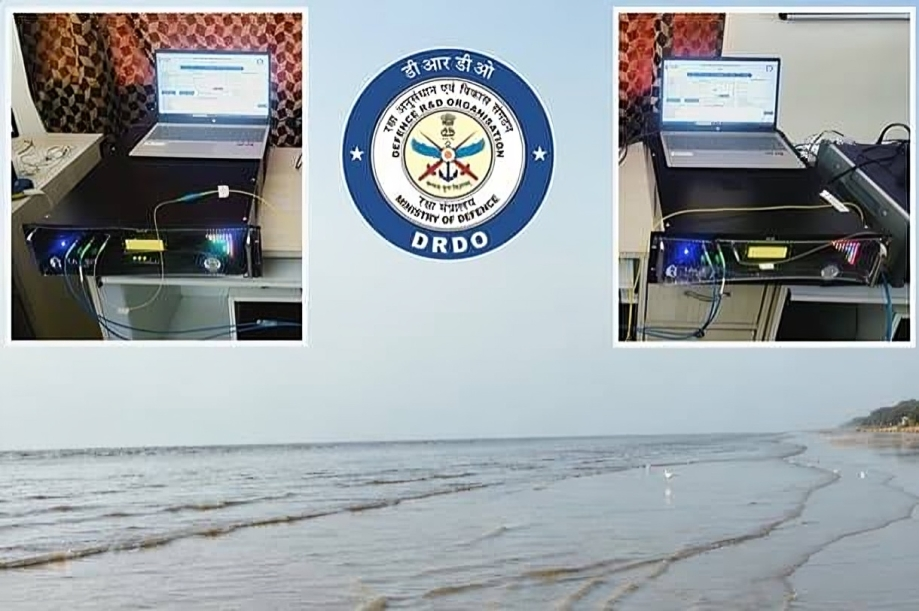
India’s Defence Research and Development Organisation (DRDO) has demonstrated the capacity of a Quantum Key Distribution (QKD) platform on the live network of Proof and Experimental Establishment at Chandipur, Odisha. The trial is aimed at developing cutting-edge technology to safeguard high-value information from growing cyber threats.
Quantum Key Distribution (QKD) uses properties of quantum physics to generate encryption keys. QKD can involve the use of physical objects, such as photons, which have the ability to detect some form of tampering when quantum signals are used to distribute those keys. It has the potential to be part of a high-security communications network.



In the trial, the platform was launched on a live network in a defence test-range environment. The trial was important because a real operational network faced a number of practical issues such as equipment integration, transmission conditions and communication reliability. QKD does not itself encrypt all transmitted information. It enables the creation of secure keys with which to encrypt data, provided that suitable encryption systems are used. In addition, secure end points, management, authentication, and measures to prevent attacks on the system are needed.
Use Cases: Strategic military command network and communications, strategic military research establishments, and other facilities of strategic importance.
The successful demonstration has created more interest in quantum-secured communications in India. Additional testing and integration of the systems will be necessary to ascertain the role this technology will play in defence networks.

