

HomeIndustryAerospace and DefenceIndia debuts largest domestically-built nuclear reactor with more planned

India debuts largest domestically-built nuclear reactor with more planned

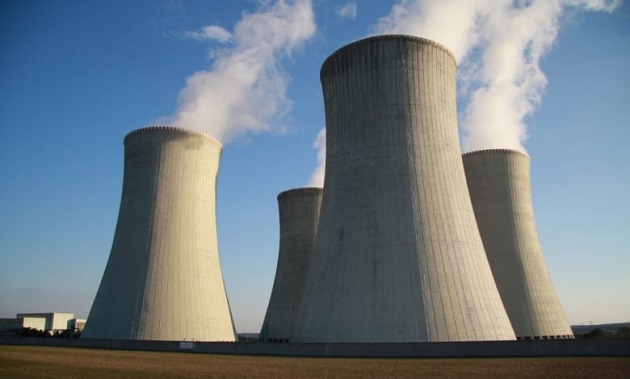
India’s success in connecting its largest domestically-built nuclear reactor to the grid is a boost for plans to deploy the technology to help the world’s third-biggest polluter limit emissions, according to the official overseeing the plans.

The 700-megawatt pressurized heavy water reactor of the Kakrapar Atomic Power Station, located in the western state of Gujarat, is the first of 16 planned units that will help balance the grid against growing intermittent renewable generation, according to K.N. Vyas, India’s atomic energy secretary.


“Renewables are less capital intensive and can be implemented much more quickly. Yet, they need to be balanced with more stable power,” Vyas said in a phone interview. “Nuclear provides clean baseload power and that makes it an important element of our climate strategy.”

India is counting on its nuclear program to help meet its Paris climate commitments to reduce the emissions intensity of its economy by a third from 2005 levels by 2030. So far, domestic built reactors have avoided cost-run-ups that have hit projects planned with overseas technologies, said Debasish Mishra, a Mumbai-based partner at Deloitte Touche Tohmatsu.

Nuclear Power Corp. of India Ltd., also known as NPCIL, which connected the reactor to the grid last week, expects to start five more units through March 2027, and is placing orders for another ten to be commissioned by 2031. The combined cost of the fleet is estimated at about 1.5 trillion rupees ($20.4 billion), according to the state monopoly.

India has 6.8 gigawatts of existing nuclear generation capacity, which accounts for roughly 2% of the nation’s total capacity. Coal-fired generation makes up about 53% of India’s installed base, although its share has been declining in favour of cleaner generation and renewable power.

ELE Times Research Desk
ELE Times Research Deskhttps://www.eletimes.ai
ELE Times provides extensive global coverage of Electronics, Technology and the Market. In addition to providing in-depth articles, ELE Times attracts the industry’s largest, qualified and highly engaged audiences, who appreciate our timely, relevant content and popular formats. ELE Times helps you build experience, drive traffic, communicate your contributions to the right audience, generate leads and market your products favourably.

Related News

Must Read

TDK to Showcase EV Technologies and Made-in-India Components at Auto EV Bharat 2026

TDK Corporation will showcase its electric mobility technologies and...

Infineon Introduces 4Tx/4Rx CTRX8144FS Radar Chip for Advanced Automotive ADAS

Infineon Technologies AG has introduced the RASIC CTRX8144FS, a...

Nuvoton MA35 Family Enables Redfish-Based Remote Management for Industrial IoT Edge Devices

Nuvoton Technology Corporation has introduced a remote management platform...

Electronic Design Automation Market Size Estimated to Reach $43.07 Billion By 2034

The global Electronic Design Automation (EDA) market is undergoing...

Bosch’s Strategy for 2030: Investments Towards Innovations in Futuristic Technology

Despite impending challenges in smart-tech implementation and rising geopolitical...

Can Vehicle-to-Grid Technology Turn Electric Vehicles into Mobile Power Stations?

Prashant Verma, Sub-Editor, ELE Times Vehicle-to-Grid (V2G) is an emerging...

How Vulnerable Are Our Infrastructure Systems and How Prepared Are Organizations?

The critical infrastructure that powers our utilities, factories, transportation...

Top 10 Sodium-Ion Battery Companies for Electric Mobility

Sodium-ion batteries are rechargeable batteries made of a cathode,...

Overcoming Next-Gen AI Data Centre Bottlenecks: The Role of Precision Timing and 800 VDC Architectures

Anwesh Koley, Executive Editor, ELE Times As artificial intelligence workloads...

Vishay’s New LoRa-Based WLMO Module Enables Wireless Position Monitoring Up to 2 km

Vishay Intertechnology has introduced a new LoRa-based machine-to-machine (M2M)...
