

HomeManufacturingIndigenisation In Defence Manufacturing

Indigenisation In Defence Manufacturing

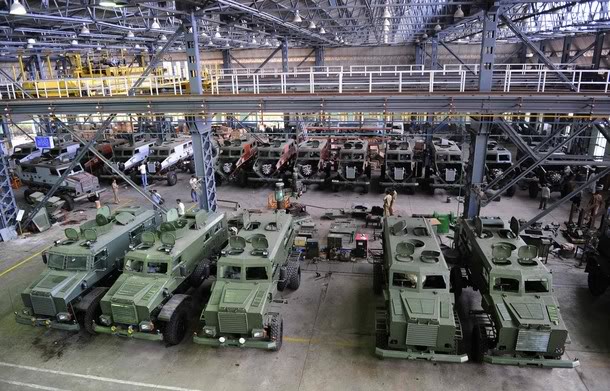
The Government has taken several policy initiatives in the past few years under ‘Make in India’ program and brought in reforms to encourage indigenous design, development and manufacturing of defence equipment in the country, thereby reducing the import of defence equipment. These initiatives, inter-alia, include according priority to procurement of capital items from domestic sources under Defence Acquisition Procedure (DAP)-2020;  Announcement of 18 major defence platforms for industry led design & development; Notification of  two ‘Positive Indigenisation Lists’ of total 209 items of Services and  two ‘Positive Indigenisation List’ of total 2851 items and 107 Line Replaceable Units (LRUs) of Defence Public Sector Undertakings (DPSUs), for which there would be an embargo on the import beyond the timelines indicated against them; Simplification of Industrial licensing process with longer validity period; Liberalisation of Foreign Direct Investment (FDI) policy allowing 74% FDI under automatic route; Simplification of Make Procedure; Launch of Innovations for Defence Excellence (iDEX) scheme involving start-ups & Micro, Small and Medium Enterprises (MSMEs); Implementation of Public Procurement (Preference to Make in India) Order 2017; Launch of an indigenization portal namely SRIJAN to facilitate indigenisation by Indian Industry including MSMEs; Reforms in Offset policy with thrust on attracting investment and Transfer of Technology for Defence manufacturing by assigning higher multipliers; and Establishment of two Defence Industrial Corridors, one each in Uttar Pradesh and Tamil Nadu.

With these actions of the Government, the expenditure on defence procurement from foreign sources has reduced from 46% to 36%, thereby reducing the import burden in the last 3 (three) years i.e., 2018-19 to 2020-21.

ELE Times Bureau
ELE Times Bureauhttps://www.eletimes.ai/
ELE Times provides a comprehensive global coverage of Electronics, Technology and the Market. In addition to providing in depth articles, ELE Times attracts the industry’s largest, qualified and highly engaged audiences, who appreciate our timely, relevant content and popular formats. ELE Times helps you build awareness, drive traffic, communicate your offerings to right audience, generate leads and sell your products better.

Related News

Must Read

Delivering Policy-based Runtime Authorization for AI Agents

​AI model providers have converged on a consistent principle:...

Building a Robust Platform That Scales with AI Infrastructure Expansion: Tam Do, Microchip

Prominent semiconductor technology supplier Microchip has been working steadily...

Indian Auto Industry: Driving Innovation via e-Mobility and Connected Vehicle Technology

Anwesh Koley, Executive Editor, ELE Times The automotive industry is...

LoRa-Based Wireless Sensor Technology Enables Long-Range Industrial Position Monitoring

Modern industry automation depends on connective technologies, artificial intelligence,...

Building Scalable Data Infrastructure for the Future of Enterprise AI

Scaling cloud-native data platforms supports growing workloads, though operating...

Fuel Cell Technology: The Key to Sustainable Mobility for the Future

Anwesh Koley, Executive Editor, ELE Times Alternate technology and materials...

TDK to Showcase EV Technologies and Made-in-India Components at Auto EV Bharat 2026

TDK Corporation will showcase its electric mobility technologies and...

Infineon Introduces 4Tx/4Rx CTRX8144FS Radar Chip for Advanced Automotive ADAS

Infineon Technologies AG has introduced the RASIC CTRX8144FS, a...

Nuvoton MA35 Family Enables Redfish-Based Remote Management for Industrial IoT Edge Devices

Nuvoton Technology Corporation has introduced a remote management platform...

Electronic Design Automation Market Size Estimated to Reach $43.07 Billion By 2034

The global Electronic Design Automation (EDA) market is undergoing...


