

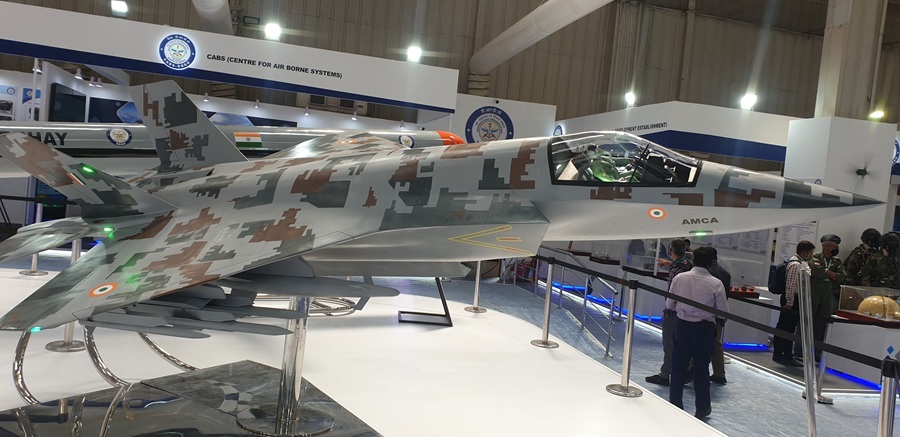
India’s pursuit of advanced stealth fighter technology has been a focal point in its defense modernization efforts. As of 2025, the Indian Air Force (IAF) operates a fleet that includes aircraft with varying degrees of stealth capabilities, while ambitious indigenous projects are underway to enhance its aerial prowess.
Current Stealth-Enhanced Aircraft in the IAF
While the IAF does not currently field a fully stealth fifth-generation fighter, it operates several aircraft with stealth features:



- Dassault Rafale: India has inducted 36 Rafale fighters, which, although not classified as fifth-generation stealth aircraft, incorporate stealthy design elements and advanced avionics to reduce radar cross-section.
- Sukhoi Su-30MKI: The Su-30MKI is a twin-engine multirole air superiority fighter developed by Russia’s Sukhoi and built under license by India’s Hindustan Aeronautics Limited (HAL). While not a stealth aircraft, efforts have been made to reduce its radar signature through various upgrades.
Indigenous Stealth Fighter Development: The AMCA Project
India’s most ambitious endeavor in stealth technology is the development of the Advanced Medium Combat Aircraft (AMCA), a fifth-generation stealth fighter designed to bolster the IAF’s capabilities.
In March 2024, the Cabinet Committee on Security (CCS) approved the full-scale engineering development of the AMCA, allocating over ₹15,000 crore for the creation of five prototypes and a structural test specimen. The Aeronautical Development Agency (ADA) of the Defence Research and Development Organisation (DRDO) is spearheading this project.
Key Features of the AMCA
- Stealth Design: The AMCA will feature advanced stealth characteristics, including serpentine air intakes, internal weapon bays, radar-absorbing materials, and conformal antennas, all aimed at minimizing its radar cross-section.
- Supersonic Cruise Capability: The aircraft is expected to achieve supersonic speeds without afterburners, enhancing its operational efficiency and reducing infrared signatures.
- Advanced Avionics: Integration of sensor fusion, multi-sensor data integration, and an Active Electronically Scanned Array (AESA) radar will provide superior situational awareness and combat capabilities.
Development Timeline and Future Prospects
The first AMCA prototype is slated to roll out within four years from the CCS approval, with its maiden flight anticipated a year thereafter. Comprehensive flight testing and certification processes are expected to culminate in the aircraft’s induction into the IAF by 2035.
The initial two squadrons of the AMCA will be powered by GE-F414 engines, developed in collaboration with a foreign partner. Subsequent variants, designated as AMCA Mark-2, will feature more powerful engines, with potential partners including General Electric, Rolls-Royce, and Safran.
Challenges and Strategic Significance
Developing a fifth-generation stealth fighter presents significant challenges, particularly in mastering stealth technology and advanced avionics. India’s previous attempt with the Kaveri engine project in the 1990s faced hurdles, underscoring the complexity of such endeavors. However, renewed efforts and international collaborations aim to overcome these obstacles.
The successful development and induction of the AMCA will position India among a select group of nations capable of producing advanced stealth fighters, significantly enhancing its air combat capabilities and strategic autonomy.
Conclusion
As of latest, while the Indian Air Force operates aircraft with certain stealth features, the realization of a fully indigenous stealth fighter remains a work in progress. The AMCA project represents a pivotal step toward achieving this goal, reflecting India’s commitment to advancing its defense technology and securing its airspace with homegrown solutions.

