
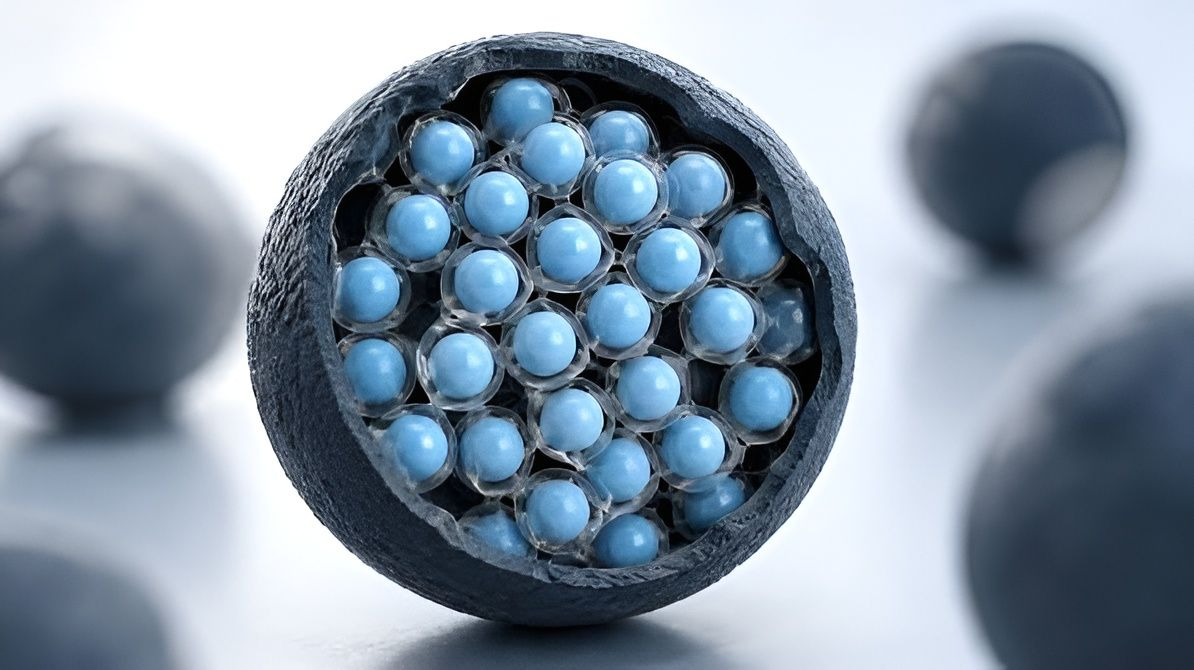
As manufactures and battery material companies are searching for increasing energy density and improve charging performance in electric vehicles, silicon-based anode technology that replace traditional graphite parts with silicon-based materials is gaining momentum in the electric vehicle (EV) battery industry. The advantage of adopting these technologies is that it holds significantly more lithium ions (up to 10 times more lithium per gram than standard graphite) to boost energy storage of an anode without increasing its size.
Although, this technology suffers from big challenges such as silicon undergo tremendous expansion once it absorbs lithium during charging. This expansion can destroy the anode and cause capacity loss over repeated charging cycles. Researchers have come up with the solution of using silicon-carbon composites to overcome this problem. By combining silicon with carbon based materials can accommodate the expansion to preserve the anode stability.




The technology has new completed its testing phase and is new ready to be implement toward large-scale manufacturing. Group14 Technologies, an American battery technology company, in March 2026 announced that its South Korea battery- material plant for silicon batteries has started production of its SCC55 material at the scale needed for EV batteries. The plant can produce up to 2,000 tonnes of silicon battery material per year, which should amount to about 10 GWh of energy-storage capacity annually once production reaches its planned level.
Australia is another major supporting commercialisation of this silicon-adopting material for energy storage. The Australian Renewable Energy Agency (ARENA) announced an award of $45 million to silicon battery technologies to build a commercial scale facility for advanced silicon-carbon battery material.
These developments put silicon-carbon anodes closer to commercialisation. If the manufacturers can overcome the issues of cost, cycle life, expansion and manufacturing scale, then the technology could contribute to higher battery energy density in future EV batteries, while allowing for faster charging.

