
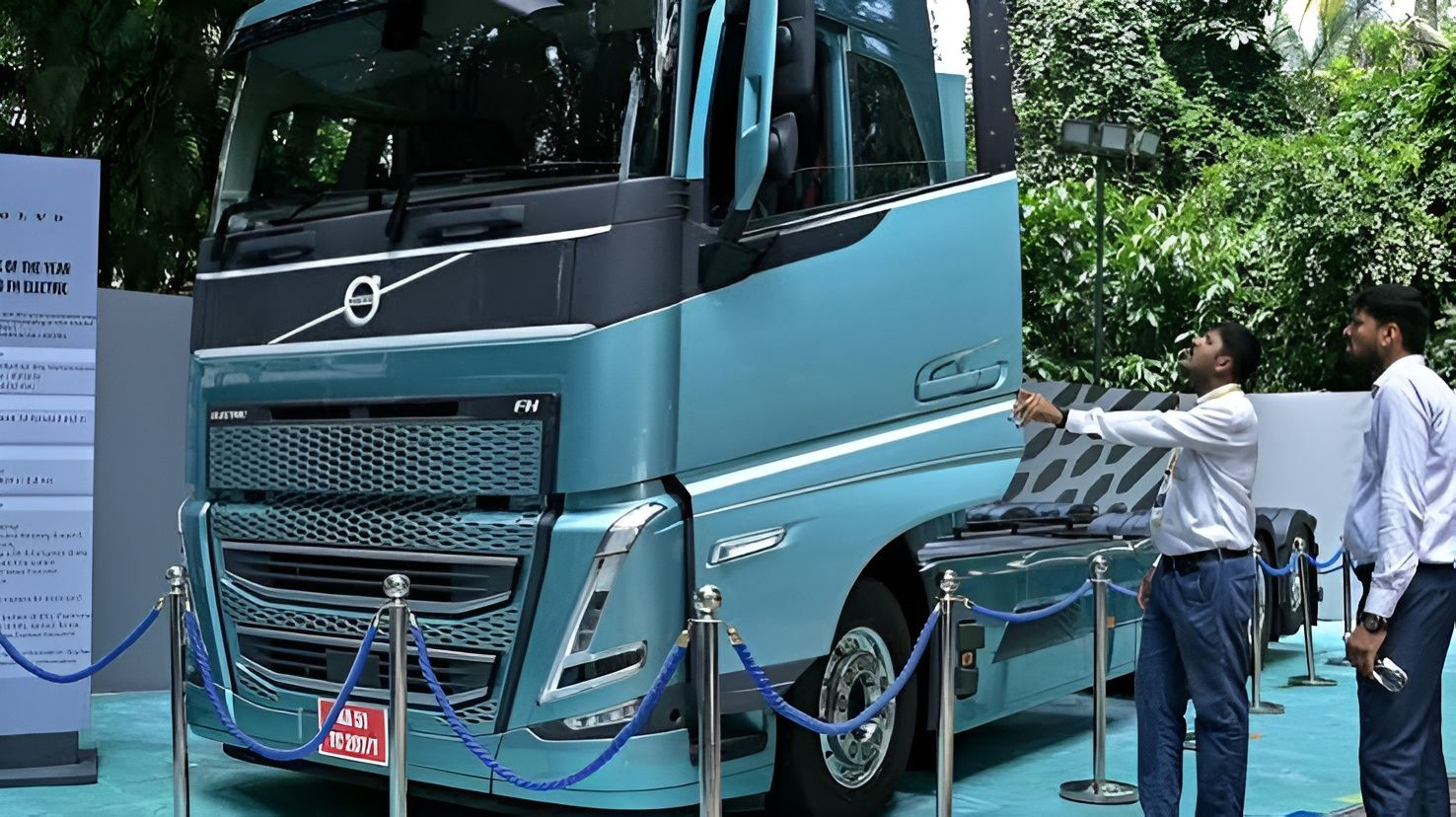
Battery-swapping technology allows electric heavy trucks to replace a drained battery placed between the frame rails with a fully charged one at a charging station in just 5 to 10 minutes. Unlike conventional plug-in EV trucks, battery-swapping vehicles are designed with modular and removable battery packs along with the mechanical, electrical and communication interfaces required for rapid battery exchange.
Automated swapping equipment can then remove the depleted pack and install a charged one. Current heavy-duty EV examples in India demonstrate the growing adoption of this approach, with some systems completing a battery swap in less than five to seven minutes.




This battery-swapping technology is gaining attention in India’s EV transportation sector as manufacturers look for a better option to reduce electric vehicle charging downtime. It also provides an advantage of lower upfront costs because the battery is owned by a battery-swapping operator, allowing the customer to pay for battery use through a subscription.
This technology is now moving beyond the deployment phase towards a wider infrastructure network. In July 2026, Energy In Motion (EIM) and Hindustan Petroleum Corporation Limited (HPCL) announced plans to develop fast-charging and battery swapping stations for heavy EV trucks at specific HPCL petrol pumps or service stations. The partnership company (EIM) will establish swap-and-charge hubs along freight corridors including Mumbai-Pune, Delhi-Jaipur and Chennai-Bengaluru over the next 18 to 24 months.
The implementation of battery-swapping at a wider scale demonstrates that India is adopting modern technologies to provide faster and efficient charging solutions to the EV industry. The adoption of this technology at a very large scale will depend on several factors such as battery standardisation, station availability, interoperability, fleet economics, and the development of reliable freight-corridor infrastructure.

