

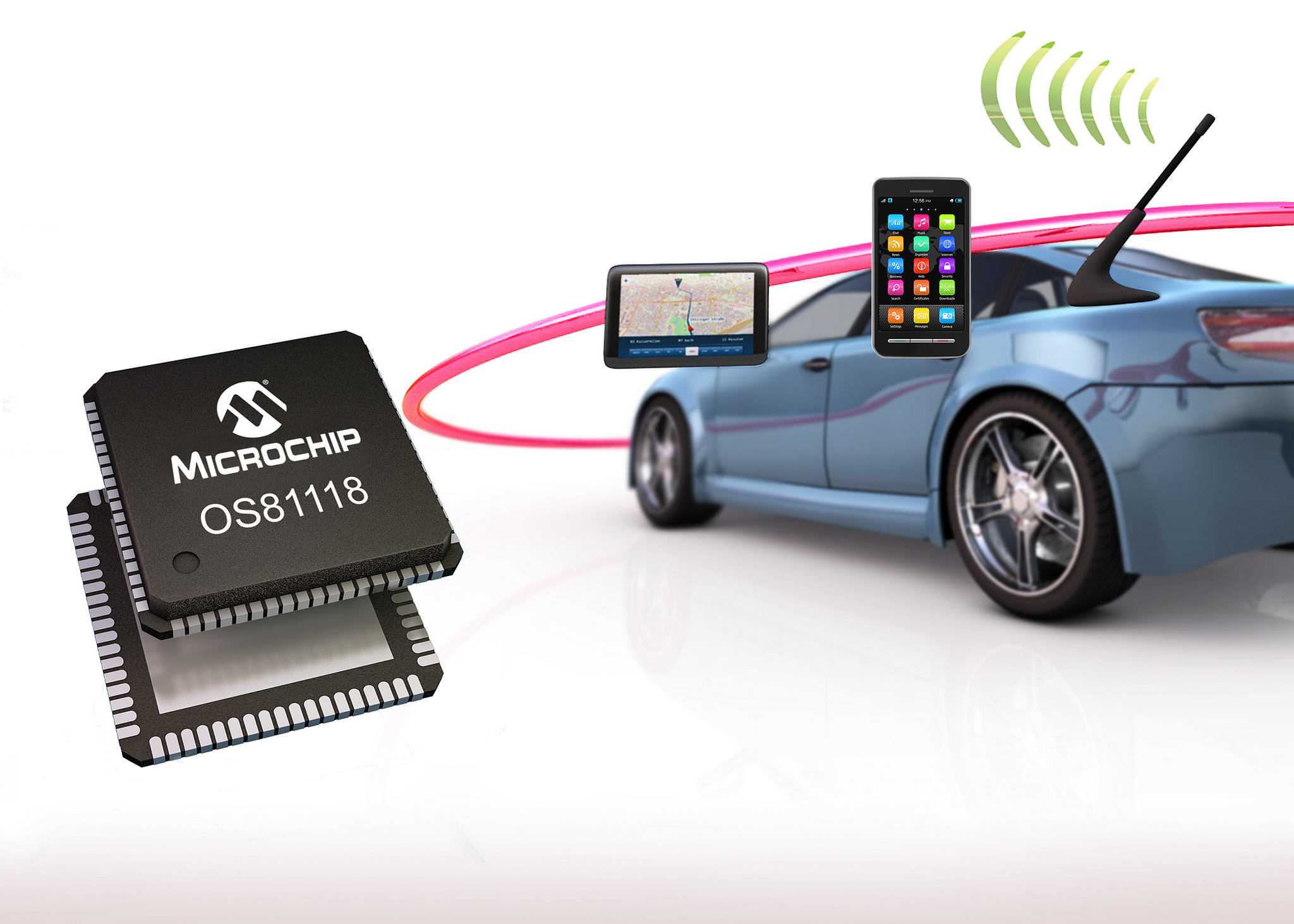
Microchip Technology Inc., a leading provider of microcontroller, mixed-signal, analog and Flash-IP solutions, on January 5, 2017, announced that Daimler AG plans to utilize Microchip’s OS81118 Intelligent Network Interface Controller (INIC) with integrated coaxial transceiver as its next-generation infotainment networking platform. Daimler expects to significantly reduce costs by moving to coaxial cabling while retaining all the benefits of their current MOST150-based systems and leveraging their existing designs for fast time to market.
To date, around 200 million Media Oriented Systems Transport (MOST) interface controllers have been installed in more than 200 car models since 2001. Daimler and most major car makers have successfully implemented MOST technology in their multi-node infotainment networking systems, as it provides a field-proven, low-risk, whole-system solution. The MOST150 standard meets Daimler’s future requirements, and the coaxial physical layer is expected to dramatically reduce Daimler’s costs. This latest version of MOST technology continues to predictably and efficiently transport video, audio, packet and control data throughout the vehicle without time-synchronization protocols, using dedicated channels for minimal processor overhead in the main infotainment control unit.



“The MOST150 coaxial physical layer is helping Daimler develop more cost-competitive infotainment solutions for our demanding customers, and it protects our investments made with MOST technology,” said Reinhold Beck, Senior Manager at Daimler.
“We are grateful for Daimler’s contribution to the specification work on the MOST150 coaxial physical layer as a member of the MOST Cooperation physical layer working group,” said Dan Termer, vice president of Microchip’s Automotive Information Systems Division. “This is a great example of the ongoing and successful cooperation taking place among multiple MOST Cooperation member companies.”
The MOST150 standard also provides 150 Mbps performance and proven electromagnetic-compatibility (EMC) behavior. And, the inherent shielding of its new coaxial-cabling option provides superior EMC immunity.
The MOST Cooperation standards enable automotive OEMs and their Tier 1 suppliers with a proven and well-supported methodology for defining and implementing high-bandwidth infotainment and Advanced Driver Assistance (ADAS) systems, including a standard physical layer and a robust method for system management and control with superior reliability and Quality of Service (QoS). Using MOST technology also results in reduced weight for easier compliance with environmental regulations.
To learn more about Microchip’s MOST networking products, visit http://www.microchip.com/design-centers/automotive/most/products.

