
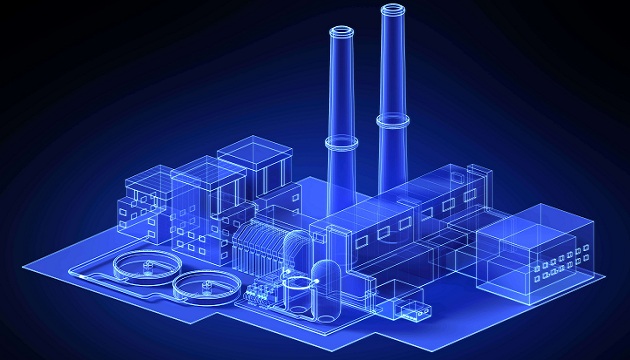
Given the evolution of mechanical and plant engineering, we see great advantages in the use of simulation models. Today, developers in the industrial automation space are facing increasingly complex challenges in mechatronic systems, with the proportion of software steadily increasing. Given this, it is important for companies to focus on all three disciplines of mechatronics – mechanics, electrics and software – when developing new machines.
For example, even before the first physical design, a new machine can be completely digitally designed and its full functionality can be checked by virtual test runs. This saves companies time to market, especially in cases where assembly is complicated or costly, such as in an offshore wind farm.




But even after launching and selling the product, a “digital twin” can still do valuable work. With the capabilities of Industry 4.0, this virtual image of the machine can always be supplied with real-time data from the physical system, thus running in parallel throughout the life of the machine. The data obtained provides valuable information on possible errors or signs of wear, for example if the measured values don’t match the simulated values. This usually provides a first clue for finding causes and troubleshooting. Early intervention can significantly extend the life of the machine and also eliminate costly errors and failures even before they occur.
It is not essential to reproduce the entire system digitally. Even a digital model of a single machine or of certain mechatronic components can significantly increase the efficiency of the entire production chain. Model-Based Design, with tools like MATLAB and Simulink, has demonstrated success in industries like automotive and aerospace & defense.
As mechanical engineering companies and the industrial automation segment sees a growing number of challenges that cannot be solved purely physically, these companies will gravitate towards and see a growing advantage from modeling, simulation and automatic code generation in mechanical and plant engineering. The digital twin will soon become a must-have to survive in the competition.

