
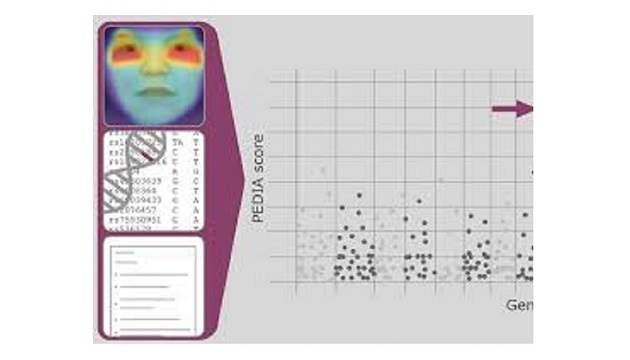
Researchers from the University of Bonn and the Charité Universitätsmedizin Berlin have shown that artificial intelligence can be used to diagnose rare diseases more efficiently and reliably. A neural network automatically combines portrait photos with genetic and patient data.
Many patients with rare diseases have to undergo long procedures, lengthy trials and tribulations until they are correctly diagnosed. “This results in a loss of valuable time that is actually needed for early therapy in order to avert progressive damage,” explains Professor Dr. med. Dipl. Phys. Peter Krawitz from the Institute for Genomic Statistics and Bioinformatics at the University Hospital Bonn (UKB). Together with an international team of researchers.




He demonstrates how artificial intelligence can be used to make comparatively quick and reliable diagnoses in facial analysis.
The used software can automatically detect these characteristic features from a photo. Together with the clinical symptoms of the patients and genetic data, it is possible to calculate with high accuracy which disease is most likely to be involved. The AI and digital health company FDNA has developed the neural network DeepGestalt, which the researchers use as a tool of artificial intelligence for their study.
“PEDIA is a unique example of next-generation phenotyping technologies,” said Dekel Gelbman, CEO of FDNA. “Integrating an advanced AI and facial analysis framework such as DeepGestalt into the variant analysis workflow will result in a new paradigm for superior genetic testing.”
The neural network with 30,000 images are trained by researchers
The scientists trained this computer program with around 30,000 portrait pictures of people affected by rare syndromal diseases. “In combination with facial analysis, it is possible to filter out the decisive genetic factors and prioritize genes,” says Krawitz. “Merging data in the neuronal network reduces data analysis time and leads to a higher rate of diagnosis.”
The study is a team effort between computer science and medicine. This can also be seen in the shared first authorship of the computer scientist Tzung-Chien Hsieh, doctoral student at the Institute of Professor Krawitz, and Dr. Martin Atta Mensah, physician at the Institute of Medical Genetics and Human Genetics of the Charité and Fellow of the Clinician Scientist Program of the Charité and Berlin Institute of Health (BIH). Prof. Dr. Stefan Mundlos, Director of the Institute of Medical Genetics and Human Genetics at the Charité, also participated in the study, as did over 90 other scientists.
“Patients want a prompt and accurate diagnosis. Artificial intelligence supports physicians and scientists in shortening the journey,” says Dr. Christine Mundlos, Deputy Managing Director of the alliance of patients with chronic rare diseases (ACHSE) e.V. “This also improves the quality of life of those affected to some extent.”

