
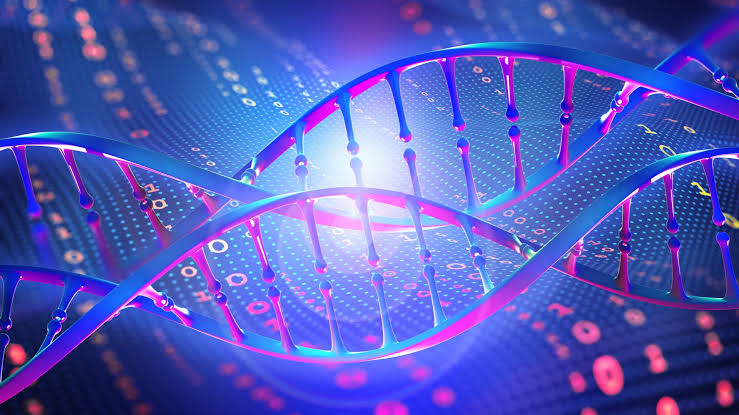
A team of researchers at Penn State University has now come up with a bio-hybrid device that pairs custom-synthesised human DNA with a perovskite crystalline semiconductor to present a new form of low-power data storage and computation. Their study was published in Advanced Functional Materials in the latest edition released August 17, 2026. Such a device may in time help reduce the energy used for powering AI computing centres and huge data centres, the scientists say.
The technology addresses a growing challenge in modern computing: the enormous energy required to model and process data. An increasing number of high-performance AI workloads and the overall compute and memory demand of data centres mean that there is pressure to find a more efficient way to store and process data.




The researchers used synthetic DNA – a chemically engineered molecule arranged into short molecular sequences and a crystalline perovskite semiconductor material (used in things like solar cells and electronics). The combined pair of these materials created a memristor: a type of electronic memory that retains clues about its past electrical experience.
Such technology could potentially go toward energy-efficient AI-computing hardware; as well as data centres and even the burgeoning field of neuromorphic computing by coupling the storage and processing information within the same device.
The development highlights a broader trend in semiconductor research: instead of relying solely on conventional silicon scaling, researchers are exploring biological materials, memristors and unconventional computing architectures to address the energy and memory demands of next-generation AI systems.

