

The global optical spectrum analyzer market was valued at US$ 325 Mn in 2019, and is expected to increase at a CAGR of ~ 6% in the forecast period 2019-2029.
Rising inclination of the demographic towards smartphones for performing online tasks, such as watching videos, sending mails, and others, is set to result in unprecedented transformation of the IT & Telecommunications industry in advance and emerging economies, finds study. As such, customers are leveraging affordable data pack tariffs offered by service providers and are widely accepting the nascent 5G network. Furthermore, automobile manufacturers are integrating 5G network in government-approved connected cars and driverless vehicles, leading to increasing incidents of network testing, which is set to be the next leg of growth of the market.



The quest of providing fast-paced Internet connectivity in various brackets, for instance, automobile, healthcare, and others is amplifying, giving rise to futuristic network systems. The study suggests that optical spectrum analyzers are offering pliable testing environments to cater to increasing implementation requisites of Ultra-Reliable Low Latency Communication (URLLC) and enhanced Mobile Broadband (eMBB) as vital features in the upcoming 5G communication.
Sales of ‘Benchtop’ Optical Spectrum Analyzers to Ramp up
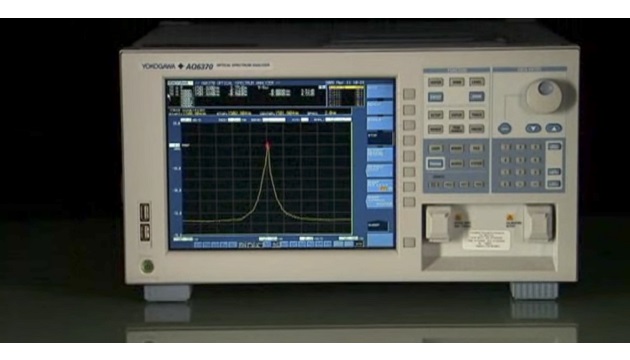
Benchtop optical spectrum analyzers account for about 70% of the total market revenue over the forecast timeframe, finds study. Benchtop OSAs are highly suitable in those areas where high precision and stability is paramount. With a high wavelength coverage of 1200 nm-3400 nm, and optical sensitivity as low as -80dB, benchtop optical spectrum analyzers are being leveraged in gas pipelines to measure the concentration of the gaseous molecules present, and monitor their interaction among each other.
Benchtop OSAs aids multimode fiber input, making it a great fit for evaluating 850nm band VSCEL modules, which are further utilized in 3D sensing, high-speed data communication, and others. Benchtop optical spectrum analyzers serve a broad dynamic range of greater than 70dB, and optimum measurement processing time of 0.035s, allowing engineers to accurately validate and enhance time-to-market of 100G/400G optical modules integrated into 5G and cloud communication systems. Furthermore, they support exact side mode suppression ratio (SMSR) measurements at 45dB or more.
Utilization of OSAs in Wavelength Meter Mode Significantly High
The report suggests that application of optical spectrum analyzers in wavelength meter mode is apparently huge, accounting for more than 80% of the total market revenue. The resolution of OSAs in wavelength meter mode is substantially greater as the system can separate a fraction of a fringe up to the limit set by the phase-locked loop (PLL) multiplier. In wavelength meter mode, the optical spectrum analyzers deliver credible outputs as low as ±0.1 pm in the visible spectra and ±0.2 pm in NIR/IR.
Most of the optical instruments are measured on the basis of wavelength to improve the efficacy of fiber-optic network. Technology, including WDM, and DWDM, splits a beam of light into different wavelengths that can propagate via a single optical fiber simultaneously, allowing the fiber to emit multiple channels, thereby increasing the capacity of the optical communication.
Click here for more information

