

HomeNewsIndia NewsResearch predicts 24 million satellite-linked IoT connections by 2024

Research predicts 24 million satellite-linked IoT connections by 2024

A new study argues there will be 24 million IoT connections made via satellite by 2024 – leading to ‘seamless’ global connectivity.

The report from ABI Research, titled ‘Satellite in IoT: New Satellite Networks for New Wave of IoT Investment’, forecasts that segments expected to see significant growth include agriculture, asset tracking, maritime tracking, and aviation tracking.


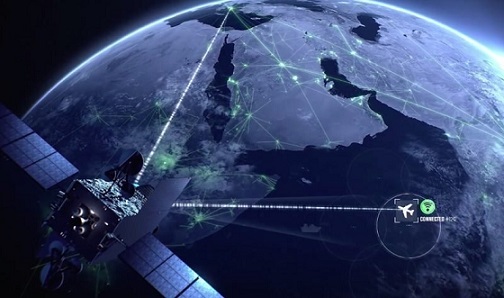
Harriet Sumnall, research analyst at ABI Research, said: “Terrestrial cellular networks only cover 20% of the Earth’s surface, while satellite networks can cover the entire surface of the globe, from pole to pole. The expansion of the satellite constellations that are currently in orbit and those due to take place will allow for connectivity to be more global. While the market using satellite connection is still immature, it shows great opportunities for growth.”

The report states maritime and aviation tracking are two of the important markets for the satellite industry as both sectors lack terrestrial infrastructures within their locations. Aerial & Maritime (A&M) is one such vendor serving these industries that provide cost-effective aircraft ADS-B surveillance and ship AIS tracking from constellations of nano-satellites. Moreover, well-known satellite providers, such as Inmarsat and GlobalStar, are facing new competition from many new start-up constellations from vendors like Amazon and SpaceX, which are launching Low Earth Orbit (LEO) satellites.

In April, Amazon confirmed its plans to launch a constellation of 3,236 satellites for global internet connectivity. Known as ‘Project Kuiper’, the project aims to cover a cover a range between the 56th parallel north and the 56th parallel south. If achieved, that would provide connectivity to around 95 per cent of the world’s population. Earlier this week, the company initiated the process of gaining FCC approval for the project.

ELE Times Research Desk
ELE Times Research Deskhttps://www.eletimes.ai
ELE Times provides a comprehensive global coverage of Electronics, Technology and the Market. In addition to providing in depth articles, ELE Times attracts the industry’s largest, qualified and highly engaged audiences, who appreciate our timely, relevant content and popular formats. ELE Times helps you build awareness, drive traffic, communicate your offerings to right audience, generate leads and sell your products better.

Related News

Must Read

How Vulnerable Are Our Infrastructure Systems and How Prepared Are Organizations?

The critical infrastructure that powers our utilities, factories, transportation...

Top 10 Sodium-Ion Battery Companies for Electric Mobility

Sodium-ion batteries are rechargeable batteries made of a cathode,...

Overcoming Next-Gen AI Data Centre Bottlenecks: The Role of Precision Timing and 800 VDC Architectures

Anwesh Koley, Executive Editor, ELE Times As artificial intelligence workloads...

Vishay’s New LoRa-Based WLMO Module Enables Wireless Position Monitoring Up to 2 km

Vishay Intertechnology has introduced a new LoRa-based machine-to-machine (M2M)...

DigiKey AIoT Design Challenge 2026 Recognises 18 Winning AI and IoT Projects

DigiKey, a global distributor of electronic components and automation...

L&T Technology Services Introduces SDVault.ai, an AI-Powered Toolchain for Software-Defined Vehicles

L&T Technology Services announced the launch of SDVault.ai on...

AI Training vs AI Inference: The War for Faster, Cheaper, and More Efficient AI Computing

Abhishek Pandey/Sub-Editor/ELE Times  Learn how next-generation chip architecture, new hardware,...

Microchip Achieves QML Class V Qualification for RT PolarFire FPGA for Space Applications

Microchip Technology has expanded its radiation-tolerant (RT) PolarFire FPGA...

Vishay Extends Safety-Certified MLCC Portfolio with New 305 VAC Capacitors

Vishay Intertechnology has expanded its VJ Safety Certified Capacitors...
