

Technological progress is the main driver of the Indian industry. Big steps forward have been taken to reduce road traffic fatalities and air pollution. With new legislation coming into effect, manufacturers are required to include a number of additional features into their two-wheelers and passenger cars. Equipment such as airbags and anti-lock braking systems will be ubiquitous. With decades of experience in producing metal components for this kind of applications, STÜKEN supports the evolution of the Indian industry by supplying robust, technologically advanced and cost-saving products for the Indian market.
New legislation has taken effect from April 1st, 2018 requiring all two-wheelers with more than 125cc to have mandatory anti-lock braking systems (ABS). Furthermore, the Union road transport ministry of India has made the installation of airbags compulsory in all new cars from July 1st, 2019. Speed limit reminders, seat belt reminders, reverse parking sensors and a manual override switch for central locking systems are further features soon to be mandatory in cars. All these measures are taken in the hopes to increase passenger and pedestrian safety. With the upcoming Bharat Standard (BS) VI emission norms, the Indian government enforces stricter rules to decrease the output of air pollutants by April 1st, 2020. Again, this will hugely affect two- and three-wheelers, as they will have to be equipped with oxygen sensors to maintain the right air-fuel mixture so that emissions stay within the permitted range.



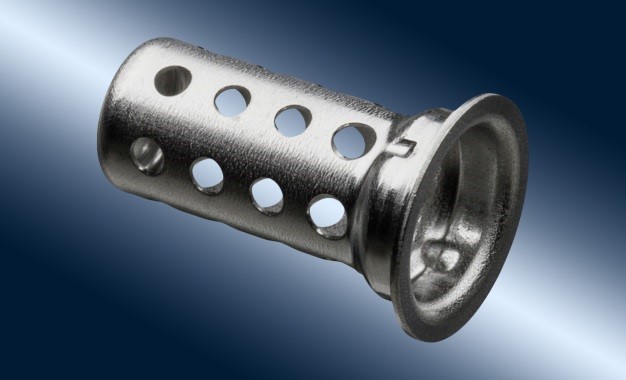
More and more Indian companies are currently starting to develop their own systems or are setting up local production capabilities. And they are looking for suppliers and partners with the necessary know-how and technical capabilities. STÜKEN has decades of experience in supplying the automotive industry with components for airbags, braking systems and oxygen sensors. The company with headquarters in Germany is the global market leader when it comes to manufacturing complex deep-drawn parts for the automotive industry. Every car with a conventional drive system statistically contains 40 components produced by the family-owned business. STÜKEN parts are also increasingly built into vehicles with electric or hybrid drive systems – about 30 different products are produced specifically for electric vehicles. Plus components for automotive lamps, power sockets, and switches. And to ensure clean air, STÜKEN makes a vital contribution with over 60 components for exhaust sensors.
Sensor components have always been an integral part of the STÜKEN range. Electronics and electrical engineering, fittings and household appliances as well as medical engineering are important industries for the deep-draw specialist. Typical sensor products include, for example, components for conventional temperature sensors in heating units, for pyroelectric sensors for measuring radiant heat in microwaves and for photoelectric sensors for data transmission using fiber optic technology. The range of vendor parts for sensors already comprises more than 100 parts – and is growing fast!

