

HomeNewsIndia NewsShortage of OLED component supplies for smartphone makers

Shortage of OLED component supplies for smartphone makers

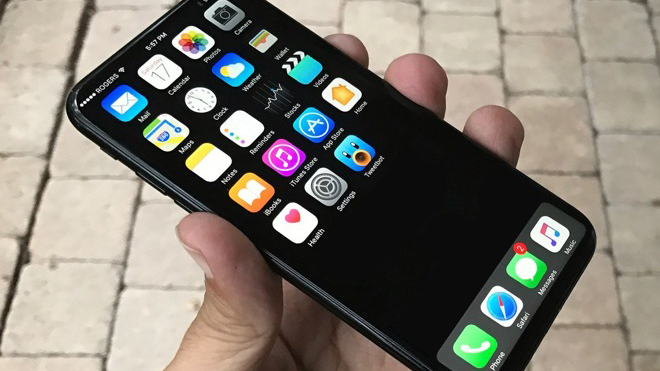
As the iPhone 8 goes into production in 2017, there is a probable shortage of OLED panels forseen for 2017.

Although Samsung and Apple will still hold the top two positions in smartphone sales, a bevy of Chinese handsets from Huawei, Vivo and Oppo are expected to sell a truck load of devices in 2017. These manufacturers are designing more upmarket phones which means they want high-end displays.


And OLED screens are not the only components that could be in short supply. The same report says that manufacturers are scrambling to secure supplies of optical sensors, memory products and LCDs, which the latter being an issue for manufacturers of 5-57-inch handsets. This means it is the mid-sized OLED panels that will be in short supply.

There is no word on which manufacturers will be impacted if the assumed shortage comes to fruition, although Apple might be one of them. It currently has an exclusive deal for 2017 with Samsung who supplies the displays; however, insiders say that Samung might not have enough capacity to meet demand. This might mean that a couple of the iPhone iterations for 2017 might have to use LCD technology for its displays.

ELE Times Bureau
ELE Times Bureauhttps://www.eletimes.ai/
ELE Times provides a comprehensive global coverage of Electronics, Technology and the Market. In addition to providing in depth articles, ELE Times attracts the industry’s largest, qualified and highly engaged audiences, who appreciate our timely, relevant content and popular formats. ELE Times helps you build awareness, drive traffic, communicate your offerings to right audience, generate leads and sell your products better.

Related News

Must Read

How Vulnerable Are Our Infrastructure Systems and How Prepared Are Organizations?

The critical infrastructure that powers our utilities, factories, transportation...

Top 10 Sodium-Ion Battery Companies for Electric Mobility

Sodium-ion batteries are rechargeable batteries made of a cathode,...

Overcoming Next-Gen AI Data Centre Bottlenecks: The Role of Precision Timing and 800 VDC Architectures

Anwesh Koley, Executive Editor, ELE Times As artificial intelligence workloads...

Vishay’s New LoRa-Based WLMO Module Enables Wireless Position Monitoring Up to 2 km

Vishay Intertechnology has introduced a new LoRa-based machine-to-machine (M2M)...

DigiKey AIoT Design Challenge 2026 Recognises 18 Winning AI and IoT Projects

DigiKey, a global distributor of electronic components and automation...

L&T Technology Services Introduces SDVault.ai, an AI-Powered Toolchain for Software-Defined Vehicles

L&T Technology Services announced the launch of SDVault.ai on...

AI Training vs AI Inference: The War for Faster, Cheaper, and More Efficient AI Computing

Abhishek Pandey/Sub-Editor/ELE Times  Learn how next-generation chip architecture, new hardware,...

Microchip Achieves QML Class V Qualification for RT PolarFire FPGA for Space Applications

Microchip Technology has expanded its radiation-tolerant (RT) PolarFire FPGA...

Vishay Extends Safety-Certified MLCC Portfolio with New 305 VAC Capacitors

Vishay Intertechnology has expanded its VJ Safety Certified Capacitors...
