
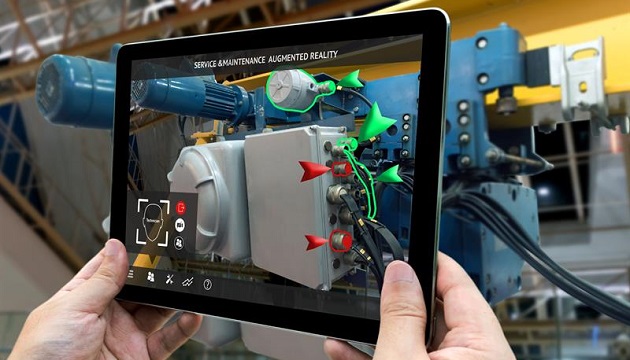
Unlike virtual reality which immerses users in an imagined environment, augmented reality (AR) brings elements of digital into the real world — thus enhancing the things we see, hear and feel.
Although not as exciting as virtual reality, AR is growing rapidly in popularity as much of the technology proves to be genuinely useful in our everyday lives.




Originally a big hit in the gaming and entertainment business (remember Pokémon Go?), AR has seen significant advancements since then. Now, other markets are taking notice.
A lot to offer
Beyond entertainment, AR technology also has a lot to offer other industries. Throughout the education sector, AR is being used to pass information onto learners in real-time and demonstrate different scenarios in a safe environment. While the housing market is seeing estate agents help buyers to visualise finished properties through headsets and interactive 3D walkthroughs.
Elsewhere, in the retail industry, companies such as IKEA are creating AR-based apps to show customers what different products would look like in their homes. Online clothing brands like ASOS are also making the most of AR technology to improve the ‘try-before-you-buy-experience’ — launching an experimental feature on its Virtual Catwalk app which aims to offer customers a new way of viewing its products in real-life.
The healthcare sector is also seeing considerable strides in this field, with technology such as the AccuVein scanner allowing doctors and nurses to locate veins quickly with little patient pain.
Equally, automobile companies are utilising advancements in AR to improve safety conditions and vehicle care. For example, Hyundai has created an app that allows users to point their phones at their cars to see detailed information about each part — breathing new life into maintenance manuals.
In the business world, companies are leveraging the technology to improve collaborative efforts and counteract a lack of direct personal presence during conference calls. For instance, Microsoft is moving forward with a beta of a video-calling system that engages AR to create holographic-style representations of participants.
Trickling through to electronics
Beyond the technologies developed in the health, consumer and business markets, AR is also starting to trickle through to the electronics manufacturing industry.
PCB design, in particular, could benefit hugely from advances in AR. For example, the technology could address issues such as fitting electronic packages into unconventional shapes and ensuring circuit connections work properly while reducing the time-consuming process of place and route.
Using AR, designers could switch between the finished, virtual version of a board and the real-life work in progress easily. Plus, considering how finely detailed PCB work can be, AR technology could prove useful to help minimise distractions. As an example, smart glasses or headsets could show a set of virtual instructions, saving the developer having to keep turning physical pages manually.

