
Non-volatile memories—which are able to retain information even when power is removed—are largely employed in computers, tablets, pen drives, and many other electronic devices. Among the various existing technologies, magnetoresistive random-access memories (MRAM), currently used only in specific applications, are expected to expand considerably on the market in the decade to come.
The newest MRAMs based on spintronic mechanisms—i.e., phenomena related to the spin, which is an intrinsic property of electrons and other particles—can offer faster operations, lower power consumption, and long retention time, with potential applications in wearable devices, automotive industry, and the Internet of Things, among others.




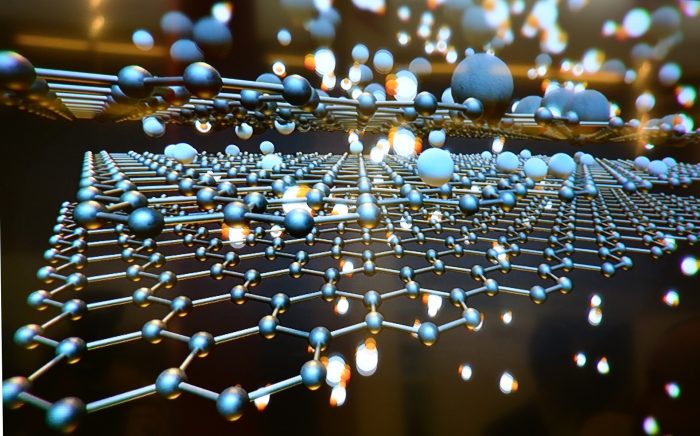
In this context, graphene and other 2D materials, which are as thin as one or very few atomic layers, may play a disruptive role. In fact, their peculiar and remarkable characteristics can provide solutions to current technological challenges and performance limitations that prevent further efficient deployment of MRAMs; therefore, they can have a strong impact on the design of next-generation spintronic devices.
The expected enhancement and new opportunities can arise from the introduction of 2D materials into spin-based memory technologies. This work, led by the Catalan Institute of Nanoscience and Nanotechnology (ICN2) at the Universitat Autònoma de Barcelona (UAB) campus, and the National University of Singapore, provides an overview of the state of the art in the field and of the current challenges being faced in the development of non-volatile memories in general, and specifically, of those employing spintronic mechanisms such as spin-transfer torque (STT) and spin-orbit torque (SOT). The authors discuss the advantages that the co-integration of 2D materials in these technologies introduces, giving a panoramic of the improvements already achieved as well as a prospect of the many advances that further research can produce. A possible timeline of progress during the next decade is also traced.
“As thoroughly discussed in the paper,” comments ICREA Professor Stephan Roche, group leader at the ICN2 and leader of the Graphene Flagship Work Package dedicated to Spintronics, “the fundamental properties of 2D materials such as atomically smooth interfaces, reduced material intermixing, crystal symmetries, and proximity effects are the drivers for possibly disruptive improvements for spin-based MRAMs. These are emerging as key enabling low-power technologies and are expected to spread over large markets from embedded memories to the Internet of Things.”
This research was coordinated by ICN2 group leaders and ICREA professors Prof. Stephan Roche and Prof. Sergio O. Valenzuela, and by Prof. Hyunsoo Yang from the National University of Singapore. It was carried out by a collaboration of various members of the Graphene Flagship project consortium, including various institutes of the Centre National de la Recherche Scientifique (CNRS, France), Imec (Belgium), Thales Research and Technology (France), and the French Atomic Energy Commission (CEA), as well as key industries such as Samsung Electronics (South Korea) and Global Foundries (Singapore), which bring the vision of future market integration.
“It is impressive to observe the scientific results achieved by the spintronics work package and the technical activities carried out in the Imec environment, together with SMEs (Singulus Technologies, GRAPHENEA), which pave the way towards the future impact on market applications,” states Prof. Jari Kinaret, Director of the Graphene Flagship. “There are still challenges to be overcome to fully deploy the potential of 2D materials in real-life applications, but the expected industrial and economic benefits are very high.”
“Funding efforts made by the European Commission to support the Graphene Flagship activities could position Europe at the lead of innovation spintronic technologies in a decade timescale,” adds Prof. Andrea Ferrari, Science and Technology Officer of the Graphene Flagship.

