
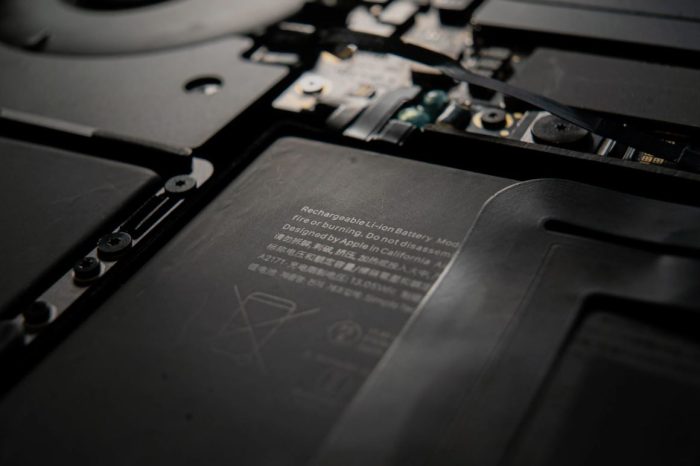
To power our increasingly electrified society, energy storage technology must evolve and adapt to meet the growing demand. Lithium-ion batteries, already essential to myriad technology, will require dramatic improvements in high-energy density, safety, temperature resilience, and environmental sustainability in order to provide the type of emission-free future that so many envision.
Batteries




Now, a team of engineers led by Y. Shirley Meng, professor at the Pritzker School of Molecular Engineering, have demonstrated liquefied gas electrolytes that can simultaneously provide all four essential properties. The research, performed between Meng’s University of California San Diego and UChicago labs, provides a path to sustainable, fire-extinguishing, state-of-the-art batteries that can be developed at scale.
Yijie Yin, a nanoengineering Ph.D. student shares how this work came about.
“In 2017, a team of UC San Diego nanoengineers discovered hydrofluorocarbon molecules that are gases at room temperature and will liquefy under a certain pressure,” Yin said. “They then invented a new type of electrolyte, which is called Liquefied Gas Electrolyte (LGE).”
The liquefied gas electrolyte greatly broadens the choice of electrolyte solvent molecules. The screened fluoromethane and difluoromethane small molecules have a low melting point, fast kinetics, and wide voltage window. With the combination of co-solvents, these characteristics make these liquefied gas electrolytes exhibit excellent low-temperature performance (less than -60°C), Li metal Coulombic efficiency (>99.8%), and high performance of high-voltage cathodes.
However, the LGE electrolyte is not yet “perfect” because the saturated vapor pressure of the molecules used is high, and like most electrolytes, it is still flammable, which makes the safety and environmental protection of the system irrational.
The idea for this work came from a chat between Yin and Yang, a nanoengineering Ph.D. student at UC San Diego. Yin mentioned that in follow-up work, he wanted to try to replace the strong solvating power liquid co-solvents with the smallest ether molecule—dimethyl ether (Me2O).
“As a gas molecule, Me2O can only be used in liquefied gas,” said Yin. “It may only work under the pressurized system, and it may provide better lithium metal interface and stability while maintaining fast kinetics.”
Yang agreed and hoped the system could be further improved.
“If we continue to use the current FM and DFM weakly solvated solvents, the existing high-pressure and flammability shortcomings will not be changed,” Yang said. “Instead, we should work on searching for molecules with increased fluorinated carbon bonding.”
The two referred to the structure of fluoromethane to search for fluorinated molecules with longer carbon chains while maintaining the inherent advantages of liquefied gases, such as low melting point, low viscosity, and maintaining a certain polarity. Considering all the above requirements, 1,1,1,2 tetrafluoroethane (TFE) and pentafluoroethane pentafluoroethane (PFE) came to mind.
What’s even more surprising is that these two molecules are the main components in some fire extinguishers, which means that the molecules are not only non-flammable but also have excellent fire-extinguishing properties.

