

HomeElectronicsBattery and Energy StorageCATL Explores Lithium-Air Battery Technology to Advance Next-Generation Electric Vehicles

CATL Explores Lithium-Air Battery Technology to Advance Next-Generation Electric Vehicles

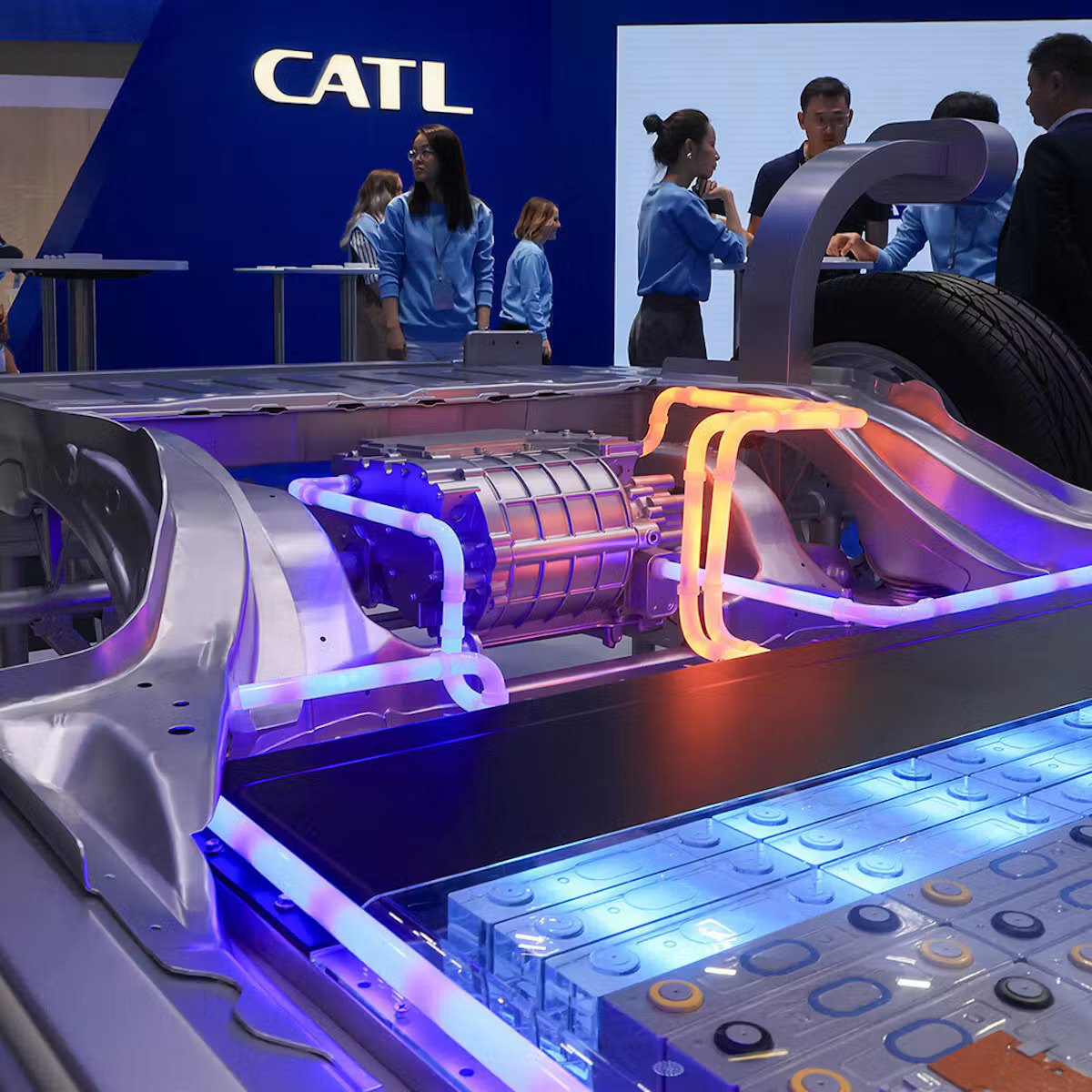
​CATL, the world’s largest manufacturer of energy storage batteries, is exploring lithium-air battery technology as a long term research direction, targeting the potential for higher energy density and long driving ranges in future electric vehicles. The company is exploring this technology because of its exceptionally high theoretical energy density.

​From the theoretical description of this technology indicates it offers a specific energy of 3,505 Wh/kg from the lithium peroxide Li₂O₂ chemical reaction alone. The technology is still far from deployment due to major engineering challenges. These challenges include air contaminants, which require power-consuming filtration due to the reaction between moisture and carbon dioxide, short cycle life as solid materials build up inside the cathode’s tiny pores, blocking them over the passage of time and reducing battery performance, and electrochemical reactions. These reactions produce harmful by-products, which can reduce battery life, lower charging efficiency, and cause chemical instability.

“Lithium-air batteries are a long-term research focus for the company,” said Wu Kai, Chief Scientist at CATL. The company is also focusing on sodium-ion and solid-state battery technologies for near-to-midterm commercial development (2026-2030), while treating lithium-air technology as a long-term research project. The sodium-ion and solid-state batteries are considered closer to commercialisation and offer potential advantages over conventional lithium-ion battery technology in manufacturing cost, extreme weather conditions, and high-performance reliability.

The company claims that lithium-air battery technology could potentially offer a driving range of 2,000 km. This figure is a theoretical description, not the tested or officially announced figure from CATL. The company’s efforts to develop lithium-air battery technology represent a longer-term plan to improve battery energy density. Progress in electrode materials, electrolyte stability and air-management systems will determine whether the technology can eventually meet the durability, safety and performance requirements of electric vehicles.

ELE Times Research Desk
ELE Times Research Deskhttps://www.eletimes.ai
ELE Times provides extensive global coverage of Electronics, Technology and the Market. In addition to providing in-depth articles, ELE Times attracts the industry’s largest, qualified and highly engaged audiences, who appreciate our timely, relevant content and popular formats. ELE Times helps you build experience, drive traffic, communicate your contributions to the right audience, generate leads and market your products favourably.

Related News

Must Read

Murata Introduces MGJ2T2 Isolated DC-DC Converters for High-Voltage SiC Gate Drives

Murata Manufacturing Co., Ltd. has introduced the MGJ2T2 series...

KAIST Develops Semiconductor-Based Interface Technology to Extend Anode-Free EV Battery Life

Researchers from the Korea Advanced Institute of Science and...

Quest Global Acquires Tests Assured to Strengthen Wearable Technology Engineering and Testing Capabilities

The acquisition aims to expand Quest Global’s engineering capabilities...

Murata Introduces SCI36LT Intelligent IMU with Integrated MEMS Sensors and Embedded Processor

Murata Manufacturing Co., Ltd. has introduced the SCI36LT Series,...

Top 10 Advanced IC Substrate Manufacturers in 2026: Leading Companies Powering the AI Semiconductor Revolution

A combination of Artificial Intelligence (AI), High-Performance Computing (HPC),...

Cyient DLM and Hindustan Shipyard Sign MoU to Advance Indigenous Maritime and Defence Electronics

Partnership to Focus on Indigenous Electronics, Advanced Manufacturing and...

Driving Motion Precision: How Physical AI is Converting Data into Action

Autonomous manufacturing is entering a new phase where robotics,...

GÖPEL Electronic Joins Automotive SerDes Alliance to Support ASA-ML Automotive Networking

High-speed communication technologies are becoming increasingly important in modern...

Texas Instruments Uses Agentic AI to Cut MCU Software Migration from Months to Days

Texas Instruments (TI) has upgraded its CCStudio development ecosystem...