
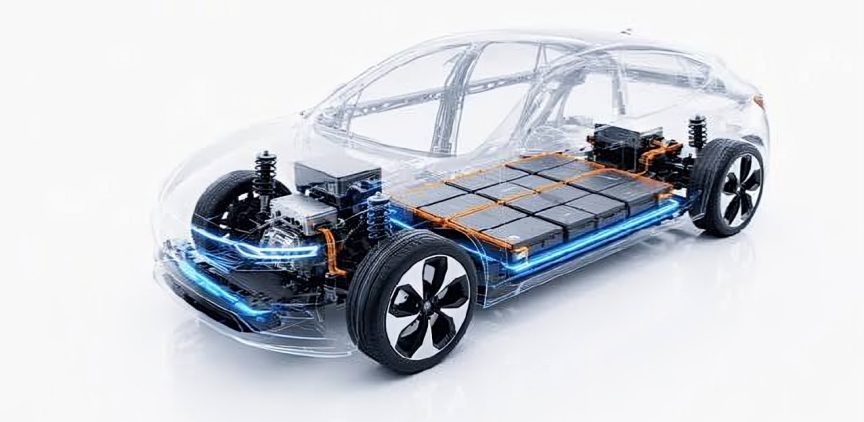
According to General Motors’ official newsroom, General Motors (GM) and LG Energy Solution are collaborating to produce lithium manganese-rich (LMR) battery technology that could reduce the cost of electric vehicles while delivering high energy density. This joint venture is upgrading its Ultium Cells plant in Spring Hill, Tennessee, to produce LMR battery cells for future EV applications.
The manufacturing plant is expected to be completed by 2028 to produce LMR cells that could deliver 33% higher energy density than Lithium Iron Phosphate (LFP) battery cells at a comparable cost. The major components of LMR battery technology contain 35% nickel, 65% manganese, and virtually no cobalt, targeting future GM electric full-size trucks and SUVs. LFP batteries are widely used in electric vehicles because of their low cost and thermal stability, but they require large and heavy battery packs to cover a longer range.




LMR addresses this challenge with higher energy density, allowing manufacturers to build smaller and lighter battery packs while delivering the same amount of power. The chances of adopting this concept are high, as major manufacturers look for alternatives that can balance cost, energy density and performance. The move also highlights the growing focus on developing new technologies at scale using existing manufacturing facilities.
If this concept is successfully commercialized, the rate of adopting this technology for future electric vehicles will depend on several factors such as cycle life, charging performance, thermal management, manufacturing cost, and the amount of production.

