
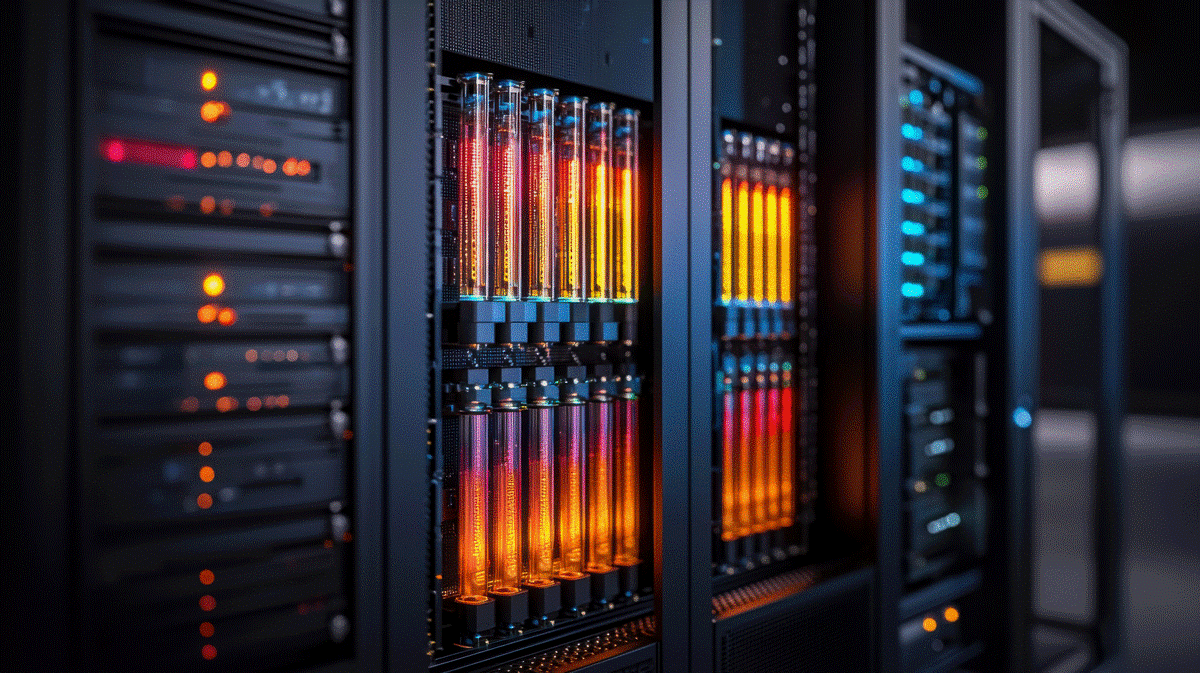
Courtesy: Arrow Electronics
Artificial Intelligence has rapidly become an innovative driver across industries, enabling everything from autonomous vehicle development to real-time healthcare diagnostics. However, as AI models grow in both complexity and scale, power and thermal management concerns are also rising. Companies must meet and overcome these challenges to help ensure sustainable and efficient AI operations.




Why Power and Thermal Management Matter in AI
AI systems are, at their core, computationally intensive and require large amounts of processing power to train and deploy models effectively. This intense compute power results in increasing amounts of energy consumption and heat. Without addressing these issues, organizations are at risk of:
- System Overheating: Excessive heat can degrade hardware performance, cause unexpected failures, and shorten the lifespan of critical infrastructure.
- Operational Inefficiencies: Ineffective cooling strategies lead to higher energy costs, increased maintenance needs, and reduced system reliability.
- Environmental Impact: Escalating energy consumption increases carbon footprints, counteracting sustainability goals and regulatory requirements.
The Scope of Power and Thermal Challenges
While AI is fundamentally a compute-heavy task, recent trends exacerbate heat and thermal concerns for artificial intelligence systems. Some of these trends include:
- Growing Compute Density: As AI models become larger and more complex, data centers must meet rack densities exceeding 50kW—a significant jump from traditional capacities.
- Edge Deployments: Deploying AI at the edge requires compact, energy-efficient systems that can handle extreme environmental conditions while still performing at high levels.
- Diverse Workloads: AI includes applications such as computer vision, NLP, and generative models, each with its own unique performance and cooling needs.
These challenges require a combination of advanced technologies and strategic planning to maintain performance and sustainability.
Strategies for Addressing Thermal Challenges
Liquid Cooling
While liquid cooling is not a new concept, it has seen rapid growth and adoption to combat heat and thermal issues in AI systems, especially at the edge. Unlike traditional air-based systems, liquid cooling directly removes heat from critical components, offering:
- Improved Efficiency: Direct-to-chip cooling systems enhance heat dissipation, allowing servers to handle workloads exceeding 50kW per rack without compromising reliability.
- Scalability: Liquid cooling is suitable for data centers, edge deployments, and hybrid environments and supports the growing compute density required for AI applications.
- Sustainability: Reduced reliance on energy-intensive air-cooling systems contributes to lower carbon emissions and aligns with environmental regulations.
Arrow’s Intelligent Solutions business works with leading vendors and leverages advanced liquid cooling technologies, such as rear-door heat exchangers and immersion cooling, to provide tailored solutions that address the specific needs of OEMs and ISVs. These solutions enhance system stability, extend lifespan, and significantly lower energy consumption.
Innovations in Passive Cooling
In addition to active cooling systems, advancements in passive cooling techniques, such as optimized airflow management and heat pipe technology, are becoming increasingly relevant. Heat pipe cooling, in particular, offers numerous advantages for AI systems, including exceptional thermal efficiency, uniform heat distribution across the system, minimal maintenance needs, a lightweight design, and effective cooling for high-density computing components.
The Role of Right-Sized Computing
As seen in Ampere’s innovative GPU-free AI inference solutions, right-sized computing aligns hardware capabilities with workload requirements. This approach minimizes energy waste and reduces costs and operational complexity. Ampere’s cloud-native processors, for instance, deliver:
- Enhanced Efficiency: Up to 6.4x greater AI inference performance compared to traditional systems.
- Lower Power Consumption: Optimized for sustainability, these processors allow organizations to achieve more with less energy.
- Broad Application Support: Ampere’s solutions excel across diverse AI workloads from computer vision to natural language processing.
Integrating Ampere’s technology with Arrow’s thermal management expertise helps ensure that customers receive end-to-end solutions optimized for performance, cost, and sustainability.
Holistic Approaches to AI Deployment
In addition to hardware choice and usage strategies, more comprehensive approaches to AI deployment can help mitigate concerns over these systems’ significant energy usage and heat generation and their general sustainability.
Predictive Maintenance
Predictive maintenance tools can monitor system performance, identify potential thermal issues before they escalate, and reduce downtime. Our engineering team can help develop comprehensive maintenance frameworks that leverage machine learning for operational continuity.
Energy-Efficient Architectures
Transitioning to energy-efficient architectures, such as those based on ARM or custom-designed accelerators, can significantly reduce power consumption. Our ecosystem of cutting-edge suppliers enables OEMs to access these transformative technologies.
Lifecycle Management
Lifecycle management is critical for achieving sustainable AI deployments. Strategies such as hardware recycling, second-life battery integration, and modular system upgrades can extend the usability of AI infrastructure while minimizing waste.
Moving Towards Sustainable AI Deployment
Beyond addressing immediate thermal and power challenges, OEMs must focus on long-term sustainability. Strategies include:
- Integrated Design Approaches: Collaborating across hardware, software, and cooling technology providers to create cohesive systems that meet evolving demands.
- Regulatory Compliance: Adhering to emerging global standards for energy efficiency and environmental responsibility.
- Customer Education: Empowering end-users with tools and knowledge to optimize their AI deployments sustainably.
Arrow is at the forefront of these efforts, providing OEMs with the tools and expertise to navigate the complexities of power and thermal management in AI. By leveraging our network of robust technology collaborations, engineering expertise, and a commitment to innovation, Arrow’s Intelligent Solutions business helps organizations stay ahead in the race for sustainable AI solutions.
Conclusion
The demands of AI are pushing the boundaries of power and thermal management, but solutions like liquid cooling, passive cooling innovations, and right-sized computing are paving the way for a more sustainable future.
In collaboration with cutting-edge technology providers, Arrow helps you build a comprehensive strategy that balances performance, cost, and environmental responsibility. With these tactics, organizations can deploy their AI solutions in an efficient, reliable, and scalable way.

