
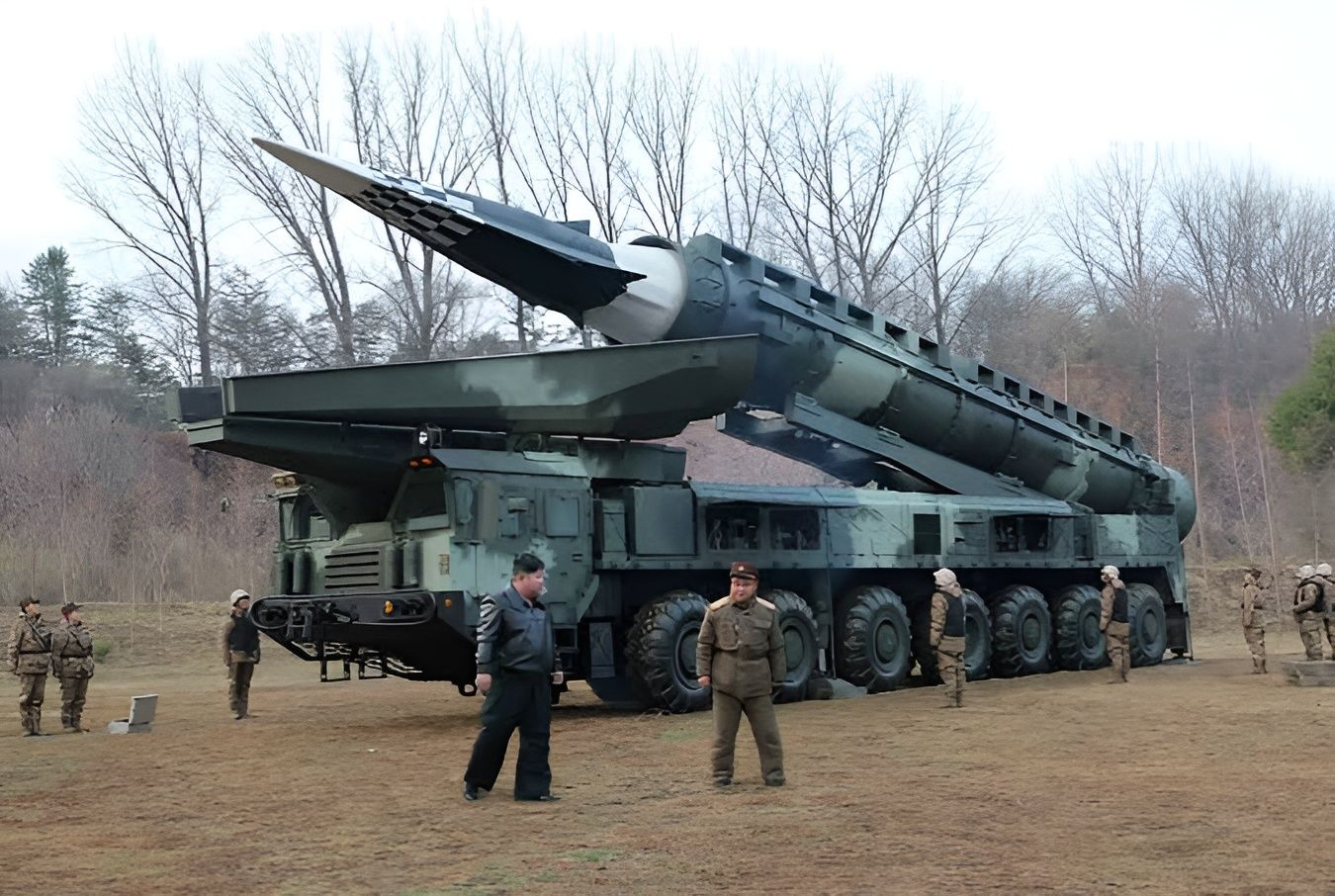
On 22 September 2026, North Korea said it had tested a new weapon system that it claimed utilised modern defence technology. State media images seem to indicate that North Korea tested an improved Hwasongpho-11Ma short-range ballistic missile capable of carrying a manoeuvrable hypersonic glide vehicle. South Korea’s military identified two missiles fired from the Wonsan area on 20 September, which it said travelled 450 kilometres and 600 kilometres before crashing into the sea.
North Korean reporting gave other performance numbers that could not be checked. A hypersonic glide vehicle is a rocket disseminated missile released from a booster that then glides course toward its target at very high speeds and altitude. Its capability to change course after launch presents a challenge to tracking and destroying it because of the ballistic predictability for defenders.




Latest test indicates progress by Pyongyang in enhancing the lethality and penetrability of its short-range missile arsenal. Such weapons, if employed, are likely meant to saturate regional missile-defence systems through rapid, highly manoeuvrable and possibly erratic flight trajectories. Still, outside analysts are sceptical of North Korea’s claims: briefly achieving hypersonic speed is one thing; sustained hypersonic manoeuvring-especially under realistic operational conditions- is another.
Additional launches will be necessary to determine the missile’s precision, guidance accuracy and ability to defeat existing missile defences. The missile test, however, inevitably heightens South Korea’s, Japan’s and the United States’ urgency to enhance regional tracking and interception capabilities.

