
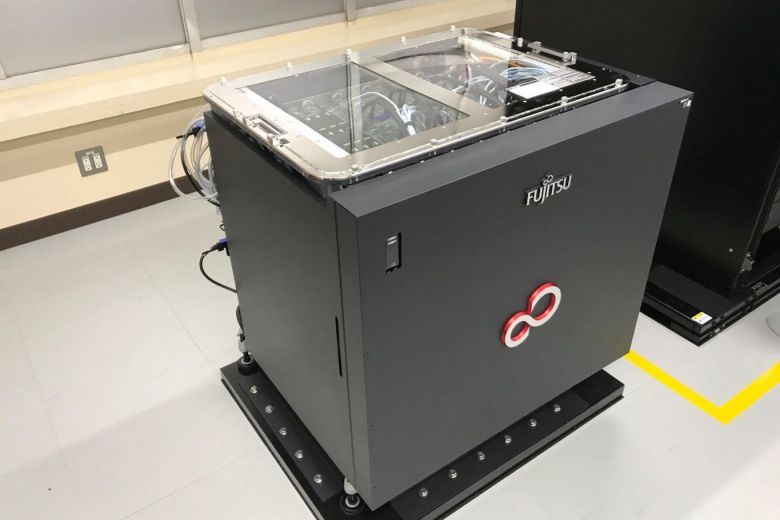
Fujitsu, a world leader in the field of supercomputing, has created a new high-performance system to simulate large-scale accidents in what is being billed as a significant step towards safer vehicles of the future.
The system can “develop very realistic models of the human body for the simulation of large-scale vehicle collisions”, Fujitsu said in a news release on Oct 23, 2017.




It has been deployed at the Japan Automobile Research Institute (JARI) that studies passenger and pedestrian safety.
Japan currently has the seventh and eighth-fastest supercomputers in the world, both of which were developed in part by Fujitsu. They include the K Computer – once the world’s fastest when it was rolled out in June 2011 – that is being used for climate and medical research.
Fujitsu is involved in a national project to build a new supercomputer, as the race against the United States and China to become the global hub for artificial intelligence (AI) research heats up.
The new AI Bridging Cloud Infrastructure (ABCI), which is expected in April next year, will be the fastest supercomputer in Japan, and the third fastest in the world.
It will rank behind China’s Sunway TaihuLight and Tianhe-2 (MilkyWay-2) systems, but ahead of Switzerland’s new Piz Daint system that took third place in the latest league table in June.
Meanwhile, Fujitsu’s latest high-performance computing system, while not technically a supercomputer, taps a liquid immersion cooling system by which servers are directly immersed in a non-conductive fluid.
This can reduce power consumption by about 40 percent, while users can do away with an air-conditioned environment. It emits extremely low noise and can function regardless of air quality issues such as humidity, salinity, and dust.
JARI conducts research in such areas as passenger and pedestrian safety in the event of a vehicle collision, through experiments to study how injuries occur. Results are then provided to car manufacturers.
The institute has said that computer simulations can provide more information than experiments using physical dummies, and expects Fujitsu’s new system to “contribute significantly to automobile development and development”.
Fujitsu intends to offer its liquid immersion cooling system worldwide.

