

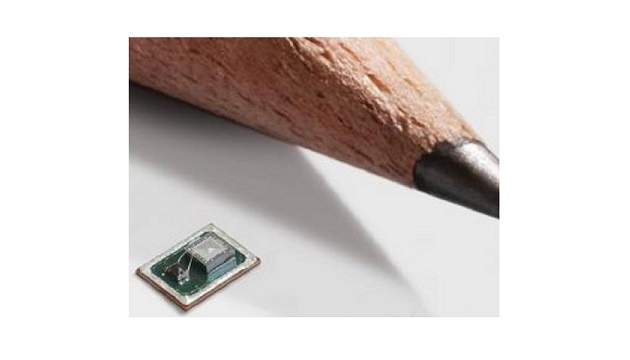
Battery-powered consumer electronics can have artificial intelligence hearing, according to a partnership between low-power MCU firm Ambiq Micro, mems microphone maker Vesper and sound recognition specialist Audio Analytic.
They are not offering wide vocabulary speech recognition, but recognition of individual sounds.



“Meeting steep power consumption demands remains the largest barrier to truly enabling AI on battery-powered edge devices,” said Ambiq, Vice President of marketing Aaron Grassian. “Audio Analytic’s unique sound recognition technology running on Ambiq Micro’s ultra-low power processors removes this barrier.”
Potential applications include the ability to detect and react to: smoke alarms, CO alarms and windows being broken, for use in product such as home cameras, motion sensors, wireless speakers, headphones, video doorbells and smart door locks.
Example potential applications:
- Stick-up battery-powered security camera running for two years on two lithium AA batteries.
- Smart lock running on four standard AA batteries for at least a year.
- wall-mounted motion detector running for at least two years on a CR123 battery.
- Five hour battery life for headphones with context-aware sound recognition that enables wearers, lost in their music, to stay in touch with the world around them.
“Our research shows that consumers are largely positive about artificial intelligence’s role in helping them,” according to Audio Analytic CEO and founder Chris Mitchell. “They also want flexibility and an easy route to installation, devices that require wires or even professional installation can present barriers to adoption, so if you can offer AI and still enable consumers to immediately benefit from their purchase then we see that as a win-win.
Companies like Blink, Ring, Nest and Yale are all selling battery powered devices, so we expect to see this trend increase. Adding AI capabilities like sound recognition enables these devices to evolve from smart to intelligent.”
Tests were conducted by Audio Analytic, using its Alexandria audio data set, on the system which uses its sound recognition algorithms running on Ambiq’s sub-threshold MCU (Apollo2 Blue) receiving audio through a Vesper’s piezoelectric mems microphone.
The MCU combines Ambiq’s Apollo2 MCU with 1Mbyte flash and 256kbyte RAM with a EM9304 Bluetooth Low Energy controller, that has a Bluetooth 5 ready radio.

