HomeElectronicsTest and MeasurementHumidity Measurement in Tantalum Capacitor Pyrolysis Furnaces

Humidity Measurement in Tantalum Capacitor Pyrolysis Furnaces

 Introduction

In tantalum capacitor manufacturing, there is a steam pyrolysis process where tantalum pellets are decomposed by steam. Humidity control in this process is important to maintain product quality and improve yield.


Stable humidity measurement at high temperatures of 200 to 400 °C is required. The ZR802G Zirconia High Temperature Humidity Analyzer is easy to maintain because of direct insertion in process without sampling system and utilizes a long-life sensor with fast response. It is widely used in humidity instrumentation applications and has been well received in the marketplace.

Expected Benefits

  • Maintains the quality of the tantalum capacitor manufacturing process
  • Ensures stable, continuous humidity measurement
  • Reduces operating costs

Process Overview

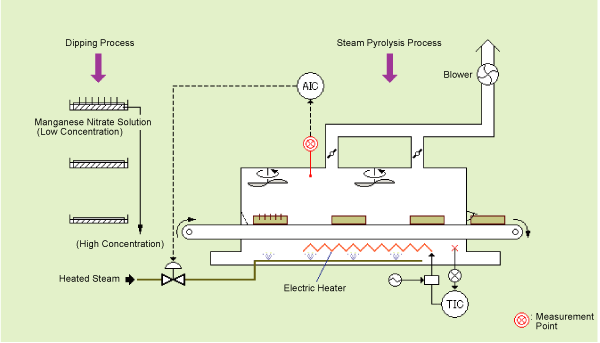
A tantalum pellet with an electrode plate applied is immersed in a manganese nitrate solution. This dipping process allows the manganese nitrate to penetrate the porous part of the pellet. After dipping, the pellet is forwarded to the pyrolysis process where the manganese nitrate is decomposed under high temperature and humidity conditions to form a manganese dioxide coating by the reaction Mn(NO3)2 -> MnO2 + 2NO2. These steps are repeated until the coating is sufficient. To improve the coating uniformity and yield, the humidity is controlled.
tantalum pellet

Solution DetailsProcess conditions

Process conditions

Measurement point: Inside the steam

pyrolysis furnace Temperature: 200 to 400 ℃

Pressure: 10 to 20 Pa

Humidity: 25 to 80 vol%H2O Dust: None

Measurement system

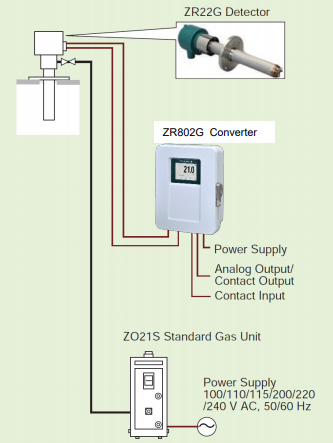
Detector: ZR22G-☐☐☐-S-☐-C-R-☐-E-A /SV Converter: ZR802G-☐-☐-N-N /□

Standard gas unit: ZO21S-☐ -E*A

Utilities

Rated voltage: 100 to 240 V AC Rated frequency: 50/60 Hz

Power consumption: 330 VA (Max. 800 VA)

Notes on Installation

As the sensor inside a pyrolysis furnace is hot, it can be easily damaged if cooler water drips onto it. The sensor should be installed with the probe head pointing downward.


ELE Times Bureau
ELE Times Bureauhttps://www.eletimes.ai/
ELE Times provides a comprehensive global coverage of Electronics, Technology and the Market. In addition to providing in depth articles, ELE Times attracts the industry’s largest, qualified and highly engaged audiences, who appreciate our timely, relevant content and popular formats. ELE Times helps you build awareness, drive traffic, communicate your offerings to right audience, generate leads and sell your products better.

Related News

Must Read

US Rapid-Tracks ‘Containerised Laser’ Weapons for Drones and Missiles

The United States finalized two Joint High Energy Laser...

Indigenous Sonars Reinforce New Naval Warships

India has deployed indigenous sonars on board two newly...

TigerShark Set to Implement F1 Engineering Techniques on Extended-Range Missions.

The British company MGI Engineering is developing TigerShark- an...

Japan Set to Demonstrate Helsing’s AI-Based HX-2 Strike Drone

Japan’s Ground Self-Defence Force will field test the HX-2...

Cobra 600 Drone Air Defence Goes Beyond Ground Launchers

Germany’s POLARIS Spaceplanes has flown the COBRA 600, an...

Indian Railways Plans to Offer EV Charging Infrastructure at Railway Stations

Indian Railways is planning to offer charging stations for...

JSW MG Motor India Set to Launch Electric SUV

JSW MG Motor India is all set to roll...

Omega Seiki Mobility Partners with Electra AI for Battery Health Intelligence

​Omega Seiki Mobility (OSM) has joined hands with ELECTRA...

Gulf Oil to Expand EV Charger Capacity with Rs 50 Crore Investment

​Gulf Oil is investing Rs 50 crore to scale...

Brandworks Technologies Receives ECMS Approval for Speakers & Microphones

Brandworks Technologies Pvt. Ltd., India's fastest-growing design-driven and R&D-led...