
Ford has announced its plan to open a new battery lab called ‘Ford Ion Park’ to develop and manufacture electric vehicle (EV) batteries, and test manufacturing approaches, taking a step toward producing battery cells for EVs internally.
Opening next year, the $185 million lab in Michigan, U.S., will develop, test and build lithium-ion and solid-state vehicle battery cells and arrays with a cross-functional team of 150 experts, the automobile giant said in a statement.




“Investing in more battery R&D ultimately will help us speed the process to deliver more, even better, lower-cost EVs for customers over time,” Hau Thai-Tang, Ford’s chief product platform and operations officer said.
The Ford Ion Park team will be led by Anand Sankaran, currently the company’s director of Electrified Systems Engineering. According to the carmaker, the team will ensure batteries are optimised for its diverse customers – from daily commuters to performance enthusiasts to commercial vehicle fleet operators.
The automotive company’s $100 million battery benchmarking and test laboratory in Michigan, opened last year, will support Ford Ion Park and help quickly test and identify the right battery cells and chemistries to power Ford’s growing EV line-up.
Unlike other American automobile firms like Tesla and General Motors that have invested in battery cell production at scale for their EVs, Ford’s 2,00,000 sq. ft. lab will include “pilot-scale” equipment for electrode, cell and array design and manufacturing and will use state-of-the-art technology to pilot new manufacturing techniques.
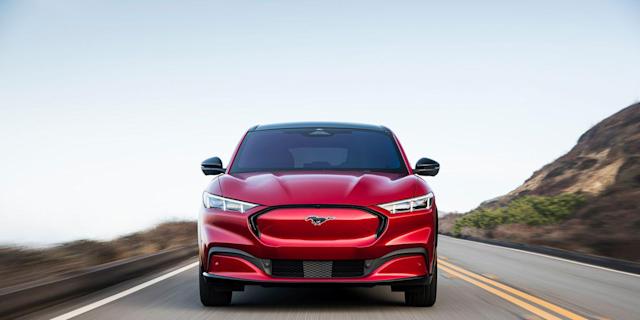
Ford at present sources its batteries from South Korea-based SK Innovation, and did not specify the timeline for in-house production of battery cells at scale for its growing EV line-up that includes Mustang Mach-E, the all-electric Ford Transit, which is set to go on sale late this year and the all-electric F-150 arriving by mid-2022.
“We are modernising Ford’s battery development and manufacturing capabilities so we can better control costs and production variables in-house and scale production around the world with speed and quality,” Thai-Tang said.
Earlier this year, Ford announced its commitment to invest at least $22 billion through 2025 to deliver connected, electrified vehicles, starting with EV versions of its most popular nameplates.

