

HomeIndustryAutomationUS Air Force Autonomous Drone Skyborg Completes First Flight

US Air Force Autonomous Drone Skyborg Completes First Flight

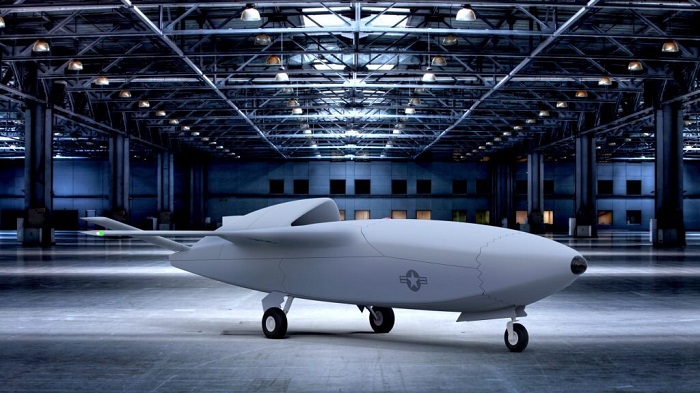
Last month, the United States Air Force successfully test flew an unnamed aerial vehicle (UAV) called Skyborg, operating on an autonomous hardware/software suite, for the very first time.

The military aims for this UAV to fuel collaboration among manned and unmanned aircraft. For its first test run, the Skyborg suite flew aboard a Kratos UTAP-22 Mako air vehicle in the first step of what’s known as the Autonomous Attritable Aircraft Experimentation Campaign.


By and large, the US Air Force Research Laboratory seeks a UAV solution that can carry out all of the functions of a manned aerial vehicle but also with the option of manned operation.

During its 130-minute test flight at Tyndall Air Force Base in Florida, the new aircraft exhibited fundamental behaviors needed to classify its system operation as safe. Indeed, Skyborg proved capable of staying within set “geo-fences,” responding to navigational commands and performing coordinated maneuvers.

Overall, the Fighters and Advanced Aircraft program expect this Skyborg aircraft to represent the “brain” of all future Skyborg technology. Ultimately, the organization hopes for this initial UAV to help build general confidence in unmanned aircraft, also known as the autonomy core system (ACS).

Going forward, the USAF Research Laboratory plans an upcoming series of tests involving multiple ACS-controlled unmanned aircraft. In fact, the Skyborg team intends full-mission autonomy with affordable and attributable UAVs, so that systems lost or damaged in combat can be feasibly replaced and reused.

The overarching mission of the Skyborg drone remains to develop an unmanned aircraft capable of making quick battle decisions at the rate of a computer while also ideally conserving the lives of human soldiers during combat.

ELE Times Research Desk
ELE Times Research Deskhttps://www.eletimes.ai
ELE Times provides extensive global coverage of Electronics, Technology and the Market. In addition to providing in-depth articles, ELE Times attracts the industry’s largest, qualified and highly engaged audiences, who appreciate our timely, relevant content and popular formats. ELE Times helps you build experience, drive traffic, communicate your contributions to the right audience, generate leads and market your products favourably.

Related News

Must Read

AI Training vs AI Inference: The War for Faster, Cheaper, and More Efficient AI Computing

Abhishek Pandey/Sub-Editor/ELE Times  Learn how next-generation chip architecture, new hardware,...

Microchip Achieves QML Class V Qualification for RT PolarFire FPGA for Space Applications

Microchip Technology has expanded its radiation-tolerant (RT) PolarFire FPGA...

Vishay Extends Safety-Certified MLCC Portfolio with New 305 VAC Capacitors

Vishay Intertechnology has expanded its VJ Safety Certified Capacitors...

Infineon Partners with Megmeet to Develop 800 VDC Power Solutions for AI Data Centres

Infineon Technologies is working with Shenzhen Megmeet Electrical Co.,...

STMicroelectronics Unveils STM32G5 Microcontrollers for AI Data Centres, Robotics and Real-Time Power Control

STMicroelectronics, a global semiconductor company, has introduced its new...

AutoEV Bharat 2026, Bengaluru: A Must-Visit Show for Automotive OEMs

From intelligent vehicles and automotive semiconductors to advanced batteries...

ASMPT Introduces SIPLACE V L to Expand SMT Placement Platform Capabilities

ASMPT SMT Solutions has expanded its SIPLACE V placement...