
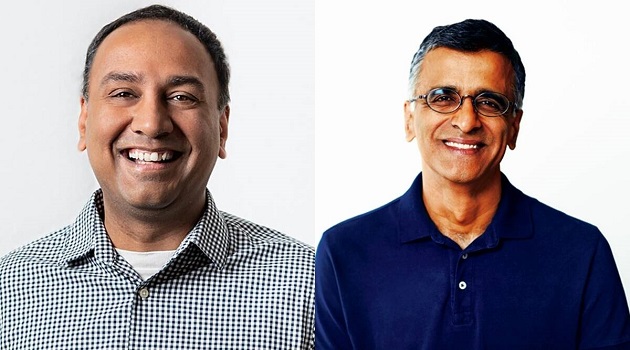
“At scale, an ad-supported product serves the company that shows you ads, it does not serve you.” With this thought, Sridhar Ramaswamy and Vivek Raghunathan, IIT alumni and former Google executives are ready to roll out Neeva, an ad-free, private search product, which, by the middle of this year, hopes to offer a customer-paid and customer-first alternative, at a time of growing concerns over the control wielded by tech megaliths.
“The ad model has been great for bringing search to everyone on the planet, but over time, there is more and more pressure to show more ads and not really what the user wants. Our thesis is that we can create a much better search product, focusing solely on what a customer needs,” says Ramaswamy, the CEO of Neeva, speaking on a video call from his California home. This is a domain the 54-year-old knows well, having been the senior vice-president of ads and commerce at Google, and also run its travel, shopping and search infrastructure teams.



Raghunathan studied at IIT Mumbai and was earlier vice-president of Monetisation at YouTube.
“So it’s actually a broad set of experiences. Similarly, Vivek was the first tech lead of what is now called the Google Assistant. So we’ve actually worked on search on both sides,” Ramaswamy says, a graduate from IIT Chennai. This is why they felt “confident enough” that they could build the technology relatively inexpensively, he adds.
With a 45-person team in the US, the plan is to roll out Neeva in “four-five months”, first in the home market of the US and then English-speaking regions like Western Europe, Australia and India. “Fortunately we have a great team of engineers, designers and product managers, and very good backers,” says Ramaswamy. Neeva has raised $37.5 million so far, with equal investments from Greylock, Sequoia Capital and Ramaswamy himself.
The product will be different from what people are used to, offering a single-window for search and queries into personal data on services like Dropbox and email accounts, Ramaswamy says. “We have to rethink the core technology. And at some level, things like how you crawl the web, how you index the basics are similar,” he says. Like Google, Neeva will also use AI and machine learning to create the secret sauce — rankings for searches.
On apprehensions that may arise regarding personal data, Ramaswamy says, “We guarantee that the product and company are designed so that personal data is indexed to serve your results, and for nothing else… We are creating a company that, from the beginning, is customer first and the customer only. We are very adamant about making sure that this is the one and only revenue source.”
A blog on Neeva also reiterates its commitment to be ad-free, guarantees that “your data will never be sold in any form whatsoever”, and promises that search history will be deleted by default after 90 days. (Google’s default is 18 months.)

