
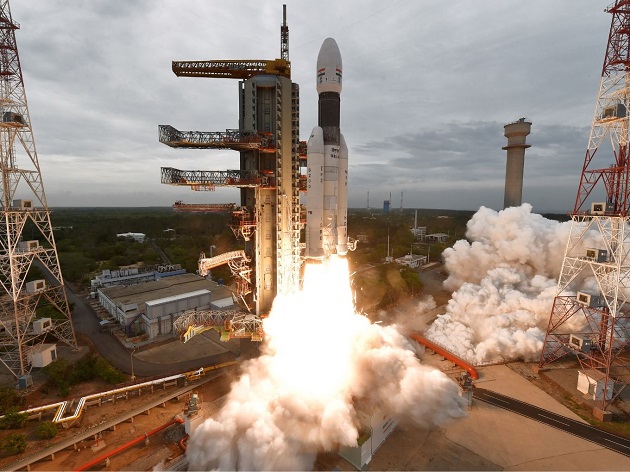
Even with the nation launching about 5-7 satellites per year in recent times, it still lags behind in the space race when compared to the US, China and Russia that launched 19, 25 and 34 satellites respectively in 2019, said the Economic Survey 2020-21.
In 2019, the global space economy was pegged at $366 billion, as per the Satellite Industry Association Report (2020) with the commercial satellite industry accounting for nearly 75 per cent of the business.




PwC estimates that the Indian space economy is valued at $7 billion, which is around 2 per cent of the global space economy, the Survey said.
India spent about $1.8 billion on space programmes in 2019-20, the Survey said.
“As per industry estimates, there are more than 40 start-ups working in India with funding, teams and structure on space and satellite projects complementing the efforts of the government. This number is likely to increase in coming years with technology to play a big role,” the Survey added.
The survey pointed out that the Centre had opened up the space sector in June 2020 to enable the participation of the Indian private sector in the entire gamut of space activities. This was done “with the long term vision of making the country self-reliant and technologically advanced”, it said.
Opening up Space Assets
The Survey noted that the Indian space ecosystem was undergoing several policy reforms to “engage private players and attract innovation and investment.”
In December 2020, Prime Minister Narendra Modi had asserted that the decision to open up India’s space sector had heralded a new age of public-private partnership and expressed confidence that Indian talent will achieve worldwide fame in this field in the same way it did in the IT sector.
As part of this process, IN-SPACe was created under the Department of Space as a separate vertical to take independent decisions with respect to permitting and regulating space activities of the private sector.
With IN-SPACe being established, the reforms will provide a level-playing field for private companies and start-ups, the PM said on Dec 14 while interacting with key industries, start-ups and academia from the space sector via video conferencing to encourage their participation in space activities.
He had said private investment in the sector will lead to the creation of hi-tech jobs, and that the endeavour was not only to ensure that India became a competitive space market but also to ensure that the benefits of the space programme reached the poorest.
The Survey said that India has provided a “level-playing field to private companies in satellites, launches and space-based services.”
“This number is likely to increase in coming years with technology to play a big role. The recent reforms announced by Government of India for unlocking the space potential of India stresses the need to enable the private industry to be the co-traveller in India’s space journey,” it said.
“Further, ISRO would be sharing its infrastructure, transfer technology know-how for production and spin-off. These measures would help India become a manufacturing hub of space assets,” the Survey said.

