
HomeNewsIndia NewsMouser Now Offering Maxim Integrated’s MAX2250xE Transceivers

Mouser Now Offering Maxim Integrated’s MAX2250xE Transceivers

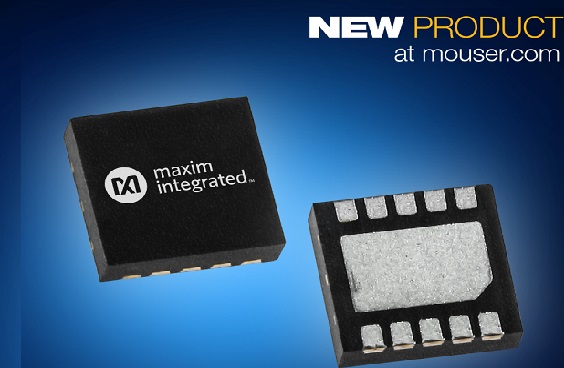
Mouser Electronics, Inc., is now stocking the MAX22500E and MAX22501E RS-485/RS-422 transceivers from Maxim Integrated. Offering up to twice the data rates over longer distances compared to similar devices, the MAX22500E and MAX22501E transceivers deliver increased accuracy for demanding motion control systems, encoder interfaces, and other industrial controls.

The Maxim MAX22500E and MAX22501E half-duplex transceivers, available from Mouser Electronics, provide flexible performance with ±15 V HBM electrostatic discharge (ESD) protection to suit a variety of applications. The devices offer a large receiver hysteresis of 250 mV, which provides excellent electrical fast transient (EFT) robustness. The transceivers feature integrated hot-swap protection and a fail-safe receiver to ensure a logic-high on the receiver output when input signals are shorted or open for longer than 10 μs.


The transceivers are optimized for 100 Mbps high-speed communication over 50 m (or 50 Mbps over 100 m) in an operating temperature range of minus 40 to 125 degrees Celsius. Both transceivers feature a supply range of 3V to 5.5V as well as high receiver sensitivity and wide receiver bandwidth. Additionally, the MAX22500E transceiver includes a low-voltage logic supply down to 1.6V.

The MAX22500E transceiver features integrated pre-emphasis circuitry to allow engineers to extend cable length by up to 50 percent and increase the data rate of reliable communication. The pre-emphasis feature also enables increased encoder resolution and reduced latency. In addition, by improving the signal integrity and robustness, system designers can achieve the same level of performance with lower-cost cables, thereby reducing overall system costs.

The transceivers are supported by the fully assembled and tested Maxim MAX22500E and MAX22501E evaluation kits, which can be used for standalone evaluation or connected to an RS-485/RS-422 network for in-system evaluation.

For more information, visit mouser.com.

ELE Times Research Desk
ELE Times Research Deskhttps://www.eletimes.ai
ELE Times provides a comprehensive global coverage of Electronics, Technology and the Market. In addition to providing in depth articles, ELE Times attracts the industry’s largest, qualified and highly engaged audiences, who appreciate our timely, relevant content and popular formats. ELE Times helps you build awareness, drive traffic, communicate your offerings to right audience, generate leads and sell your products better.

Related News

Must Read

Upgrading Factory Power Safety with Silicon Carbide Semiconductors from Infineon and Siemens

Semiconductor circuit breakers are fast-acting, semiconductor-based electronic devices that...

Wide-Bandgap (WBG) Power Electronics: Transforming the Future of High-Efficiency Energy Systems

The global power electronics industry is undergoing a major...

What is the Future of Embedded Systems?

In the next five years, the embedded landscape will...

India Targets 50% Semiconductor Self-Sufficiency by FY35

In a major push toward technological sovereignty, India is...

Silicon Photonics: Breaking the Bandwidth Barrier in AI Computing

Introduction: When Data Movement Becomes the Bottleneck Artificial intelligence now...

PLC, PAC, and Industrial PC Architectures for Automation

Navigating the New Era of Industrial Control Systems Introduction Industrial automation...

Optics and Silicon Photonics: The Next Data Highway Inside Chips

For more than five decades, the semiconductor industry has...

Neuromorphic Engineering & Edge AI: The Future of Intelligent Computing

Artificial Intelligence is rapidly transforming industries, but traditional AI...

Ensuring Reliable AI in Safety-Critical Systems: Challenges and Engineering Solutions

Introduction: When AI Decisions Carry Real-World Consequences In safety-critical environments,...

Nanometer Nanotubes for Future Electronics

1nm molybdenum disulfide tubes expand nanotube science beyond carbon Researchers...

