
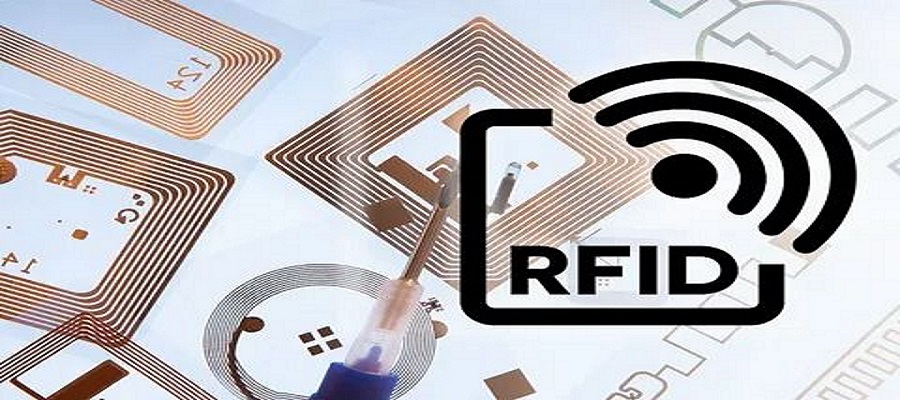
Radio-frequency identification (RFID) chips represent a silent revolution in technology, revolutionizing how we interact with the world in the age of digital innovation. Let’s examine RFID chips in more detail, including their definition, types, functions, applications, technology, and many benefits they offer to different businesses.
Definition of RFID Chip:




Using electromagnetic fields, RFID technology uses tags attached to items to identify and track them automatically. RFID stands for Radio-Frequency Identification. The RFID chip, a tiny electronic device that stores and transmits data wirelessly via radio waves, is the brains behind this technology. RFID chips essentially function as digital fingerprints, making it possible to track and identify objects without direct line-of-sight scanning.
Types of RFID Chip:
There are several varieties of RFID chips, each made to meet a particular purpose. Active RFID and Passive RFID are the two main kinds.
- Active RFID Chips: Active RFID chips can broadcast signals over greater distances when they are powered by a battery, giving them an expanded range. Real-time location systems (RTLS), automobiles, and high-value asset tracking are all frequent uses for these devices.
- Passive RFID Chips: Passive RFID chips depend on the energy from the RFID reader’s signal to send data because they lack an internal power supply. They are frequently utilized in retail, access control, and inventory management. They are also reasonably priced and appropriate for short-range applications.
How RFID Chips Work:
RFID chips work on a straightforward but efficient principle. The RFID chip’s antenna collects radio waves emitted by an RFID reader and processes the signal to create a little electric current that activates the chip. The reader receives the chip’s unique identifier or data after that, enabling prompt and precise identification. Because this procedure takes place in a few milliseconds, RFID technology is incredibly effective.
Applications of RFID Chips:
RFID technology is highly versatile and has revolutionized operations and enhanced efficiency in a variety of sectors.
- Retail: RFID chips improve the whole shopping experience, decrease stockouts, and expedite inventory management.
- Logistics and Supply Chain: RFID makes it possible to trace shipments in real time, which minimizes errors, minimizes losses, and improves supply chain efficiency.
- Healthcare: In healthcare settings, RFID chips improve patient safety, track medical equipment, and simplify inventory management.
- Access Control: Access cards and key fobs for safe access to buildings and restricted areas frequently employ RFID technology.
- Automotive: RFID chips are used in toll collecting, keyless access, and vehicle tracking.
RFID Chip Technology:
The combination of radio frequency and data storage capabilities is the basis of RFID chip technology. The chips’ read ranges and capacities vary depending on whether they are passive, semi-passive, or active. The development of incredibly tiny, robust RFID chips appropriate for a wide range of applications is the result of miniaturization advancements.
RFID Chip Advantages:
The adoption of RFID technology brings forth numerous advantages:
- Efficiency: Obtaining data quickly and automatically increases operational effectiveness.
- Accuracy: Lower manual mistake rates improve the tracking and identification data accuracy.
- Cost-Effective: RFID reduces labour costs and operating expenses by streamlining procedures.
- Real-Time Tracking: Provides real-time visibility into assets, inventory, and personnel.
- Versatility: Applicable to a large number of use cases and industries.
In conclusion, RFID chips, which provide a smooth and effective way of tracking and identifying, are a revolutionary force in the digital world. The advantages and applications of RFID chips are anticipated to increase as technology develops, further establishing their status as a fundamental component of the modern era.

