
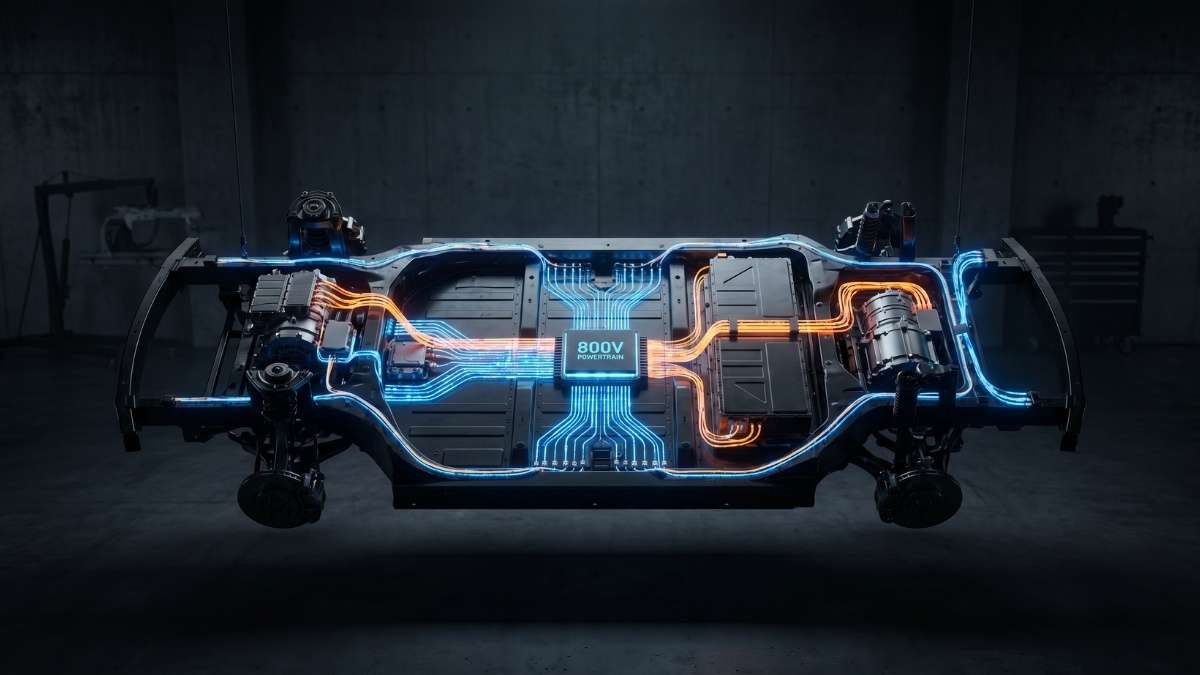
Silicon carbide (SiC) power semiconductors are increasingly being adopted in high-voltage electric vehicle (EV) powertrains as manufacturers are achieving higher efficiency, faster charging, and improved power density in next-generation EV powertrain designs. And the most recent practical demonstration related to this comes from Japanese semiconductor company ROHM Semiconductor announced that its SiC MOSFETs are being used in BMW’s sixth-generation electric powertrain, named the Neue Klasse.
The electric powertrain of BMW’s Gen6 is based on an 800V architecture to enable faster charging and more efficient high power energy transfer while supporting higher-power charging and powertrain performance of the next-generation powertrain. BMW has designed an electric motor, a new inverter and other powertrain components optimised for the higher-voltage system. The inverter uses SiC semiconductors to improve power-conversion efficiency and is integrated into electric motor housing.




Greater switching efficiency can also allow engineers to increase power density and reduce the size of supporting components in power-conversion systems. Reducing losses during power conversion lowers heat generation, which can ease thermal- management requirements and contribute to improved overall powertrain efficiency.
The use of ROHM’s SiC MOSFETs in BMW’s Gen6 powertrain highlights the growing use of wide-bandgap semiconductors in future EV power electronics because of its switching performance, voltage capability and power-conversion efficiency. As manufacturers adopt higher-voltage platforms, SiC devices are likely to be critical technology for enhancing power-conversion efficiency, thermal management and charging capacity.

