
OIST research suggests MoS2–organic heterojunctions can serve as hybrid solar cells
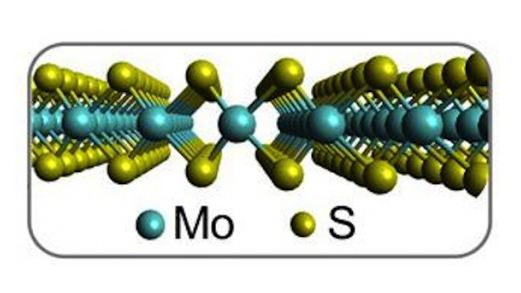
In a research work published in ACS Nano, by Okinawa Institute of Science and Technology Graduate University (OIST), Japan, new ways to improve optoelectronic devices by adding a 2D layer of n-type MoS2 to an organic semiconductor has been suggested.



The theory behind using both materials is that the interaction between the MoS2 layer and the organic semiconductor (a polymer: fullerene blend with similar absorption strengths as MoS2) should lead to efficient charge transfer.
The thinness of 2D materials is a limiting factor in their efficiency as light-energy conversion devices because a certain optical thickness is needed in order to absorb photons, rather than allowing them to pass through. To overcome this, the researchers added an array of silver nanoparticles, or a plasmonic met surface, to the organic semiconductor-MoS2 hybrid to focus and localise the light in the device.
The addition of the metasurface increases the optical thickness of the material while capitalising on the unique properties of the ultra-thin active layer, which ultimately increases the total absorption.
The research was carried out by Christopher Petoukhoff, a Rutgers University graduate student working in the Femtosecond Spectroscopy Unit of OIST under the supervision of Keshav Dani. He demonstrated for the first time that charge transfer between these two layers occurs at an ultra-fast timescale, on the order of less than 100 femtoseconds, or one tenth of one millionth of one millionth of a second.
The team thinks that MoS2–organic heterojunctions can serve as hybrid solar cells, and their efficiencies can be improved using plasmonic metasurfaces.
While this research is still in its infancy, it has important implications for the future, according to the group. Conventional optoelectronic devices are expensive to manufacture and are often made from scarce or toxic elements, such as indium or arsenic. Organic semiconductors have low manufacturing costs, and are made of earth-abundant and non-toxic elements.

