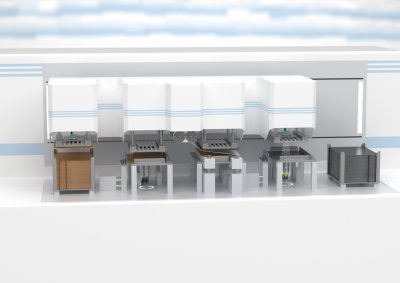
Powerful batteries for electromobility applications are manufactured in highly automated processes. Numerous sensors using various measurement procedures ensure efficient control of machines and plants. Pepperl+Fuchs has decades of experience in the automotive industry and electrical engineering, so it can offer all relevant measuring instruments for battery production from a single source.
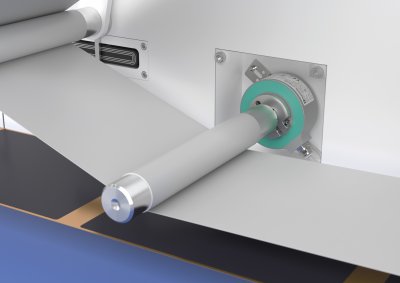
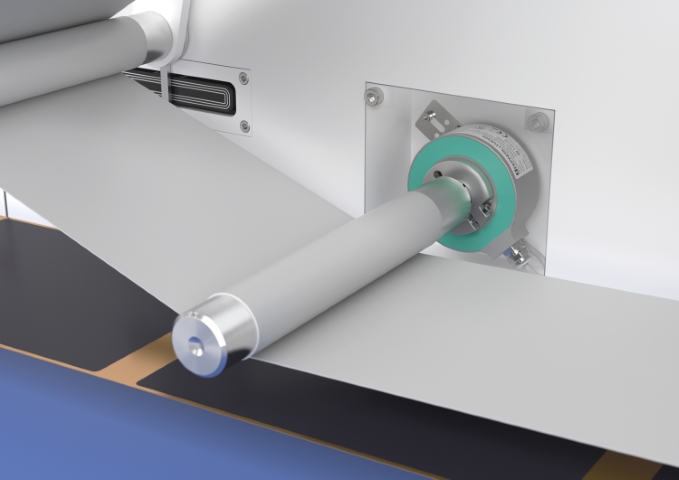
Rotary Encoder ENI190
Coated foils are the most important source material for lithium-ion batteries. They are delivered in large rolls from which they are processed during production. The unwinding speed of the rollers is measured using high-precision rotary encoders. The winding distance and material stock can be calculated using the speed. The speed value is also used to control the material supply and allows the correct web tension to be set. The new, extra-rugged ENI90 rotary encoder series is ideally suited for this task.




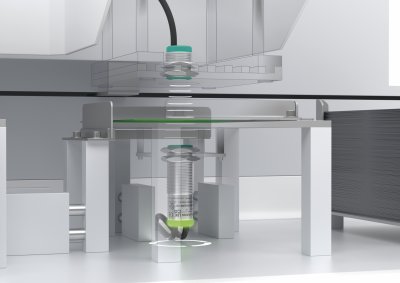
Ultrasonic Double Sheet Sensor M18
In the next step, pieces of foil roll that are suitable for the battery to be produced are punched out and assembled into battery cells. The punched material feed is monitored using ultrasonic double sheet sensors, such as those from the UDC-18GS series. These sensors are equipped with two ultrasonic transducers and detect if one, two, or even zero sheets are in the sensing range. If the sheets have been incorrectly double-stacked, the process is stopped in time. This prevents the battery capacity from being reduced by having two layers with the same polarity next to each other. Using an ultrasonic solution double sheet detection means the process is not affected by ambient conditions or the optical properties of the material; although the films are often glossy, they are still reliably detected.
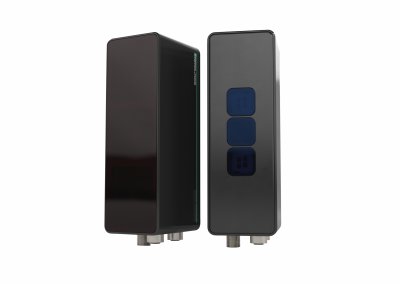
SmartRunner Explorer 3-D
Bonding the foil layers together creates cells, which are then joined together to form the finished batteries. In this step, it is important that all the required cells are actually available and in the right position in the specified grid. To verify this, a SmartRunner Explorer 3-D sensor creates a precise 3-D point cloud image so that the actual situation can be matched with the required positioning. The process step to connecting the cells is only initiated when everything is in the correct position.
Pepperl+Fuchs sensors have been part of the standard equipment in the automotive industry for decades. This is also true for factory automation in the field of electrical engineering: In both areas, customers benefit from the comprehensive expertise of the Mannheim-based company. A broad portfolio of proven standard devices is available for high-performance electric-vehicle-battery production. Pepperl+Fuchs also offers custom automation solutions for specific applications.