

STMicroelectronics has announced a unified microcontroller platform that brings its STM32 product portfolio together for industrial, automotive and robotics applications. The new platform aims to help developers reuse hardware designs, software and development tools across different industries, making it easier and faster to develop advanced electronic systems.
As part of this strategy, STMicroelectronics has introduced the new STM32A family to support automotive and safety-critical applications. Building on more than 20 years of STM32 development, the unified platform will allow developers to reuse hardware designs, software and development tools across different industries. This will help reduce development time and bring new embedded systems to market faster. The platform is designed to support applications such as physical AI and meet industry requirements for safety, security, product certification and long-term availability.


“Embedded innovation should not require developers to start again with every new product. With the unified STM32 platform, we are creating a foundation they can trust across markets and generations. The industry needs less fragmentation and a stronger focus on helping MCU technologies converge around a common foundation, while maximizing software reuse. This is how we intend to make STM32 the reference MCU platform across industries,” said Remi El-Ouazzane, President, Microcontrollers, Digital ICs and RF Products Group, STMicroelectronics.
One platform for converging technology needs
As intelligence moves to the edge, industrial and automotive systems increasingly share requirements for real-time control, secure operation, functional safety, connectivity and AI processing. The unified STM32 platform gives development teams a consistent architecture and software foundation, enabling them to reuse proven assets while selecting products tailored to the performance, qualification, and lifecycle requirements of each application.
- Continuity across the portfolio: Arm Cortex-M cores and shared architectural principles give developers a familiar path between STM32 MCU families, making it easier to carry proven software and IP into new designs.
- A common development ecosystem: STM32Cube, the world largest MCU software ecosystem, and the broader Arm ecosystem provide a consistent development environment backed by software resources, technical support, and the ST developer community and help customers retain established workflows.
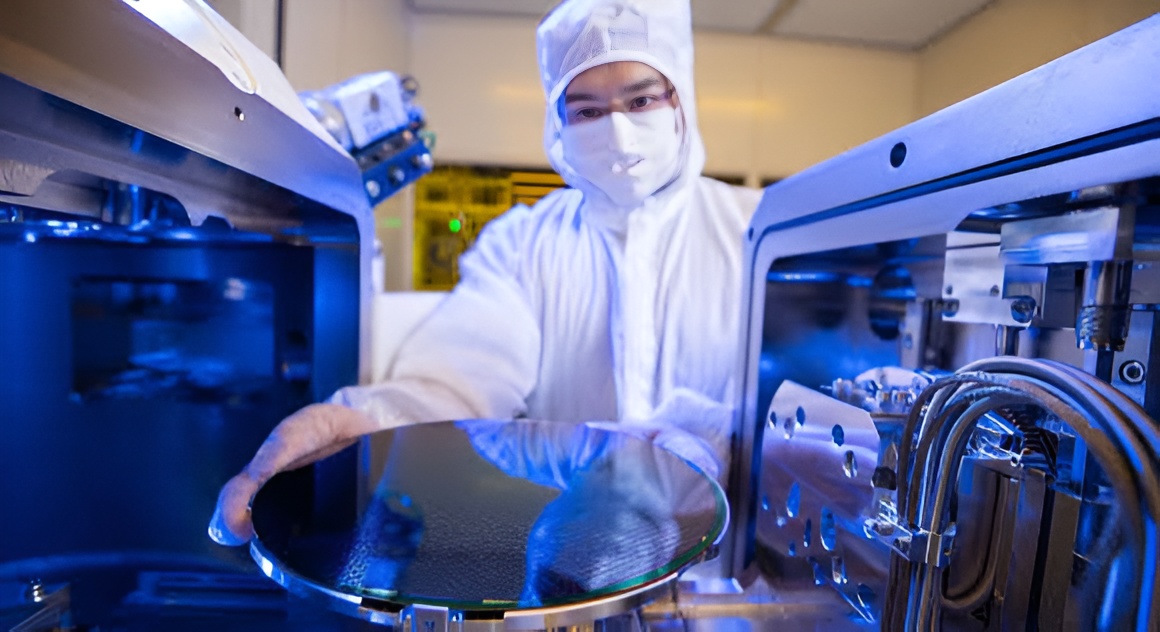
- Shared process technologies: ST’s 40nm Flash technology and 18nm FD-SOI technology with embedded phase-change memory, augmented by TSMC eNVM technologies, provide a scalable manufacturing foundation for future STM32 products.
Arm, ST’s longstanding partner, shares this vision of a unified microcontroller platform. ST is a lead partner in shaping the future of the Arm Cortex-M portfolio, the architecture of choice for more than 100 billion devices already, and in building the high-performance MCU foundation required for physical AI. This collaboration is helping developers reuse more code across applications, from cars and robots to automated industrial systems.
“The next major frontier for computing is bringing intelligence into the machines that move, manufacture and operate in the physical world,” said Drew Henry, Executive Vice President, Physical AI, Arm. “Building on more than two decades of collaboration, Arm and STMicroelectronics are advancing Cortex-M together to meet the demands of intelligence at the edge, where the physical world is sensed and controlled, helping unlock the next generation of physical AI systems.”
STM32A extends the platform into high-safety and automotive markets
The new STM32A family brings the STM32 platform into high-safety and automotive systems. It enables customers to reuse software while meeting the qualification and performance requirements of each application. The first three STM32A microcontrollers are sampling to customers, with broader availability planned in 2027:
- STM32A4 targets entry-level automotive local control nodes and safety systems.
- STM32A5 addresses mid-range safety-critical applications in industrial automation, robotics, and energy systems, as well as automotive applications.
- STM32A9 addresses safety-critical multi-domain control where real-time control, low latency, Ethernet, and deterministic communication become essential.

