

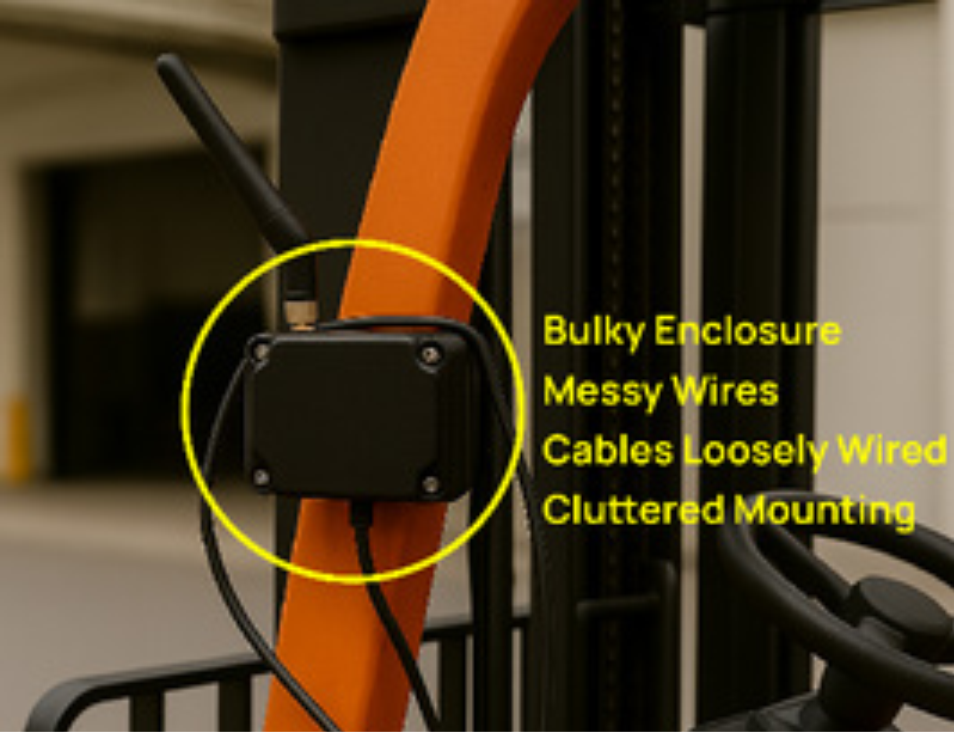
Courtesy: Infineon
Connected MCUs are gaining popularity rapidly.



If you’ve spent any time building or supporting connected products over the last decade, you’ve seen the pattern repeat itself: a product team realises they need wireless, so they bolt on a Wi-Fi module, wire up SDIO or SPI, route antennas where there’s some available space, and duct-tape the firmware stack into place right before release.
It works…until it doesn’t. And the truth is, most of us knew it was going to be painful the moment that architecture was chosen.
Whether it’s a forklift, a vitals monitoring device, a handheld scanner, or an HVAC controller, the problems are surprisingly universal. And they all stem from the same root issue.
Wireless was treated like an accessory instead of a part of the system.
We’re finally at a turning point. Connected MCUs, especially with integrated Wi-Fi 6 and 6E, change the entire equation.
Let me walk you through why this shift is happening and what it solves.
The pain: Bolt-on wireless was never as simple as it looked
Customers usually come with the same set of problems:
- Integration complexity snowballs quickly
That “easy” SDIO Wi-Fi module seems fine at first, until you realise:
- Your host processor can’t keep up under load
- The driver needs specific kernel patches
- The layout constraints choke your antenna performance
- You’re juggling two separate firmware roadmaps
By the end, half the schedule is spent debugging issues no one originally accounted for.
- RF performance suffers because it has to fit the enclosure, not the system
Bolt-on designs force antennas into whatever space is left. That might be inside a forklift mast, behind a metal enclosure, or buried under plastic in a medical device.
You can predict the RF problems before they happen, and yet they still happen.
- Certifications slow everything down
When wireless is a separate module, you:
- Test the radio module for compliance
- Test your host MCU for EMI
- You have to do integration testing when you put them together
- And then redo it every time you want to change the antenna
Teams underestimate this every single time.
- The BOM cost keeps going higher
One board for the host MCU, one for wireless, external memory, custom harnesses, enclosures… By the time the full system is built, the wireless subsystems cost more than the product owner ever expected.
And in long-lifecycle industries, like material handling, medical, and commercial HVAC, that pain compounds across entire product lines.
The turning point: Wi-Fi 6 and 6E connected MCUs
The reason this shift is happening is simple:
We finally have connected MCUs that are powerful enough, low-power enough, and secure enough to replace external wireless subsystems entirely.
This means the wireless subsystem is no longer bolted on. It’s a self-contained compute & connectivity module that slides directly into your main system design. For the first time, the architecture reflects how engineers actually want to build products:
A single module that handles wireless, networking, security, protocol stacks, and memory, rather than scattering those components across multiple boards.
Simplifying the integration, RF performance, and certification challenges that discrete systems have.

