
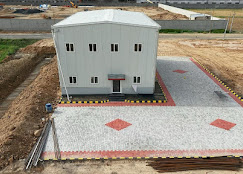
In a move that cements India’s transition from a consumer to a producer in the global silicon race, Prime Minister Narendra Modi officially inaugurated the Kaynes Semicon OSAT (Outsourced Semiconductor Assembly and Test) facility on March 31, 2026.
The ₹3,300 crore plant, located in the industrial heart of Sanand, marks the second major semiconductor unit to go operational in Gujarat within 900 days, following the earlier launch of the Micron facility. This rapid execution underscores the momentum of the India Semiconductor Mission (ISM) 2.0, as the country aggressively pursues a slice of the $110 billion global chip market.




A Global Export Hub
While domestic self-reliance is a key driver, the Kaynes plant is looking outward. During the ceremony, the first batch of Intelligent Power Modules (IPMs), sophisticated components that integrate 17 individual chips, was presented to Stephen Chang, CEO of Alpha & Omega Semiconductor, a California-based anchor customer.
“Today, a new bridge has been formed between Sanand and Silicon Valley,” the Prime Minister stated during his address. “The modules made here will reach American companies and, from there, power the world.”
Key Specifications of the Sanand Plant
The facility is designed for high-volume, high-precision manufacturing, focusing on sectors that are currently seeing explosive growth:
| Feature | Details |
| Investment | ₹3,300 Crore |
| Production Capacity | Approx. 6.3 Million chips per day |
| Primary Products | Intelligent Power Modules (IPMs), Multi-chip modules |
| Target Industries | Electric Vehicles (EVs), Industrial Automation, 5G Infrastructure |
| Timeline | From Cabinet approval to production in 14 months |
The “Techade” Vision
The inauguration is more than just a corporate milestone; it is a strategic piece of the “India Techade” vision. Unlike traditional manufacturing, the Kaynes plant focuses on the back-end of the semiconductor value chain, like assembly, testing, and packaging, which has historically been a bottleneck for Indian electronics.
Union IT Minister Ashwini Vaishnaw highlighted the speed of the project, noting that the plant moved from foundation-laying to commercial production in record time. He also pointed to the growing “Sanand-Dholera” cluster, which is being modelled after global hubs like Hsinchu in Taiwan and Gyeonggi in South Korea.
Building the Talent Pipeline
To sustain this growth, Kaynes Semicon announced a memorandum of understanding with SVNIT Surat to develop a specialised workforce. This partnership aims to bridge the gap between academic theory and the rigorous standards of semiconductor cleanrooms, ensuring a steady stream of engineers for the 10 major chip projects currently approved across six Indian states.
As the ribbon was cut in Sanand, the message to the global tech community was clear: India is no longer just waiting for the future of hardware; it is assembling it.
The facility has already reported early execution success, having shipped approximately 900 multi-chip modules (IPM5) just days before the formal inauguration, signalling high operational readiness for its export commitments.
By: Shreya Bansal, Sub-Editor

