

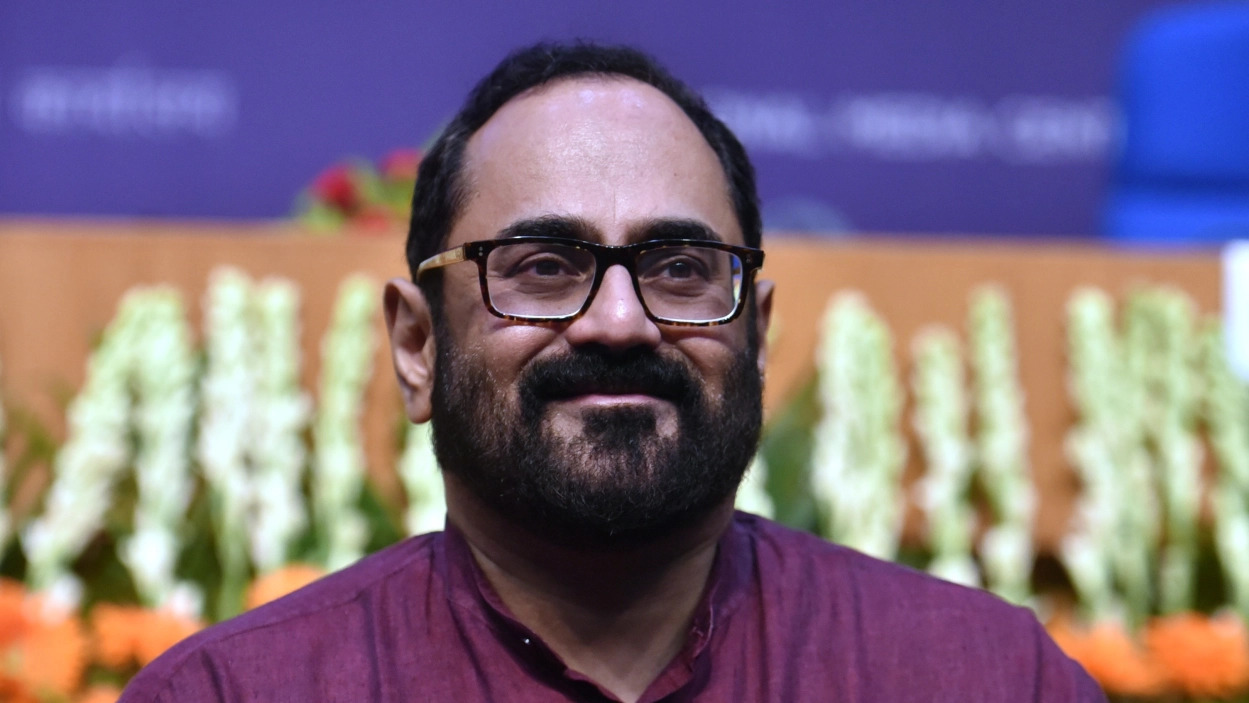
India’s Minister of State for Electronics and Information Technology, Rajeev Chandrasekhar, announced that the country will implement regulations to safeguard its citizens from potential harm caused by artificial intelligence (AI). Chandrasekhar emGoverephasized that the approach to AI regulation would be similar to the regulation of emerging technologies such as Web3, ensuring their responsible use and preventing harm to digital citizens. He said, “Our approach towards AI regulation is fairly simple. We will regulate AI as we will regulate Web3 or any emerging technologies to ensure that they do not harm digital citizens”.
Chandrasekhar made these statements during a discussion on Prime Minister Narendra Modi’s nine years in office. He revealed that the Digital Personal Data Protection Bill, 2022, would soon be introduced in Parliament, and consultations on the proposed Digital India Act, 2023, would commence this month. The focus of these regulations is to protect users from any harm arising from the use of AI and other technologies. Chandrasekhar stressed that platforms causing user harm would not be allowed to operate in India.



These remarks coincide with a call for regulation by Sam Altman, the CEO of OpenAI, the company responsible for developing the popular chatbot program, ChatGPT. Altman expressed support for regulating major AI companies, including his own, to ensure responsible practices. However, he argued that smaller firms and startups should be exempt from stringent regulations to avoid stifling innovation. Altman also stated that the current state of AI development is task-oriented and not sophisticated enough to pose an immediate threat to job displacement.
Chandrasekhar echoed Altman’s sentiment regarding job replacement, assuring that AI’s impact on job markets would be limited in the near future. He explained that AI’s current application is primarily focused on specific tasks, lacking the reasoning and logical capabilities necessary for more complex job roles. While he acknowledged that jobs involving low levels of intelligence and repetitive tasks could be replaced by AI, he anticipated that it would take around 5-10 years for AI to reach a level of sophistication where it could effectively replace a broader range of jobs.
The minister highlighted the imminent introduction of the Digital Personal Data Protection Bill and the upcoming consultations on the Digital India Act as significant steps in India’s journey towards digitization. These initiatives underscore the government’s commitment to protecting its citizens’ personal data and ensuring the responsible and beneficial use of emerging technologies like AI.
In summary, India is taking proactive measures to regulate AI and emerging technologies to safeguard its citizens from harm. By focusing on user protection and preventing harm caused by technology, the government aims to strike a balance between promoting innovation and ensuring responsible practices.

