

For decades, the job of a camera or sensor was quite simple. A camera captured an image and a sensor measured distance, sending both pieces of information to a computer, which then studied it. Machines could record the information but didn’t truly understand it.
And this is about to change. Today, sensors are much more intelligent: Sensors have already begun to evolve from merely collecting data into an important part of the machinery’s intelligence. AI, edge AI, 3D sensing, computer vision, and Time-of-Flight (ToF) give machines a complete understanding of their environment, allowing them to react almost immediately. This is leading us into a new age of machines’ understanding of what we see. Machines are slowly learning to ‘see’, not just capture an image of what we see.



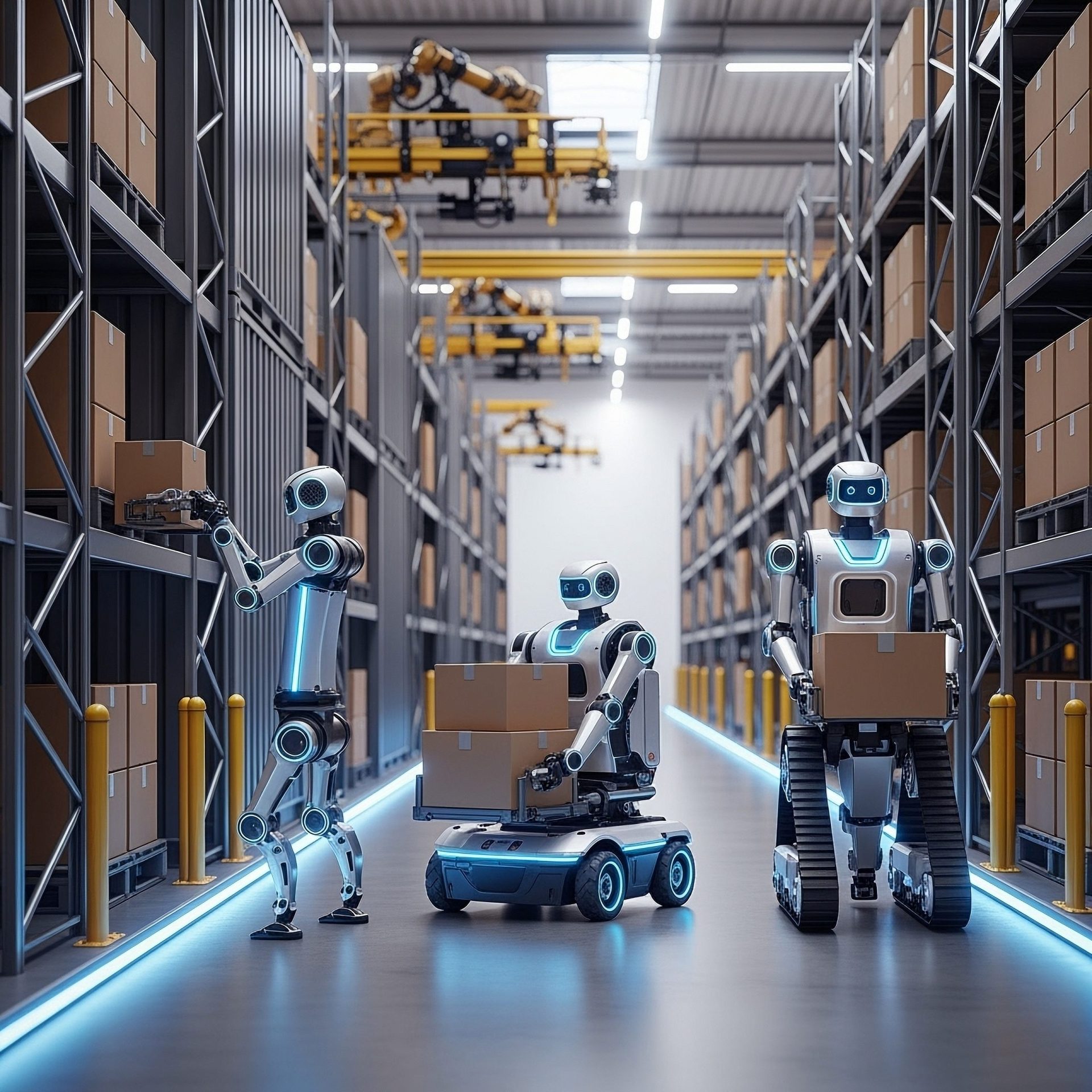
Think about a robot rolling around a busy warehouse, but instead of sticking to a set plan, it’s aware of an object in its way, how far off it is, and is able to change its direction. Imagine an intelligent office that knows someone is coming through the room without building a very detailed image of their face. Now imagine a factory environment where a machine has sensors and cameras that can see what’s in its environment and is capable of making a split decision to act. Smart sensing- now that’s a game-changing feature!

“Moving from AI in the cloud to AI in the physical world. A whole new category of smart sensors and other devices enables machines to notice, understand, and communicate with the physical world around them.” – Alexandre Balmefrezol, EVP, Imaging Sub-group, STMicroelectronics.
The Sensor Will Get a Brain Update
Old cameras are designed to take pictures of humans. Capture colourful images, improve image quality, and produce clearer videos. However, new cameras are designed for machines and AI, rather than for human beings.
STMicroelectronics’ camera sensors are geared more towards computer vision and AI than just transmitting pixels, according to its June 2026 imaging roadmap. The company touts low-power sensing, always-on sensing, high-quality identification, and tight integration into AI. This strategy places the sensors in industrial applications such as robots and automation, smart buildings, medical equipment, wearable devices, and smart glasses.
It is an important change. A camera operated by humans is programmed to show a perfect photograph. However, the job of a camera developed for a computing machine differs. It will be employed to allow a machine to detect movement of a body or object, perceive the environment, sense an object, or identify that something has changed in an image. In other words, the eye has moved up and become a part of the machine’s brain.
Bright Sense and Flight Sense: Towards More Intelligent Vision
According to an ST presentation from June 2026, the company has delivered more than 3 billion Time-of-Flight (ToF) sensors and is now making use of its specialised knowledge in sensing to pursue next-generation technologies. Its approach relies on sensing-, processing-, and system-level technologies, enabling it to deliver products for use in robots, smart buildings, and industrial automation. STMicroelectronics has been developing two major families of technology in this field: The Flight Sense portfolio and the Bright Sense portfolio.
Flight Sense: Time-of-Flight sensing that helps devices with distance and depth. Bright Sense: Image sensor, focusing on computer vision, AI, and low-power use cases. This is powerful because more often than not a machine needs to know that you are showing it a photograph, rather than something just in front of it, that it needs to understand where in this image a photograph lies and indeed, which photograph you are in.
As an example, a factory robot might rely on a camera to recognize a box, but a combined depth sensor provides an even better understanding of how far away that box is. Using these combined technologies allows the robot to build a richer picture of its environment.
Bright Sense: For the Bright Sense product family, its technology and performance have been further enhanced. The pixel size has gone up from the conventional 3.2 microns to 2.6, 2.43, and even to the current 2.2 microns. With further technology development, especially 3D stacking technology, we can further reduce chip size, particularly at the module level and achieve greater performance leaps.
VL53L9: Providing Machines with Better Vision to See the World
The most exciting part mentioned in the new release material is likely the VL53L9 3D direct Time-of-Flight LiDAR module. The device can deliver detailed information about distance across 54 individual zones of detection, down to a distance of 9 metres and up to 100 frames per second (fps). Furthermore, the technology includes on-chip processing and supports low-power microcontrollers, suitable for use in small form-factor Edge AI applications.
So why is this important? Because robots and smart machines need to be able to sense the world. The VL53L9 offers infrared and depth sensing. The camera can use low-resolution Time of Flight (ToF) to provide meaningful data to an AI with some privacy considerations in place. This will also function in bright light and total darkness, and it may be able to see very thin items and close blind spots.
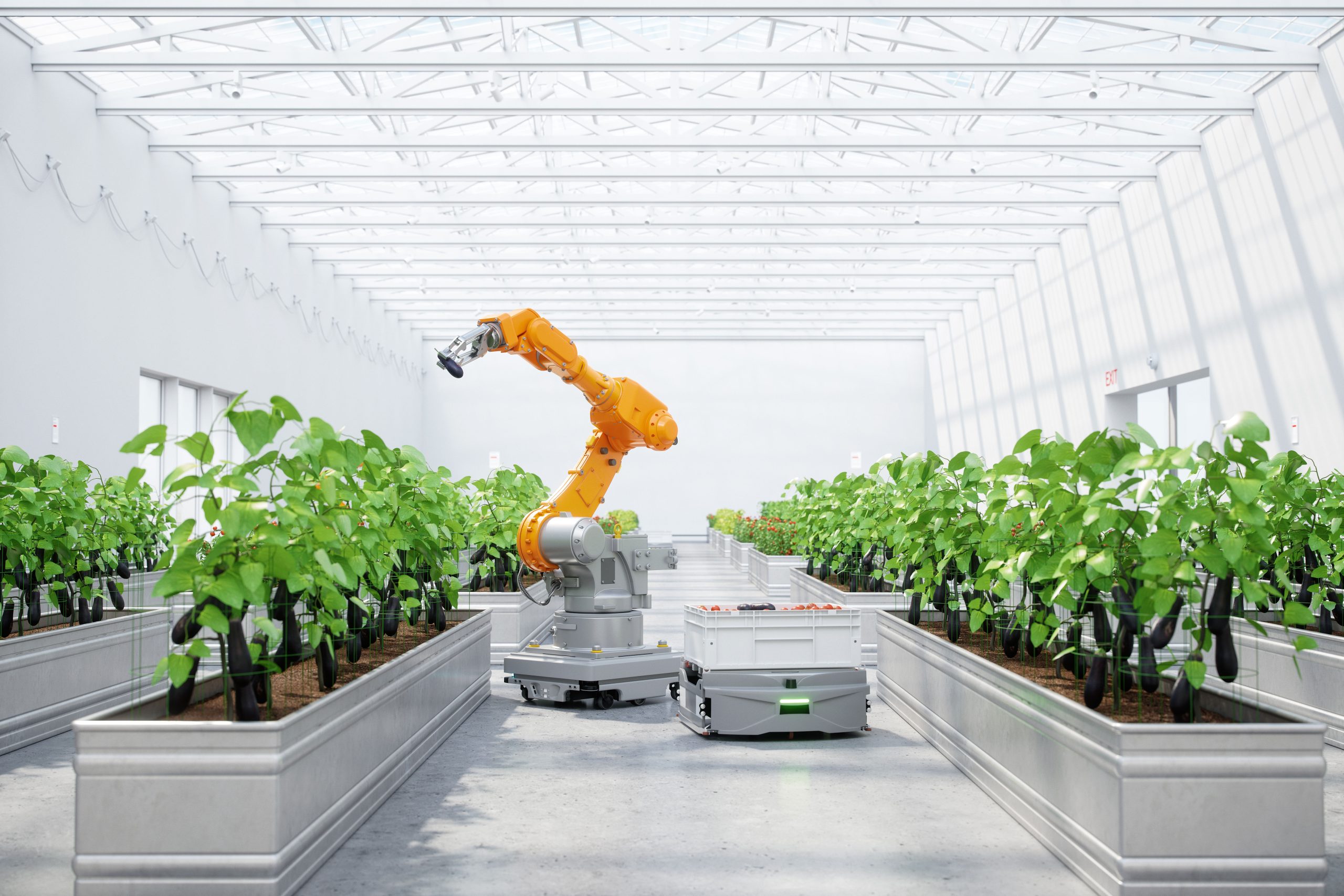
This could be helpful in the areas of robotics, factories, smart buildings, and security systems. It is also in development for use in AR and VR headsets, drones, healthcare, and smart farming, among other uses. At ST’s demonstration of the tech, it connected the VL53L9 with an STM32H5 microcontroller for checking safe areas, processing at 30 frames per second and requiring very small system memory. That’s big news for tiny gadgets. The less computing power you can use, the smaller you can make your device, the more efficiently you can power it, and the longer the battery life.
Edge AI: Thinking at The Source of the Data
Another major trend that comes together with intelligent sensors is Edge AI. Traditionally, a device may collect lots of data and send the information to the cloud for analysis. This method may take too much time and waste more network resources. The introduction of edge AI makes a change by performing the analysis closer to the sensor or device. Machines make the decision quicker.
ST’s new imaging material shows the transition towards sensors enabling on-board AI processing, intelligent features in devices closer to the edge, and the new family roadmap including designs that capture and process images at a sensor level to decrease overall system size, power, and computing needs. To an average user, this may not seem like a great improvement on a small piece of technology. However, to robots it could be the difference between going over obstacles and ploughing through them.
Always On but Don’t Always Have to Be Awake
There are other exciting things happening too, such as always-on sensors. One of the issues with using AI that runs all the time is the drain on power resources—especially on the limited resources of battery-powered devices like wearables, smart glasses, and easy-to-carry machines. ST’s new sensing design features ultralow power consumption and an auto-wake-up ability. With the sensor able to enter its ultra-low-power mode, the system waits until something interesting happens to turn on the main system.
An auto-wake-up scene change detection mode drawing just about 1mW was demonstrated in the June 2026 presentations. It’s like a security guard that isn’t alert at all times, but that immediately jolts awake when something’s off. Perhaps the battery can last longer if it still gives the fastest response on devices. Applications can range anywhere from smart glasses, home devices, medicine applications, and security systems to barcode scanning.
Robots Seem to Finally Get Their Eyes
There’s no field that’s arguably receiving a bigger benefit from the sensing revolution than robotics. A robot needs good perception, or else it’s almost as good as any other robot out there that is just strong and fast, but also blind to what is going on around. It won’t be safe to run those robots in an unknown environment with just brute force.
ST demonstration image sensors enable “eyes” for machines such as robots in the industrial or humanoid world, robot packaging, logistics, and even for flying robots. ST also emphasizes computer vision to enable machines to make sense of their surroundings.
Now here is where the really fun stuff happens. “The robots of the future will increasingly look like our own visual system, sensing and reacting to their environment,” says Calkins. “They won’t necessarily just be executing the same program over and over again; their eyes will give them understanding and allow them to react to unexpected events.”
Robots could spot a human being on the move in a warehouse. A factory robot may identify an item in front of it. A drone can have a better sense of its environment. If humanoid robots have vision and depth capability, they could interact with the physical world. The more accurately machines can perceive their environment, the more “intelligent” they can behave.
Privacy: Being Observed but Unidentified
Another massive advantage that comes with smart depth sensing is privacy. Not all applications require a high-res image of a human face; in some applications, the system needs to determine whether somebody is present, if they have fallen, or how many people there are.
The new VL53L9 material demonstrates low-resolution Time-of-Flight (ToF) sensing with privacy awareness. The system can obtain helpful depth and motion data while still being less personal on visual information than an actual camera. This could be particularly useful in hospitals, offices, and in the smart home, as well as retail surroundings.
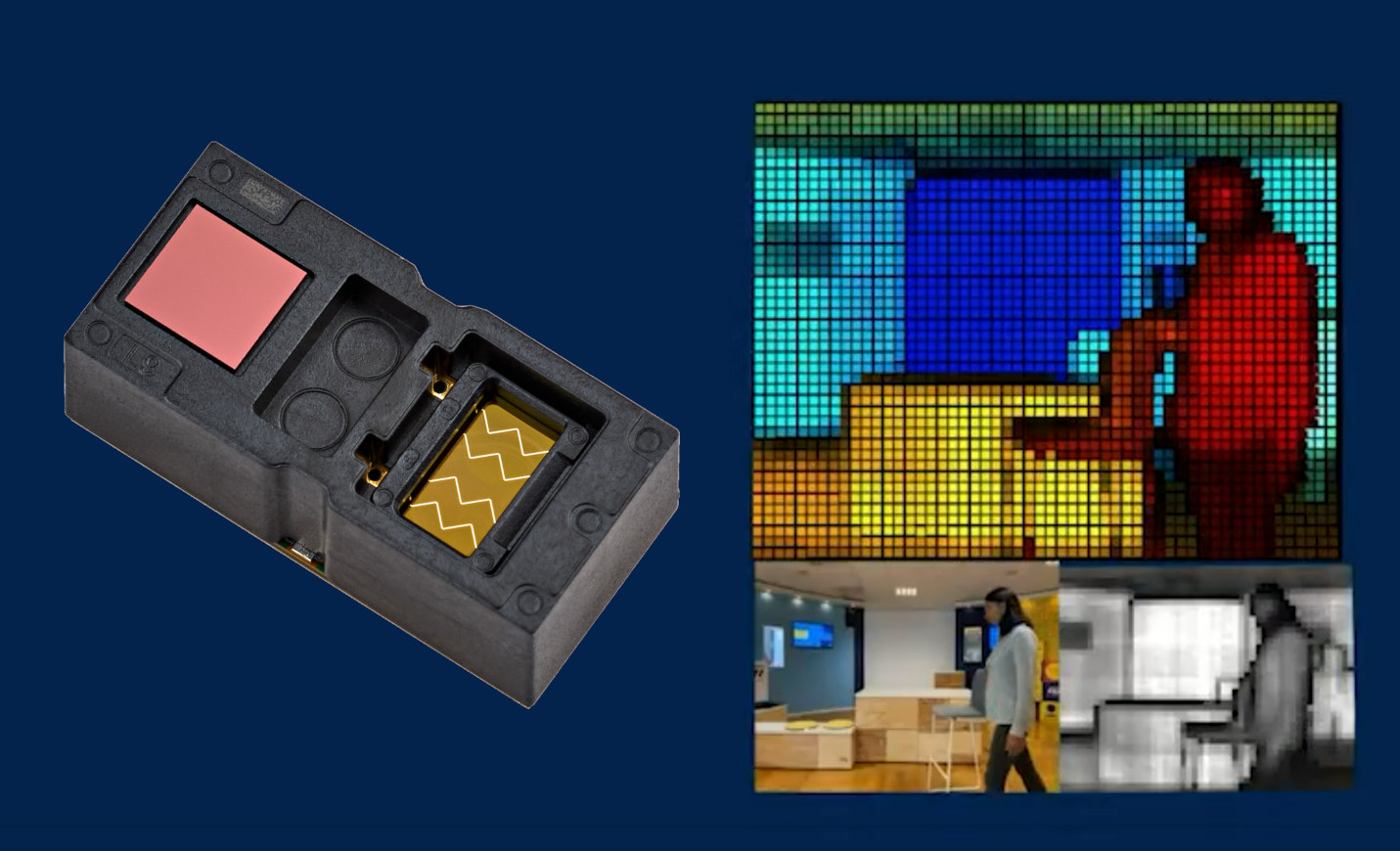
For example, a fall detection system for elder care might not need to identify a person’s face. This could bring intelligent sensing not just closer to home, but to personal spaces too.
Future Machines That Will Sense Their Surroundings
The technology we are being treated to in the newest ST report indicates an imaging future much broader than just pretty pictures. The attention turns to machine vision, AI, depth sensing, low-power computing and real-time perception. The company’s portfolio includes the new low-power and 5-megapixel Bright Sense sensors targeting edge AI, wearables and industrial automation. Its Flight Sense technology delivers 3D sensing to the edge for a number of uses ranging from robots to smart buildings.
It’s part of a much larger technology trend. AI isn’t confined to your computer screen anymore; it’s becoming a physical part of the physical world around us. In robotics, drones, smart machines, vehicles, or the large number of interconnected gadgets and gizmos out there, it’s important for something to know the difference between the road and your living room before they do something smart (or frankly, dangerous). And that’s why intelligent sensors are becoming so valuable. The biggest revolution of all might be that machines can at last see. And this is where the real revolution is- they are starting to understand what it is that they see.
As the power of Edge AI grows and sensors are becoming smaller, smarter, and more energy efficient, the devices around us may soon have the capability to detect the changes around them, understand them, and react to them in the right way. Perhaps the future of AI won’t involve only smarter software. It would also depend on providing machines with appropriate vision, appropriate senses, and the ability to understand the world around them.

