
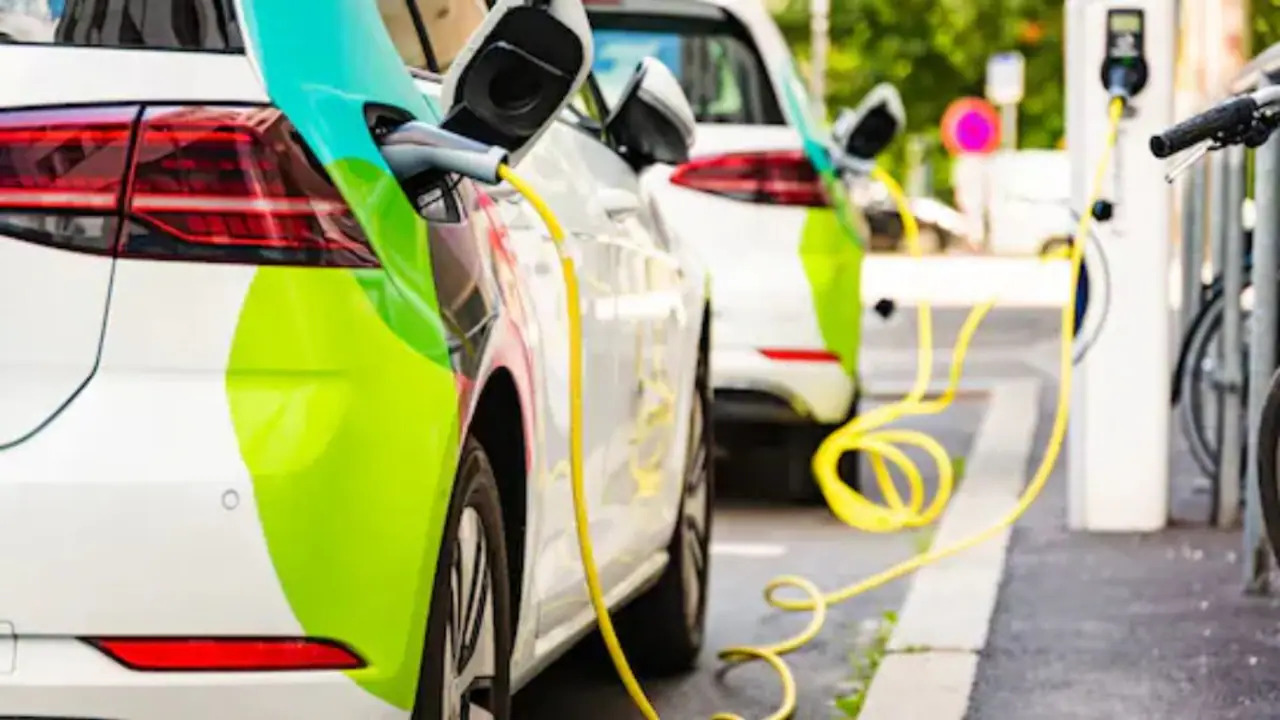
India is stepping up investments in key EV technologies. The South Asian country is speeding up its investments in key electric vehicle (EV) technologies while planning to boost a self-dependent and globally relevant EV manufacturing ecosystem. Driven by various central government initiatives, state government programs, and private sector investments, India attracted commitments for around US$25.6 billion worth of investments across battery manufacturing, advanced battery chemistries, powertrains, charging infrastructure, and technologies for battery and electric powertrains. These investments will help scale up domestic manufacturing and reduce dependence on imported components.
The Government of India launched multiple schemes to boost domestic manufacturing of the Electric Vehicles (EV) ecosystem through production-linked Incentive (PLI) Schemes for Advanced Chemistry Cell (ACC) and battery storage, as well as the PM E-Drive program to promote charging. The PM E-Drive program aims to promote charging for automobiles and auto components. Along with manufacturers both domestically and overseas, these schemes lead to localization of EVs’ key technologies.




One of the most prominent contributors to the cost of EVs has become battery cells. To cut down on battery imports, the Indian government has focused on indigenous manufacturing in the segment, providing support to the players setting up giga-scale manufacturing units of advanced chemistry cells (ACCs). Battery makers in India are actively pushing next-gen battery chemistries for their EVs, such as lithium iron phosphate (LFP) and nickel-magnesium-cobalt (NMC), and are even exploring future products like solid-state batteries that offer greater energy density, improved safety, and rapid charging capabilities. chemistries for their EVs, such as lithium iron phosphate (LFP), nickel magnesium Cobalt (NMC), and even for other future products like solid-state batteries that offer more power per space (energy density), safety, along with rapid charging possibilities.
The increasing investment in core EV technologies has the potential for far-reaching economic benefits, creating widespread opportunities for engineers, manufacturing plant workers, software and hardware professionals, quality testers and logistics and maintenance staff, as battery makers and electronics Producers and charging companies build upon their manufacturing bases. Furthermore, locating High-value manufacturing locally would allow us to decrease reliance on EV component imports and contribute positively towards our trade balance as we export electric vehicles and their associated automotive electronics.

