
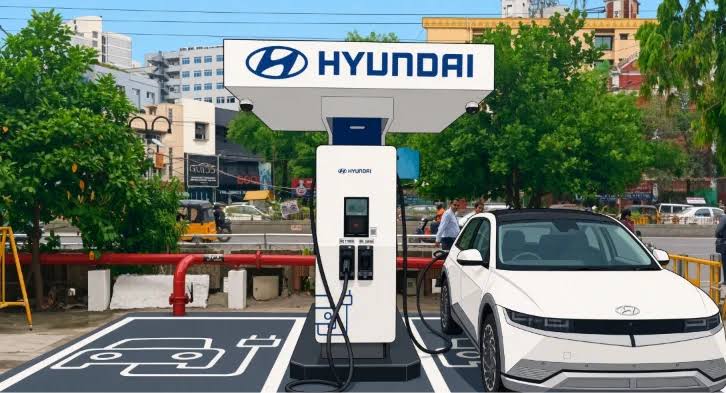
Hyundai Motor India has inaugurated 120 kW DC fast-charging stations at strategic locations in New Delhi. These high-power charging stations are intended to provide faster charging for EV users and can be accessed through the myHyundai app and other charging-management applications. The company’s DC fast-charging solutions in India currently range from 60 kW to 240 kW, offering different charging power levels based on the vehicle’s configuration.
A 120-kW DC fast charger provides significantly higher charging power compared to conventional AC charging systems and can therefore reduce charging time. The actual charging time for an EV battery depends on several factors, including the vehicle’s maximum DC charging capability, battery capacity, state of charge, temperature, and charging curve. The maximum capacity of these inaugurated charging stations is 120 kW, but the EV will only draw power suitable for its charging.




Impact on Grid Demand
Charging a vehicle at higher power also increases instantaneous electricity demand. A 120-kW charger operating at its rated output can deliver up to approximately 120 kW of DC power to an EV, excluding conversion and other system losses. Multiple chargers operating simultaneously at charging stations can creates significant local electricity demand of power supply, requiring suitable transformers, switchgear, cables and grid connections.
Thermal Management Challenges
A high amount of heat generates while charging an Electric Vehicle using high-power DC charging. This heat generates inside the battery, cables and connectors. Effective thermal management is therefore required to maintain charging performance and protect components from the extensive heat generated. This can involve liquid-cooled cables, cooling systems, temperature monitoring, and a power-control strategy.
The inauguration of 120 kW charging station represents growing shifts towards faster charging consumer infrastructure in India. The speed of charging an EV will ultimately depend on battery technology, interaction between charger power, vehicle architecture, thermal management and available grid capacity.

