
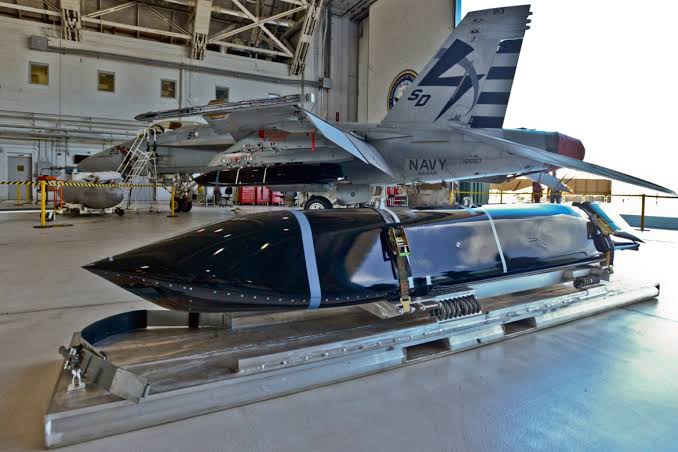
RAAF has declared initial operational capabilities for the AGM-158C LRASM and AGM-158B JASSM-ER. The AGM-158C LRASM will vastly increase the strike range of Australia against both land and maritime targets in defended environments. LRASM is an air-launched, self-propelled, autonomous anti-ship missile with autonomous target identification capabilities. It is designed to detect and destroy large surface targets at ranges greater than 370 km. It uses sensor and internal processing to find, identify, and attack targets in GPS- and communications-denied environments, and its low-observable features and flying attitude provide a higher probability of survivability against today’s ship-based radars.
JASSM-ER is a long-range stealth cruise missile for land attack missions. The range is listed as “about 900 km (560 mi)” by the RAAF. (The missile allows the launching aircraft to remain outside the range of enemy air defences). Both weapons are being added to the RAAF F/A-18F Super Hornet force, which is firing the weapons in areas such as weapons storage, mission planning, aircraft loading, and targeting. Australia has already employed two LRASM and two JASSM-ER missiles from the Woomera Test Range in Australia and two LRASM from P-8A Poseidon aircraft in RIMPAC 2026, attacking the target.




The two systems also show how modern missile systems leverage advanced precision navigation, sensor-fusion, autonomous processing, and electronic-warfare resistance. Their strategic use also underscores how Australia is turning to long-range deterrence and maritime security in the Indo-Pacific, with aircraft carrying out strikes well outside the range of increasingly capable air-defence systems.

