

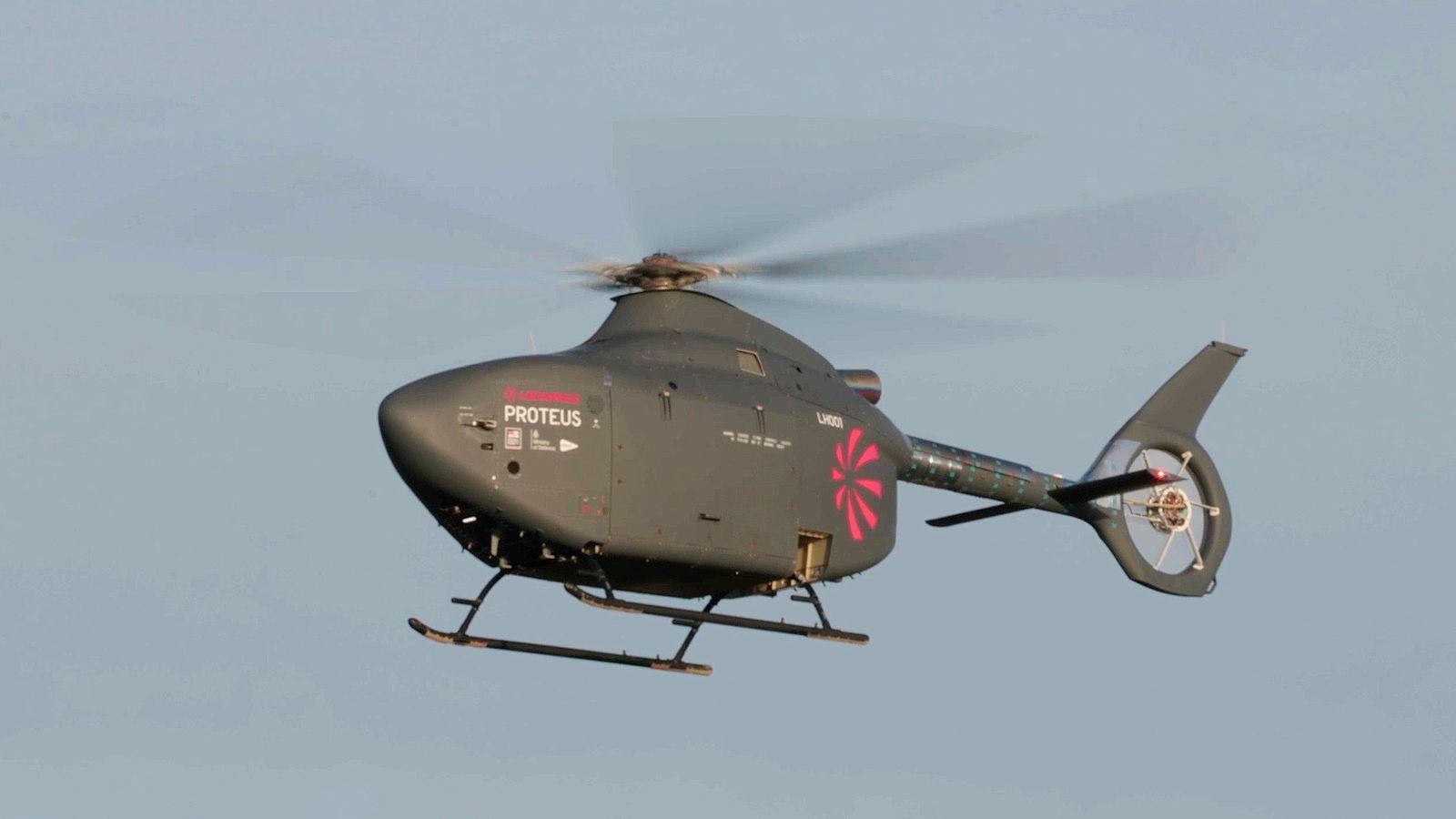
European aerospace and defence firm Leonardo has announced it will be partnering with US-based Shield AI to further develop autonomous mission capabilities for its Proteus uncrewed rotorcraft, pushing forward on the path to AI-enabled military aviation.
According to the deal. Leonardo will use the Hivemind software development kit of Shield AI to develop and integrate mission-autonomy capabilities. This document is aimed at supporting rotary-wing ISR, ASW, and logistics capabilities in contested operating areas. Further details were not disclosed.



The Proteus platform has a modular payload bay allowing for mission-specific payloads, providing a lot of flexibility in the type of missions the vehicles can undertake, such as maritime surveillance, transport, and other naval-related tasks. Proteus is an uncrewed vertical take-off and landing technology demonstrator developed by Leonardo in collaboration with the Royal Navy and UK Defence Innovation.
Hivemind software allows engineers to plan autonomous aircraft behaviour so that a mission can be adapted to operate on a range of platforms in different operating environments. The contract has allowed Leonardo to maintain the capability to adapt to changing mission requirements.
The collaboration is a complement to Proteus’ first flight earlier this year in 2026, when the autonomy capability developed by Leonardo was integrated into the aircraft. The new pact is intended to follow up on this work rather than imply that the platform has gone live.
AI-powered uncrewed rotorcraft might one day enable navies to undertake sustained surveillance, without requiring aircrew to undertake sustained surveillance, without requiring aircrew to deploy on dangerous mission. Nevertheless, autonomous mission execution, reliability, and safe integration with crewed aircraft continue to be development challenges.
This collaboration demonstrates how defence manufacturers are beginning to combine proven aircraft engineering with flexible AI software.

