

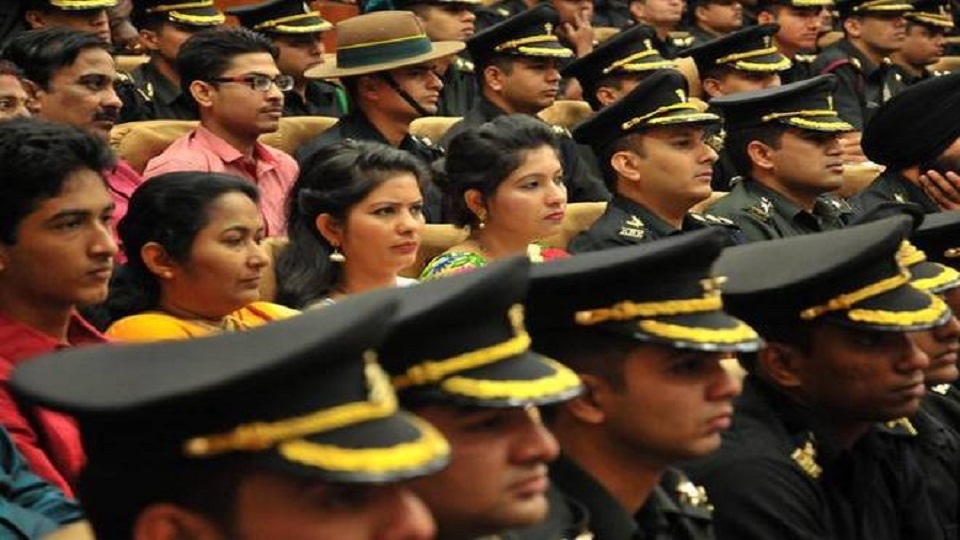
Futuristic innovation is being witnessed with the graduating batch of Military College of Electronics and Mechanical Engineering (MCEME) developing hi-tech robots and fingerprint-authentication enabled motorcycles and more, in their labs as student projects.
The six student projects are on display at the MCEME auditorium that claims to be cost effective and efficient. Once certified to be apt for combat, the model would be utilised by the country’s military organizations.



Displaying a modified Yamaha bike with four levels of security screenings, three graduating students — Major S. Kiran, Major Ashish Sidhawat, and Major Chandrasekhar Sharma — said, “The fingerprint module is connected with a macro controller and the bike will not start unless authenticated by the user’s or owner’s print. The bike can also be tracked using GPS. There is a SIM card attached to the bike and it can be turned on and off from any remote location.”
The model was also selected for a national science fair, said Maj. Kiran. The total cost of gearing up the bike was a mere Rs. 54,000.
If developed in bulk numbers by defence establishments, the costs of producing these gears would go down further, the graduates stated.
Another group, Lt. Ankit Dagur, Lt. Laveesh Chauhan, Lt. Madhur Malik and Lt. Lokesh Kumar, who developed a colour detecting robot that can change movements based on the colours that it encounters, said the model could help lessen human fatalities in perilous states. “Once a robotic arm gets attached to the model, it can move hazardous material and stack them based on common colours on the labels. This will prevent harm to human beings,” said Lt. Dagur.
The robot could be used to handle nuclear material, the developers said.
Other projects on the spectacle included a voice-based noticeboard with a voice-to-text converter which could be used for training students in military classes. The board displays text which is spoken into a microphone using the Global System for Mobile (GSM) module. The project was developed by Lt. Bakuni, Lt. Shubam Patnaik, Lt. Ajay Semwal, and Lt. Saurabh Pandey.
The cost of most projects ranged between Rs. 70,000 and Rs. 90,000. Most models developed by the graduates of MCEME are later tried and tested in the country’s defence laboratories. “We have applied for patent and are awaiting results,” said Maj. Kiran, who was one among those who developed the four level safety key.
MCEME trains students in both B.Tech and M.Tech degrees.

