
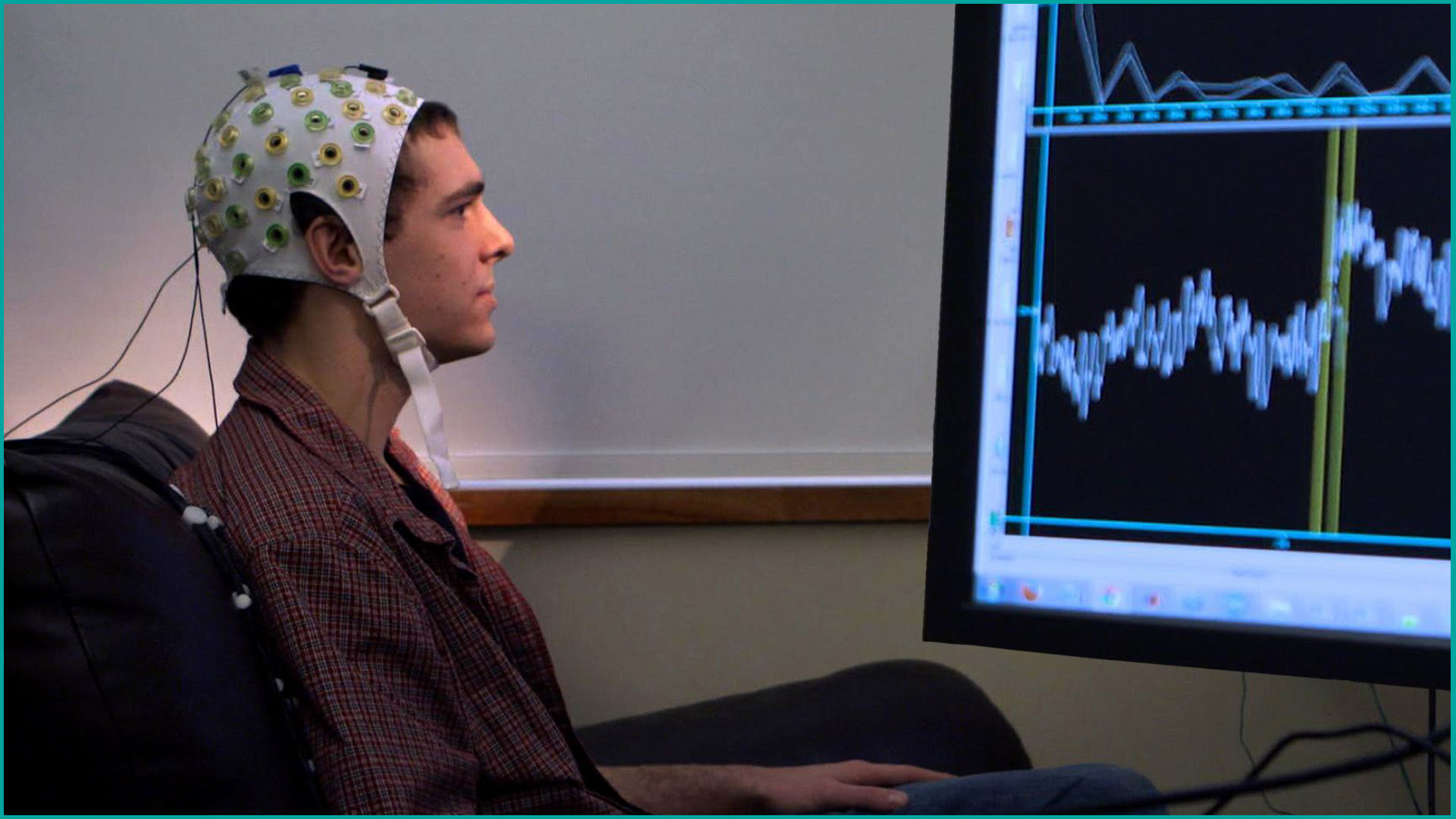
A non-invasive brain-computer interface detects completely locked-in patients’ responses by measuring changes in blood oxygen levels in the brain.
With a goal of allowing patients with completely locked-in syndrome to communicate, a multinational team has conducted a study using a computer interface that deciphers patient’s thoughts.




Patients suffering from complete paralysis, but with preserved awareness, cognition, and eye movements like blinking, are classified as having locked-in syndrome. If eye movements are also lost, the condition is referred to as completely locked-in syndrome.
Near-infrared spectroscopy
In the trial, led by Professor Niels Birbaumer, at the Wyss Centre for Bio and Neuro-engineering in Geneva, Switzerland, patients with completely locked-in syndrome were able to respond “yes” or “no” to spoken questions, by thinking the answers. A non-invasive brain-computer interface detected their responses by measuring changes in blood oxygen levels in the brain.
While other brain-computer interfaces have previously enabled some paralysed patients to communicate, near-infrared spectroscopy is, so far, the only successful approach to restore communication to patients suffering from completely locked-in syndrome.
Useful for people with neuro disorders
Extensive investigations were carried out in four patients with ALS (amyotrophic lateral sclerosis, also known as Lou Gehrig’s disease)-a progressive motor neuron disease that leads to complete destruction of the part of the nervous system responsible for movement.
The researchers asked personal questions with known answers and open questions that needed “yes” or “no” answers including: “Your husband’s name is Joachim?” and “Are you happy?”. They found the questions elicited correct responses in 70% of the trials.
“The striking results overturn my own theory that people with completely locked-in syndrome are not capable of communication. We found that all four patients we tested were able to answer the personal questions we asked them, using their thoughts alone. If we can replicate this study in more patients, I believe we could restore useful communication in completely locked-in states for people with motor neuron diseases,” Birbaumer said.
“Restoring communication for completely locked-in patients is a crucial first step in the challenge to regain movement. The Wyss Centre plans to build on the results of this study to develop clinically useful technology that will be available to people with paralysis resulting from ALS, stroke or spinal cord injury. The technology used in the study also has broader applications that we believe could be further developed to treat and monitor people with a wide range of neuro disorders,” Professor John Donoghue, Director of the Wyss Centre, said.

