
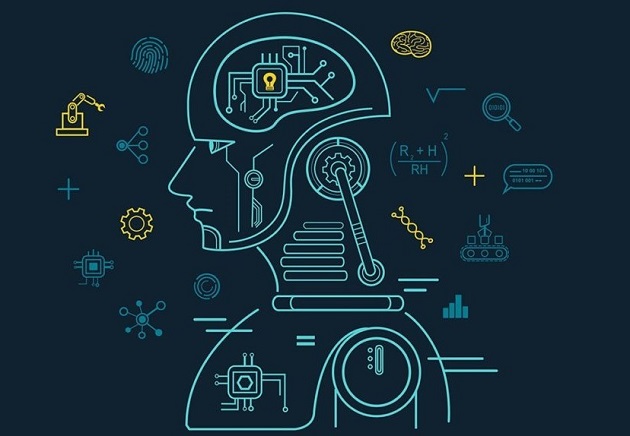
Companies must adopt responsible AI methodologies in order to ensure their algorithms and applications are fair and trustworthy.
The “future of work” went from theory to practice almost overnight in 2020, but our new reality is still evolving. Undoubtedly, AI will be important in enabling what’s next. The possibilities for enhancing human ability are vast. The level of responsibility for its use is just as big. To get the most out of AI’s potential, we need to reach a balance. What’s needed is responsible for AI.




We see AI as the application of advanced analytical techniques, such as machine learning and natural language processing, combined with automation to solve problems, develop personalized products and services and seize new opportunities in new ways. It promises to transform business and society by helping us make better decisions, reducing the risk of human error, and generating efficiencies.
Still, human oversight and empathetic decision-making are still essential. Hence we can state that there is no more powerful system than the combination of technology and AI with human power.
Responsible AI
As AI will be a core part of the digital societies of the near future, businesses must weigh the opportunity to maximize the technology while considering the broader effects on customers, employees, and society. AI must be designed with data privacy, security, and the fundamental rights of end-users in mind. While benefiting from such data for insight, any so-informed decisions should be fair and free of harmful bias.
The best way to ensure responsible AI action is to put all AI initiatives against a strong framework that can be used across the organization. The principles within a framework can dictate AI practices and aim to protect from the unintended consequences of utilizing machine learning techniques. When building out a responsible AI framework, it’s important to consider the following principles:
- Transparency and accountability: This starts with making sure users know they’re interacting with machines and not humans and includes clearly communicating what data is being collected and how it will be used.
- Ethics and fairness: AI can be used to support and augment decision-making, but humans should be in command of it. The data collected should not be analyzed in a way that inadvertently affects any group or individual unfairly. AI should help close the digital divide, not widen it.
- Preservation of privacy and security: Trust is paramount to the use of AI, and a commitment to privacy is the top tenet. Security systems for AI must keep pace, if not get ahead of the threat landscape.
- Human rights, diversity, and inclusivity: International human rights standards should be adhered to while ensuring AI systems foster diversity, accessibility, and inclusivity.
- Managing AI disruption: Remain human-centric and commit to helping people gain new skills that allow them to take advantage of the digital world.
AI in use
While AI has yet to reach its full potential, positive impact can already be seen. Chatbots are a familiar example. But we see potential use cases for nearly any industry. In retail, greater intelligence could optimize the store footprint to improve zone performance, predict customer satisfaction throughout the shopper journey and raise personalization levels.
Manufacturers will benefit from predictive equipment maintenance to save time, money, and resources, in part due to the rise of IoT adoption in the last few years. Logistics will also become smarter and more efficient. Marketing could continue to be revolutionized by data. These are just a few instances.
In a real-world example, Mencap, a UK-based charity for people with learning disabilities, developed the Connected Living project using AI to enhance the quality of life for people with learning disabilities and provide support workers with smart tools to use for more personalized care.
The technology helps people get ready for the day, use reminders, cook independently, and have a discrete method of communicating with supporters when out in the community to stay safe or raise an alarm in the case of an emergency. It also helps support workers better understand the needs and wants of the person in their care.
The future of AI
Companies, whether technology providers or end-users have a moral responsibility as AI grows in usage and impact across geographies and industries. Only AI that is trustworthy, secure, scalable, and robust has the potential to achieve mass-market adoption and be positively transformational.

