
USB Type-C with Power Delivery (PD) and open-source software are two technologies leading the next wave of wired connectivity. With Microchip Technology Inc.’s (Nasdaq: MCHP) new Power Delivery Software Framework (PSF), designers can now modify and own the IP in their USB-C PD systems. By merging their proprietary code with Microchip’s fully functional PD stack, designers have the ultimate flexibility for creating differentiated product offerings while choosing from a wide variety of Microchip SmartHubs, microcontrollers (MCUs) and standalone PD solutions for their USB systems.
Microchip’s PSF solution offers both an open-source code base for power delivery and a comprehensive programming environment, removing the need for manufacturer dependence and making it easy for users to program MCUs and immediately modify PD code as their system evolves. Harnessing the benefits of this industry-changing solution, customers can now determine their own product destiny, reducing time to market and overall bill of materials (BOM).



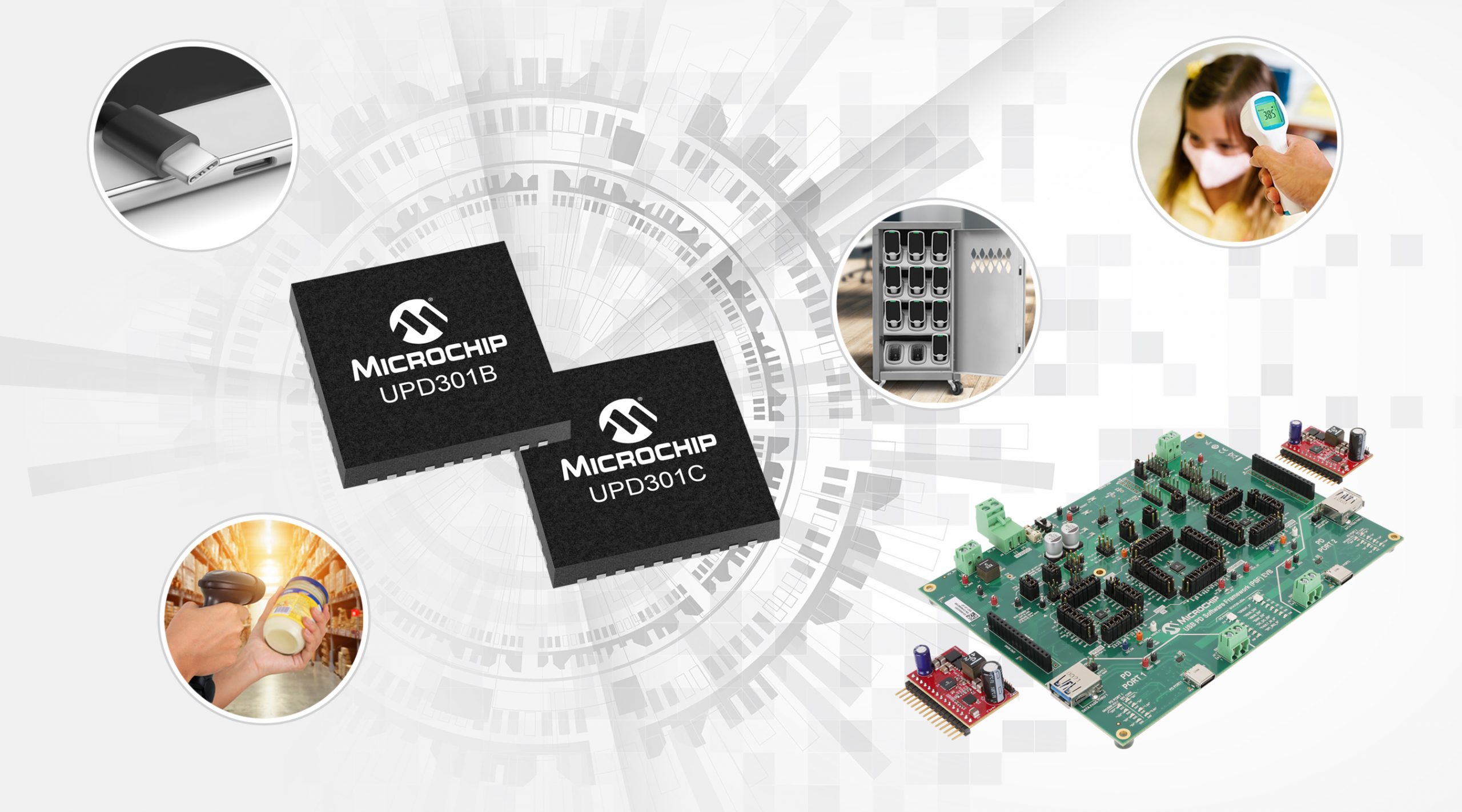
Leveraging both a software and hardware framework, developers can also choose from an expanded family of Microchip controller options to host PD functionality, including the new UPD301B and UPD301C standalone PD controllers. The PD architecture’s open approach enables customers to easily add a USB-C/PD port to a wide range of embedded applications, while also allowing customers to reallocate unused pins or CPU memory to other system functions. A range of Microchip SAM and PIC® MCUs and dsPIC® Digital Signal Controllers (DSCs) are supported. The PSF solution gives designers the option to run PD on an existing Microchip MCU infrastructure by adding the UPD350 PD transceiver or by integrating PD into more complex product offerings with proprietary system code.
“With our new PD Software Framework, all Microchip MCUs and standalone controllers that support USB-C now share the same PD code base,” said Charles Forni, vice president of Microchip’s USB and networking business unit. “This code is provided free to customers and is easy to configure and modify, enabling our customers to implement new features and system updates without the need for a manufacturer to customize the code for them. Microchip’s PSF offering changes the way USB-C PD is integrated into customer systems.”
Development Tools
The PSF software solution is supported by Microchip’s MPLAB® X IDE development environment. The PSF evaluation board features the SAMD20 MCU and the UPD350 PD PHY and is available today.
Pricing and Availability
Microchip’s open-source Power Delivery Software framework (PSF) is available for download on Microchip’s website at no cost. The UPD301C is available for $1.50 in 10,000-unit quantities.
For additional information, click to order now

