

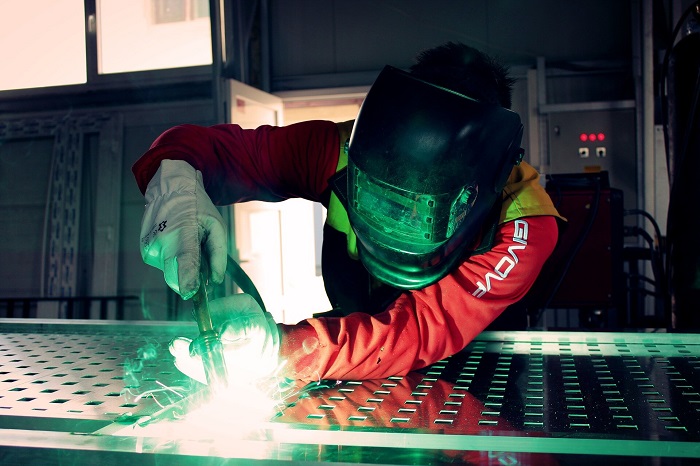
Additive manufacturing offers an unprecedented level of design flexibility and expanded functionality, but the quality and process can drastically differ across production machines, according to a professor of industrial engineering at Penn State. With applications in aerospace, health care and automotive industries with potential for mass customization, additive manufacturing needs quality management.
Team of researchers proposed the design, development and implementation of a new data-driven methodology for quality control in additive manufacturing.



The people working in isolated efforts in different areas of additive manufacturing, and systems engineers can help connect the dots to provide a framework for quality management. Quality is indispensable, and if they design a system-level framework of quality management from the start, then they will have a higher quality and better productivity at less cost. Ultimately, everyone wants to do high-precision, high-end manufacturing, but if quality suffers at any step during production, they lose the competitive advantage needed for the global market. Leveraging data to control and ensure high quality products helps keep that advantage to them.
The team worked together to analyze various academic papers to deduce a six sigma framework of quality control for additive manufacturing, which lead to their proposed systems engineering approach.
The method hinges on six sigma, a popular approach that uses data-driven tactics to eliminate defects, drive profits and improve quality of products. Through their detailed analysis, the team suggested that this five-step approach of defining, measuring, analyzing, improving and controlling can further the quality management when applied to additive manufacturing.
Via research we analyzed, identified the critical challenges of additive manufacturing and where quality standards are lacking, for each step in the process, they need to identify the sticking points, which is where methods such as machine learning can come into play and help show an engineer or designer how to control the process to avoid defects.
Researchers explained that such defects can become massive liabilities when considered in the context of mass-produced products.
If There goal is to use additive manufacturing to make parts for a car or a plane, then that part better not fail.
The cost of failed parts can add up—a failed metal build, could easily cost 10 to 20 thousand dollars and require multiple iterations along the way.
By looking for the quality gaps in the standards for mass-produced parts, their proposed methodology is critical to ensure quality production with additive manufacturing for both high volume and custom products.
Quality control processes and methods are established for mass production, where you make hundreds to millions of things. Additive manufacturing enables customization, and the current quality control methods and accepted practices do not readily apply when you are only making one or a few of an item. They have to think differently to ensure high quality parts.
Researchers, noted that their review represents the state-of-the-art additive manufacturing technologies and can help researchers by providing a comprehensive understanding of the tools and techniques.

