
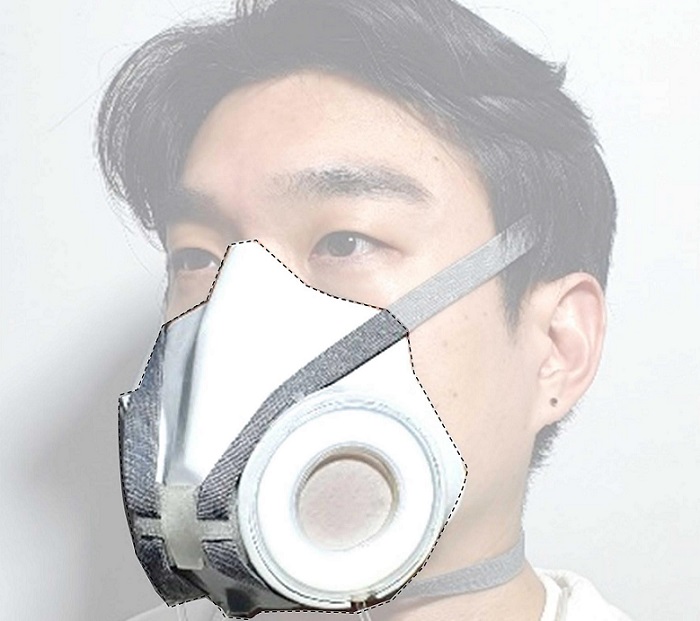
During the coronavirus pandemic, many people have grown accustomed to wearing face masks to protect themselves and others, but that doesn’t mean the masks are always comfortable—especially during exercise. Now, researchers have developed a dynamic respirator that modulates its pore size in response to changing conditions, such as exercise or air pollution levels, allowing the wearer to breathe easier when the highest levels of filtration are not required.
Face masks protect against the spread of the virus that causes COVID-19, but they are also worn by people with respiratory problems to filter out harmful pollutants. However, in some circumstances, high levels of filtration aren’t needed, such as when air pollution levels are low, or when someone is exercising outdoors alone—which is generally considered a low-risk activity for spreading COVID-19. But current masks can’t adjust to changing conditions. With time, the trapped, exhaled breath can create sensations of heat, humidity, bad breath, and discomfort, especially as more breath gets exhaled during exercise. Seung Hwan Ko and colleagues wanted to make a respirator that could automatically adjust its filtration characteristics in response to changing conditions.




The researchers developed a dynamic air filter with micropores that expand when the filter is stretched, allowing more air to pass through. A large increase in the breathability of the filter, which was made of electrospun nanofibers, was achieved with only about a 6% loss in filtration efficiency. The team then placed a stretcher around the filter that was connected to a lightweight, portable device containing a sensor, air pump, and microcontroller chip.
The device communicates wirelessly with an external computer running artificial intelligence (AI) software that reacts to particulate matter in the air, as well as changes in the wearer’s respiratory patterns during exercise. Two of the filters were placed on each side of a face mask and tested on human volunteers. The stretcher correctly generated a smaller increase in pore size when a volunteer exercised in a polluted atmosphere than when they exercised in clean air.
Notably, the AI software allows the respirator to adapt to individuals’ unique respiratory characteristics, which could be used to develop a personalized face mask, the researchers say. To make the system smaller, lighter, and less cumbersome, the stretcher could eventually be redesigned to have a pump-free mechanism, they add.

