
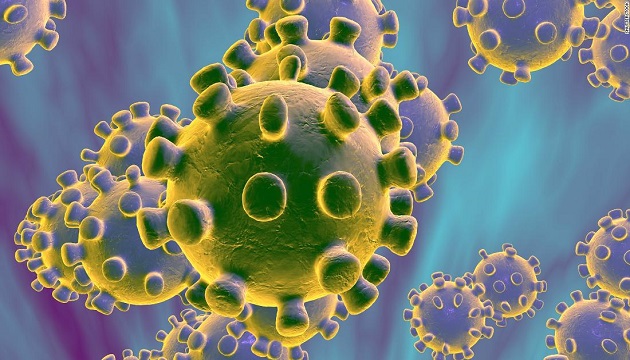
Artificial Intelligence technology can today automatically mine through news reports and online content from around the world, helping experts recognize anomalies that could lead to a potential epidemic or, worse, a pandemic. In other words, our new AI overlords might actually help us survive the next plague. These new AI capabilities are on full display with the recent coronavirus outbreak, which was identified early by a Canadian firm called BlueDot, which is one of a number of companies that use data to evaluate public health risks.
The company, which says it conducts “automated infectious disease surveillance,” notified its customers about the new form of coronavirus at the end of December, days before both the US Centers for Disease Control and Prevention (CDC) and the World Health Organization (WHO) sent out official notices, as reported by Wired. Now nearing the end of January, the respiratory virus that’s been linked to the city of Wuhan in China has already claimed the lives of more than 100 people. Cases have also popped up in several other countries, including the United States, and the CDC is warning Americans to avoid non-essential travel to China.




But artificial intelligence can be far more useful than just keeping epidemiologists and officials informed as a disease pops up. Researchers have built AI-based models that can predict outbreaks of the Zika virus in real time, which can inform how doctors respond to potential crises. Artificial intelligence could also be used to guide how public health officials distribute resources during a crisis. In effect, AI stands to be a new first line of defense against disease.
Other data, like traveler itinerary information and flight paths, can help give the company additional hints about how a disease will likely spread. For instance, earlier this month, BlueDot researchers predicted other cities in Asia where the coronavirus would show up after it appeared in mainland China.
The idea behind BlueDot’s model to get information to health care workers as quickly as possible, with the hope that they can diagnose — and, if needed, isolate — infected and potentially contagious people early on.
But artificial intelligence can be far more useful than just keeping epidemiologists and officials informed as a disease pops up. Researchers have built AI-based models that can predict outbreaks of the Zika virus in real time, which can inform how doctors respond to potential crises. Artificial intelligence could also be used to guide how public health officials distribute resources during a crisis. In effect, AI stands to be a new first line of defense against disease.
More broadly, AI is already assisting with researching new drugs, tackling rare diseases, and detecting breast cancer. AI was even used to identify insects that spread Chagas, an incurable and potentially deadly disease that has infected an estimated 8 million people in Mexico and Central and South America. There’s also increasing interest in using non-health data — like social media posts — to help health policymakers and drug companies understand the breadth of a health crisis. For instance, AI that can mine social media posts to track illegal opioid sales, and keep public health officials informed about these controlled substances’ spread.
Still, all of these advancements represent a more optimistic outlook for what AI can do. Typically, news of AI robots sifting through large swathes of data doesn’t sit so well. Think of law enforcement using facial recognition databases built on images mined from across the web. Or hiring managers who can now use AI to predict how you’ll behave at work, based on your social media posts. The idea of AI battling deadly disease offers a case where we might feel slightly less uneasy, if not altogether hopeful. Perhaps this technology — if developed and used properly — could actually help save some lives.
Similarly, the epidemic-monitoring company Metabiota determined that Thailand, South Korea, Japan, and Taiwan had the highest risk of seeing the virus show up more than a week before cases in those countries were actually reported, partially by looking to flight data. Metabiota, like BlueDot, uses natural-language processing to evaluate online reports about a potential disease, and it’s also working on developing the same technology for social media data.

