
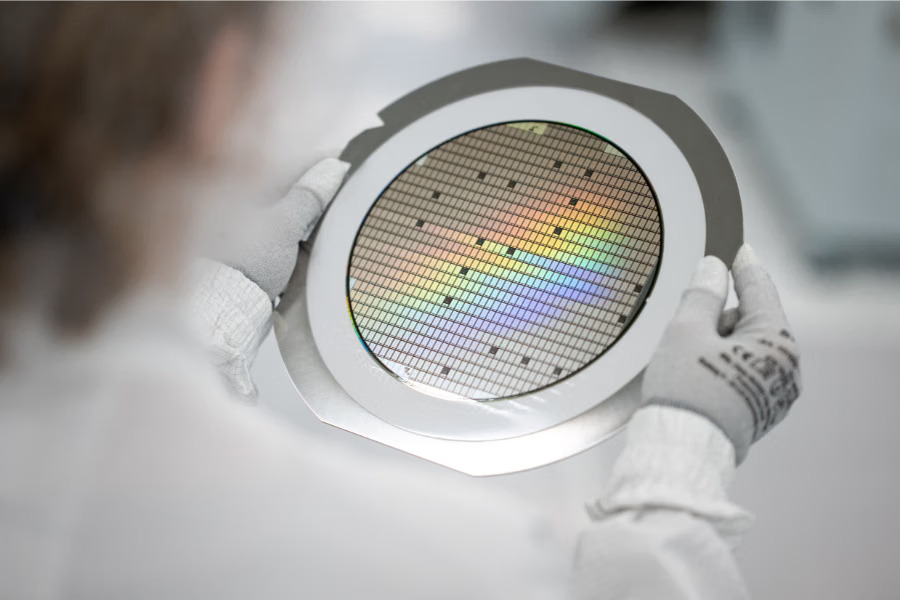
With EV manufacturers aiming to boost the vehicle’s travel range, fast-charging capabilities, and powertrain efficiency, semiconductor technology is becoming an important part to the development of electric vehicles. Bosch’s third-generation silicon carbide (SiC) semiconductors, developed to enhance the efficiency and performance of EV power electronics, is an achievement in India’s electric-mobility ecosystem. Sample chips are currently shipping to global automakers for testing, with full commercial market availability targeted for 2027.
20% Higher Performance
Bosch’s third-generation Silicon Carbide (SiC) chips support advanced dual-channel trench architecture, a specialised transistor design that improves current transmission efficiency and the overall system power-conversion efficiency by lowering down the resistance and loss during device switching. The chips are designed to meet the demanding power-efficiency and performance requirements of modern electric vehicles.




This technology offers around 20% more performance than the previous generation of chips. According to Bosch, its SiC technology should help to boost the driving range, battery utilisation and reduce the overall cost of ownership to owners of EV vehicles.
Silicon carbide technology can reduce power loss for the energy conversion process and thus can increase the power efficiency. The reduction of loss can also decrease the generation of heat inside the inverter, lowering the system’s cooling requirements.
Supporting India’s EV Ecosystem
The introduction is particularly relevant as Indian automakers and component suppliers increasingly localise EV technologies and develop higher-efficiency powertrains. Advanced semiconductor devices such as SiC MOSFETs can play a key role in this transition by improving inverter performance without requiring proportionally larger battery packs.

